
Sharbat Albaloo (Persian Sour Cherry Syrup)

Sharbat Albaloo (Persian Sour Cherry Syrup)

شربت آلبالو

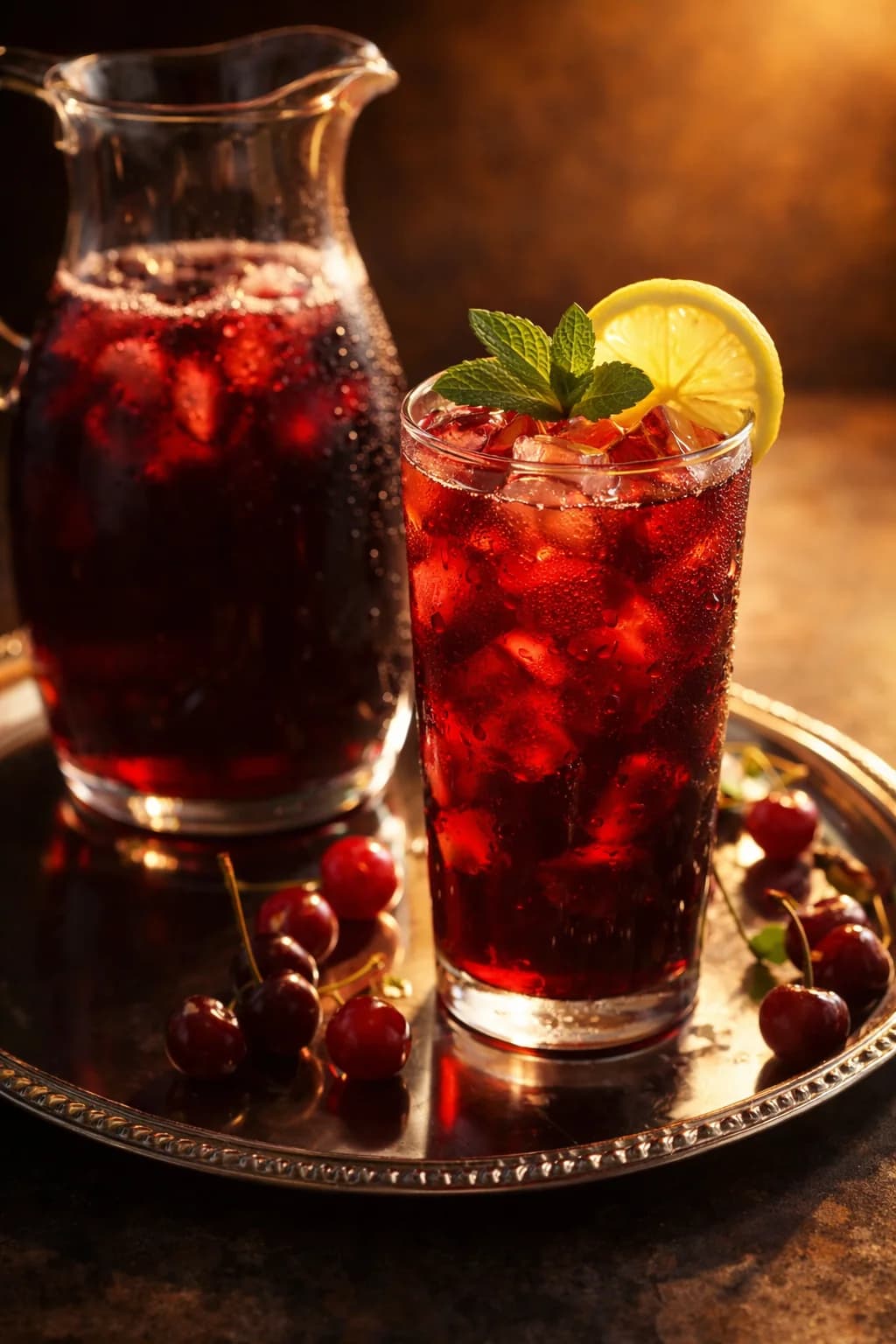
A jewel-toned syrup made from tart sour cherries, their ruby juice transformed into a concentrated elixir that captures the essence of Persian summer. Diluted with ice water, sharbat albaloo becomes a stunningly beautiful drink—deep garnet red, intensely fruity, and perfectly balanced between sweet and tart. Beyond drinking, this versatile syrup is the traditional topping for faloodeh, drizzled over the icy rose water noodles for a stunning pink-red contrast. The brief summer season when sour cherries are available makes this syrup precious—families preserve summer's bounty in these jeweled jars to enjoy year-round.

beverageVorbereitung: 30 MinKochen: 45 MineasyFür 30

Kultureller Hinweis

Sour cherries (albaloo) are beloved in Persian cuisine, appearing in rice dishes (albaloo polo), stews, and preserves. The syrup, sharbat albaloo, is quintessential Persian summer refreshment—its deep ruby color is visually stunning, and its sweet-tart flavor is intensely satisfying on hot days. The syrup also plays a crucial role as the traditional topping for faloodeh, where its pink-red color contrasts beautifully with the white frozen noodles. Iranian families traditionally make large batches during the brief sour cherry season (late spring to early summer), preserving the fruit's essence to enjoy year-round. The word 'sharbat' (from which 'sherbet' and 'sorbet' derive) means 'drink' in Persian and refers to a category of concentrated fruit syrups diluted with water—a tradition dating back centuries in Persian culture.

Kritische Momente

  • Using sour cherries (not sweet)
  • Extracting maximum juice from cherries
  • Straining thoroughly for clear syrup
  • Not over-reducing (thickens when cold)
  • Adding lemon juice for color and brightness
1
VORBEREITUNG25 Min

Prepare the cherries

Wash the sour cherries thoroughly. Remove stems and pit the cherries. This is time-consuming but essential—a cherry pitter helps significantly. Collect all juices released during pitting; they're precious. You should have about 1.3kg pitted cherries.

Deep red pitted cherries; juice collecting in bowl
GeruchFresh, tart cherry aroma
TexturSoft, juicy cherries
A cherry pitter is highly recommended—pitting by hand is tedious. Work over a bowl to catch all juice. Frozen pitted sour cherries can substitute for fresh and are available year-round.

Häufige Fehler

  • Discarding juice released during pitting (use it all)
  • Using sweet cherries (wrong flavor profile—must be sour)
2
KOCHEN25 Min

Cook the cherries

Place the pitted cherries and all collected juice in a large pot. Add 500ml water. Bring to a boil over medium-high heat, then reduce to a simmer. Cook for 20-25 minutes, stirring occasionally and mashing the cherries with a potato masher to release all their juice. The cherries should be completely soft and broken down.

Cherries completely broken down; deep red liquid
MediumSimmer after initial boil
GeruchIntense cooked cherry—sweet-tart
KlangGentle bubbling
TexturSoft, broken cherries in red liquid
Mash thoroughly to extract maximum juice and color. The cherries should be completely soft—no whole pieces remaining.
3
KOCHEN15 Min

Strain the cherry juice

Set a fine-mesh strainer lined with cheesecloth over a large bowl. Pour the cooked cherry mixture through, pressing firmly on the solids to extract all liquid. Twist the cheesecloth to squeeze out every drop. Discard the pulp. You should have about 1 liter of deep red juice.

Clear, deep ruby-red juice; no pulp
GeruchIntense cherry
KlangDripping liquid
TexturSmooth, clear juice

Kritischer Schritt

Thorough straining creates a clear, beautiful syrup. Pulp left in will make the syrup cloudy and affect texture. Press firmly—the pulp holds a lot of juice.

Let it drain first, then press. For clearest syrup, strain a second time through fresh cheesecloth.
4
KOCHEN20 Min

Make the syrup

Return the strained cherry juice to the pot. Add the sugar and stir over medium heat until completely dissolved. Bring to a boil, then reduce to a simmer. Cook for 15-20 minutes until the syrup has thickened slightly—it should coat a spoon but still be pourable. Add lemon juice in the last minute.

Glossy, slightly thickened syrup; deep garnet color; coats spoon
MediumSimmer after boiling
GeruchConcentrated cherry—intensely fruity and sweet
KlangSteady simmering
TexturCoats spoon; thicker than juice but still pourable

Kritischer Schritt

The syrup must reduce enough to concentrate flavor but not so much it becomes too thick. It will thicken further when cold. The lemon juice brightens flavor and helps preserve the vibrant color.

Don't over-reduce—the syrup thickens significantly when cooled. Better slightly thin than too thick.
Kontrollpunkt: Dip a spoon—the syrup should coat it lightly and run off slowly, not immediately.
5
FERTIGSTELLEN60 Min

Cool and bottle

Remove from heat and let cool completely. The syrup will thicken as it cools. Pour into clean glass bottles or jars. Seal tightly. Refrigerate for up to one year.

Deep ruby-red syrup in glass bottle; jewel-like appearance
GeruchConcentrated sweet-tart cherry
TexturThick, pourable syrup
Use clean, sterilized bottles for longest storage. Label with the date. The syrup deepens in color and flavor over time.
6
FERTIGSTELLEN3 Min

Serve as a drink

To serve, add 3-4 tablespoons (45-60ml) of syrup to a tall glass. Fill with cold water and stir. Add ice cubes. Garnish with fresh mint or a lime slice. Adjust syrup-to-water ratio to taste.

Stunning deep pink-red drink; ice cubes; mint garnish
GeruchFresh cherry aroma
KlangIce clinking
TexturRefreshing, cold, sweet-tart
The dilution ratio is personal—start with 1:4 (syrup:water) and adjust. Sparkling water makes an especially refreshing version.
7
FERTIGSTELLEN2 Min

Serve over faloodeh

For the traditional faloodeh topping: drizzle undiluted syrup generously over a serving of faloodeh. The pink-red syrup contrasts beautifully with the white frozen noodles. Serve immediately.

White faloodeh with ruby-red syrup drizzled over; stunning contrast
GeruchCherry and rose water together
TexturThick syrup on icy noodles
This is the classic pairing—the sweet-tart cherry with the floral rose water and lime of faloodeh is extraordinary.

Ruhezeit Erforderlich

60 Min - Syrup must cool completely; thickens as it cools

Extras

Ausstattung

großer Topffeines Siebcheeseclothglass bottles or jarspotato masherStandard

Im Voraus Zubereiten

  • This is a preserving recipe—the syrup keeps refrigerated for up to one year.
  • Make during cherry season and enjoy year-round.
  • Flavor deepens and mellows over time.

N/A—served cold.

Use directly from refrigerator.

Servieren Mit

Beilagen

  • Essential topping for faloodeh
  • Drizzled over bastani (ice cream)
  • With yogurt or ice cream

Getränke

  • Served as the beverage itself

Ersatzstoffe

sour cherriesMust be sour cherries (Montmorency, Morello)—sweet cherries create a completely different, less interesting syrup. Frozen pitted sour cherries are excellent and available year-round. In a pinch, canned sour cherries in water (not pie filling) work.
sugarWhite granulated sugar is traditional. Can use honey (400g honey per 500g sugar) for different flavor. Brown sugar changes color but adds depth.
lemon juiceLime juice works equally well. The acid is important for color preservation and flavor balance.

Skalierung

This recipe makes a concentrated syrup yielding about 30 servings when diluted. Scale based on cherry availability—when sour cherries are in season, make as much as you can store. The syrup keeps refrigerated for up to a year, so large batches are practical and traditional.

Quelle

Traditionell · Traditional Persian cuisine

Sour cherries (albaloo) hold a special place in Persian cuisine—used in rice dishes, stews, and most famously in this syrup. The brief cherry season in early summer is a time of intense preserving activity, with families making enough syrup to last until the next harvest.

Ähnliche Rezepte

Doogh (Persian Yogurt Drink)

Doogh (Persian Yogurt Drink)

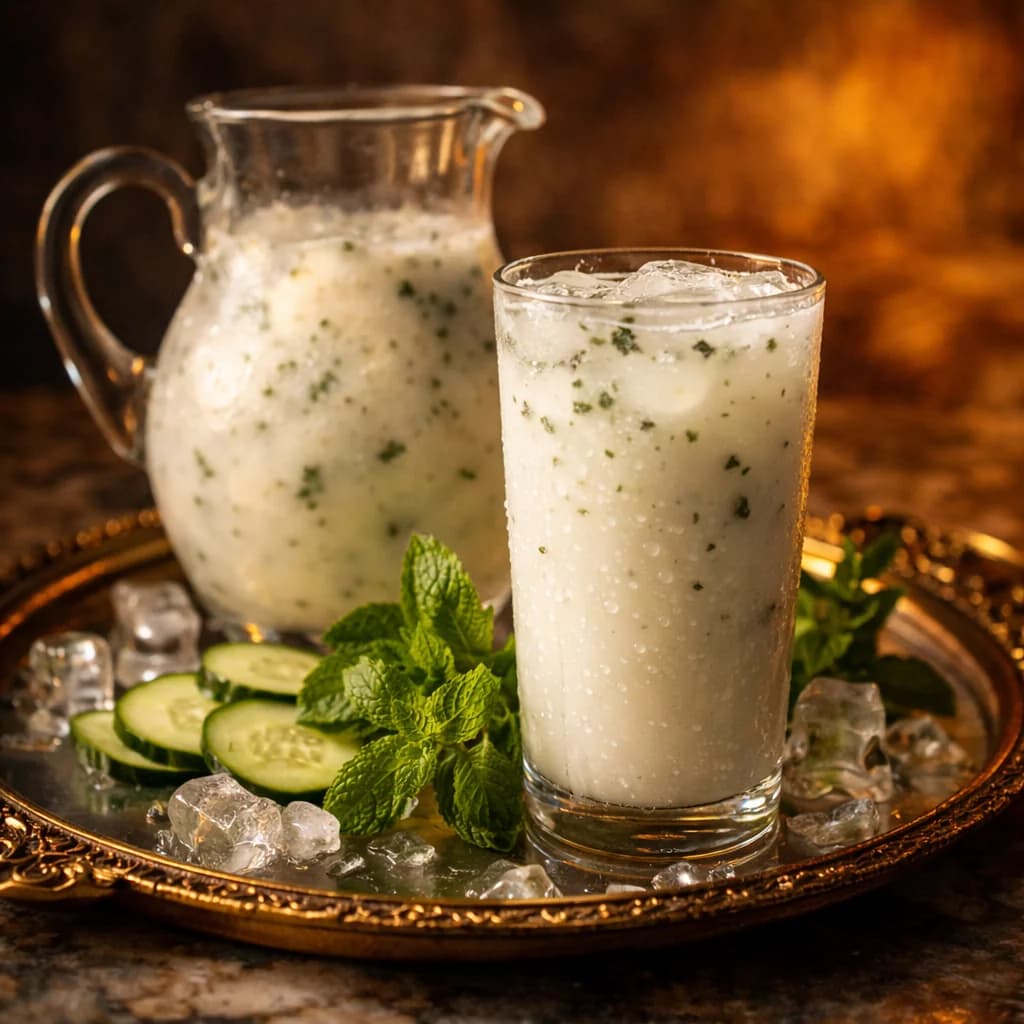
The quintessential Persian beverage—a refreshing, tangy, effervescent drink of yogurt, water, salt, and dried mint that accompanies nearly every Persian meal. Doogh is the perfect counterpoint to rich, flavorful Persian cuisine: its cool tanginess cuts through the richness of kebabs, its salt replenishes what's lost in summer heat, and its probiotics aid digestion. Whether homemade or from one of Iran's beloved commercial brands, doogh is as essential to the Persian table as bread itself. The slight fizz of traditionally fermented doogh or modern carbonated versions adds an extra dimension of refreshment.

Sharbat Sekanjabin (Persian Mint and Vinegar Syrup)

Sharbat Sekanjabin (Persian Mint and Vinegar Syrup)

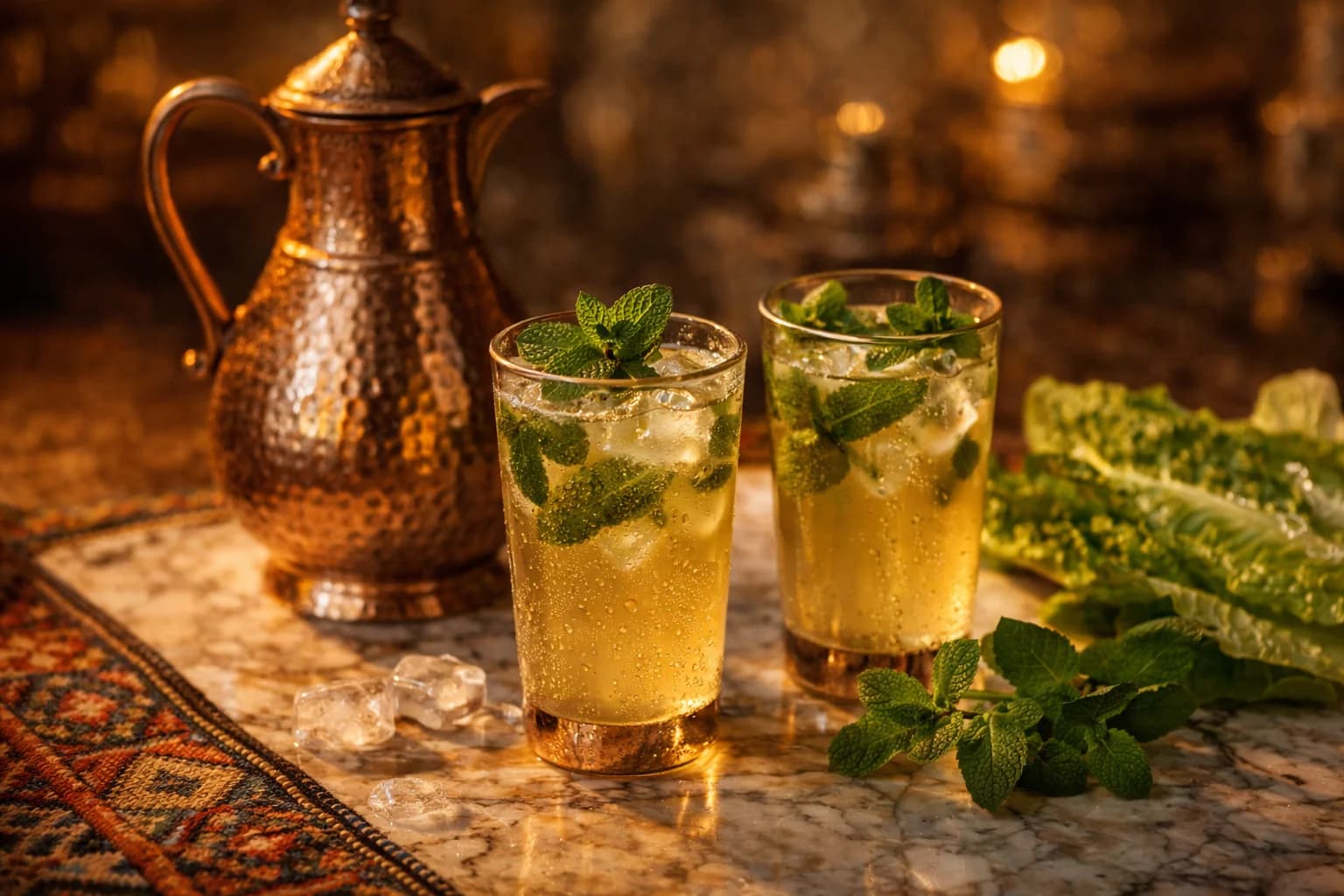
An ancient Persian elixir dating back over 2,000 years—a concentrated syrup of honey (or sugar), vinegar, and fresh mint that's diluted with cold water to create one of the world's most refreshing drinks. The name comes from 'serke' (vinegar) and 'anjabin' (honey), revealing its original ingredients. This sweet-sour-minty drink was prized in ancient Persia as both refreshment and medicine, believed to aid digestion, cool the body, and restore balance. Today, sekanjabin remains beloved, especially during Nowruz when it's served with crispy romaine lettuce leaves for dipping—a tradition as old as Persian civilization itself.

Chai (Persian Tea Service)

Chai (Persian Tea Service)

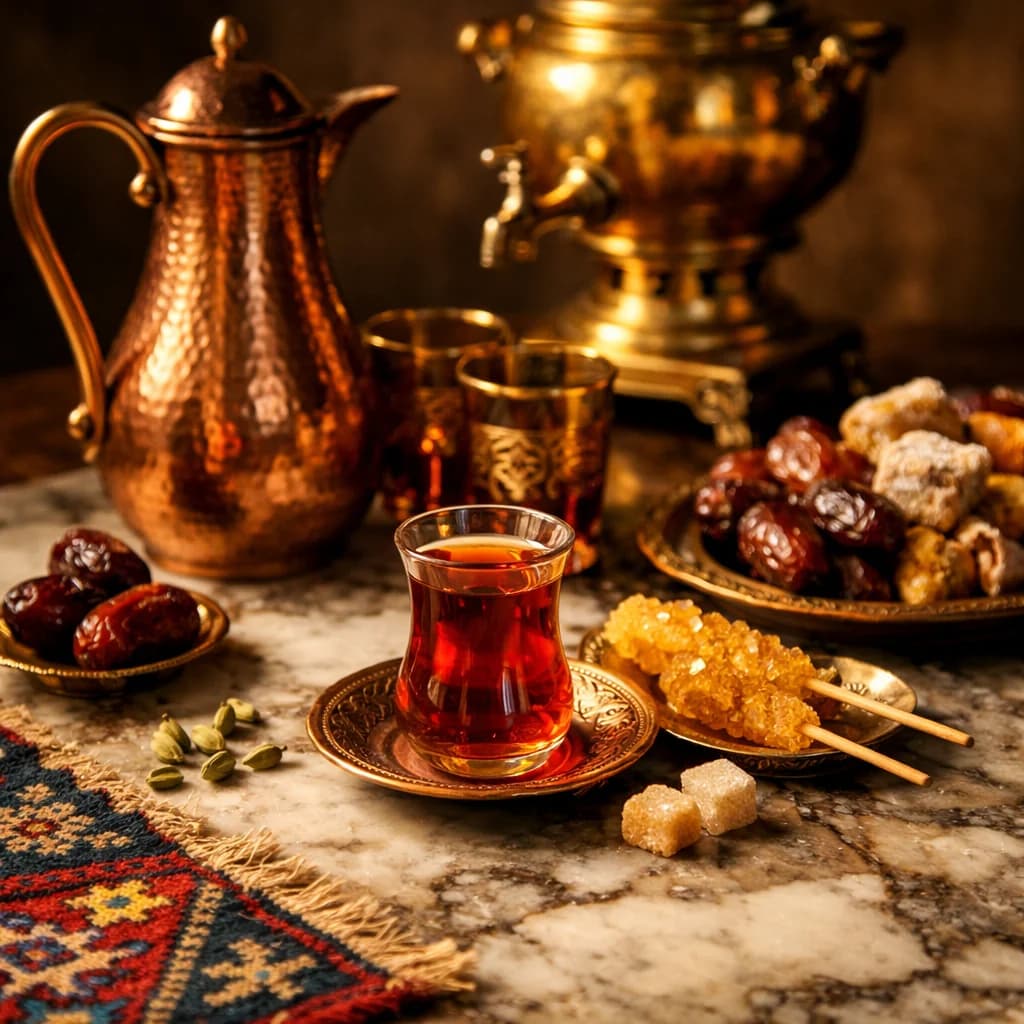
Tea is not merely a beverage in Iran—it is the very rhythm of daily life, the foundation of hospitality, and an art form unto itself. Persian tea service involves brewing strong black tea (traditionally in a two-tiered pot with a samovar) until it reaches a deep amber color, then diluting it to taste with hot water. Served in small, elegant glasses that showcase its jewel-like color, accompanied by rock sugar (nabat), sweets, and good conversation, Persian tea is offered to every guest and consumed throughout the day. The brewing method, the glassware, the accompaniments—all are integral to an experience that transcends simple tea-drinking.