

Kritische Momente
- •Timing des Vorkochens (bissfest, nicht weich)
- •Tahdig-Schichtbildung und Hitzemanagement
- •Berberitzen-Sautieren (verbrennt äußerst leicht)
- •Deckel während des Dämpfens niemals anheben
Reis waschen und einweichen
Reis in eine große Schüssel geben. Mit kaltem Wasser auffüllen, mit der Hand schwenken und abgießen. Diesen Vorgang 5–6 Mal wiederholen, bis das Wasser fast klar ist. Salz in lauwarmem Wasser auflösen, Reis hinzufügen und mindestens 1 Stunde (bis zu 3 Stunden) einweichen.
Kritischer Schritt
Waschen entfernt überschüssige Stärke, die den Reis klebrig machen würde. Einweichen in gesalzenem Wasser würzt den Reis von innen und lässt die Körner langsam aufquellen, was Bruch beim Kochen verhindert. Dies ist die GRUNDLAGE für lockeren persischen Reis.
Häufige Fehler
- •Nicht genug waschen (klebriger Reis)
- •Einweichen überspringen (Reis bricht, gart ungleichmäßig)
- •Salz im Einweichwasser vergessen (fader Reis)
Safran aufblühen lassen
Safranfäden mit einer Prise Zucker im Mörser zu Pulver mahlen. In eine kleine Schüssel geben, heißes (nicht kochendes) Wasser hinzufügen. Abdecken und mindestens 30 Minuten ziehen lassen. Dieser wird zwischen Reis und Hähnchen aufgeteilt.
Berberitzen reinigen
Berberitzen auf einem hellen Teller oder Schneidebrett ausbreiten. Sorgfältig auf kleine Stiele, Blätter oder Verunreinigungen durchsuchen und entfernen. Gereinigte Berberitzen in ein feines Sieb geben, kurz unter kaltem Wasser abspülen und trocken schütteln. Beiseitelegen.
Häufige Fehler
- •Reinigung überspringen (Stiele im fertigen Gericht)
- •Zu viel spülen (Geschmack wird weggespült)
- •Nicht trocknen (verursacht Spritzen beim Sautieren)
Hähnchen anbraten
Hähnchenstücke trocken tupfen. Mit Kurkuma, Salz und Pfeffer würzen. Öl in einer großen Pfanne bei mittlerer bis hoher Hitze erhitzen. Hähnchen portionsweise von allen Seiten goldbraun braten, je Seite etwa 4–5 Minuten. Auf einen Teller nehmen. Nicht durchgaren – es gart später fertig.
Hähnchen mit Zwiebeln vorbereiten
In derselben Pfanne in Scheiben geschnittene Zwiebel (eine Zwiebel) hinzufügen und goldbraun braten, etwa 8 Minuten. Hähnchen zurück in die Pfanne geben, Wasser und Safranwasser hinzufügen. Abdecken und 25–30 Minuten köcheln lassen, bis das Hähnchen durchgegart ist.
Reis vorkochen
Wasser mit Salz zum rollenden Kochen bringen. Eingeweichten Reis abgießen und ins kochende Wasser geben. 5–7 Minuten kochen, dabei einmal oder zweimal sanft rühren. Häufig testen – Reis sollte außen weich, aber noch mit kleinem festen Kern sein (bissfest).
Kritischer Schritt
Das Timing des Vorkochens ist entscheidend. Untergar gekochter Reis ist im fertigen Gericht hart; übergar gekochter Reis wird beim Dämpfen matschig. Die bissfeste Phase gewährleistet perfekt lockeren Endreis.
Häufige Fehler
- •Übergaren (matschiger Endreis)
- •Untergaren (harte Körner)
- •Zu viel rühren (Körner brechen)
- •Nicht genug Salz im Wasser (fader Reis)
Reis abgießen
Reis sofort in ein feines Sieb abgießen. Sehr kurz mit lauwarmem Wasser abspülen, um das Garen zu stoppen und überschüssige Stärke zu entfernen. Vorsichtig schütteln zum Abtropfen – nicht andrücken oder verdichten.
Kritischer Schritt
Sofortiges Abgießen stoppt das Garen. Reis der auch kurz im heißen Wasser sitzt, gart weiter und wird matschig.
Tahdig-Basis vorbereiten
In einem beschichteten Topf Öl mit Safranwasser mischen. Parboiled Reis mit Safranwasser mischen. Diesen Safranreis gleichmäßig am Boden des Topfes verteilen und leicht andrücken, um eine flache, etwa 1 cm dicke Schicht zu bilden.
Kritischer Schritt
Diese Schicht wird zum Tahdig – der knusprigen Reiskruste, die der Hauptpreis des persischen Reiskochens ist. Gleichmäßige Dicke gewährleistet gleichmäßiges Knuspern. Der Safran verleiht Farbe und Geschmack.
Restlichen Reis schichten
Restlichen weißen Reis über die Tahdig-Schicht schöpfen und zu einer Pyramide/Hügel-Form aufbauen – nicht flach. Nicht andrücken. Die Pyramidenform lässt Dampf zirkulieren. Mit dem Stiel eines Holzlöffels 5–6 Löcher bis zum Boden stechen, um Dampfkanäle zu schaffen.
Kritischer Schritt
Die Pyramidenform und Dampflöcher sind für gleichmäßiges Dämpfen unerlässlich. Flacher, gepackter Reis dämpft ungleichmäßig und kann klebrig werden. Die Löcher lassen Dampf entweichen und verhindern, dass Kondenswasser den Reis durchweicht.
Häufige Fehler
- •Reis flachdrücken (ungleichmäßiges Dämpfen)
- •Dampflöcher vergessen (feuchter Reis)
- •Reis zu fest packen
Dämpfen beginnen – Hochhitzephase
Topf bei mittlerer bis hoher Hitze ohne Deckel stellen. 3–4 Minuten kochen, bis Dampf aus dem Reis aufsteigt. Ein sanftes Zischen vom Boden ist zu hören – das ist der Tahdig, der sich zu bilden beginnt.
Kritischer Schritt
Diese anfängliche Hochhitze setzt die Tahdig-Kruste. Ohne sie bekommt man keinen knusprigen Reis.
Deckel umwickeln und dämpfen – Niedrighitzephase
Den Topfdeckel vollständig mit einem sauberen Küchentuch umwickeln (Ecken oben zusammenbinden, um sie von der Flamme fernzuhalten). Den umwickelten Deckel fest auf den Topf legen. Hitze auf niedrigste Stufe reduzieren. 45–50 Minuten ohne Deckelabheben dämpfen.
Kritischer Schritt
Der mit Tuch umwickelte Deckel ist unverzichtbar – er saugt Kondenswasser auf, das sonst zurücktropfen und den Reis durchweichen würde. Niedrige Hitze dämpft den Reis sanft, während der Tahdig langsam knuspert. Deckelanheben lässt Dampf entweichen und ruiniert die Textur.
Häufige Fehler
- •Hitze zu hoch (Tahdig verbrennt)
- •Tuch weglassen (feuchter Reis)
- •Deckel zum Nachsehen anheben (Dampf entweicht)
- •Nicht genug Zeit (ungegart, keine Knusprigkeit)
Berberitzen-Topping vorbereiten
Butter in einer kleinen Pfanne bei niedriger bis mittlerer Hitze schmelzen. Gereinigte Berberitzen hinzufügen und 2–3 Minuten sanft sautieren – sie werden leicht zischen und aufquellen. Zucker hinzufügen, verrühren und 1 weitere Minute kochen, bis der Zucker sich auflöst und die Beeren überzieht. Safranwasser hinzufügen. Sofort vom Herd nehmen.
Kritischer Schritt
Berberitzen verbrennen wegen ihres hohen Zuckergehalts äußerst leicht, sobald der zusätzliche Zucker eingearbeitet wird. Niedrige Hitze und ständige Aufmerksamkeit verhindern das Verbrennen. Verbrannte Berberitzen sind bitter und ruinieren das Gericht.
Häufige Fehler
- •Hitze zu hoch (Berberitzen verbrennen sofort)
- •Zucker zu früh hinzufügen (karamellisiert bevor Beeren warm sind)
- •Zu lange kochen (Beeren werden bitter)
- •Weggehen (verbrennt in Sekunden)
Tahdig lösen und stürzen
Topf vom Herd nehmen. Mit Deckel 5 Minuten ruhen lassen. Deckel abnehmen. Den weißen Reis vorsichtig mit einer Gabel lockern, dabei den Tahdig nicht berühren. Lockeren Reis auf eine Servierplatte schöpfen. Für den Tahdig: einen Teller größer als der Topf umgekehrt auf den Topf legen, fest halten und umdrehen. Topfboden abklopfen. Topf hochheben – Tahdig sollte in einem Stück lösen.
Kritischer Schritt
Dies ist der Moment der Wahrheit. Richtige Technik während des gesamten Kochens bedeutet, dass der Tahdig sauber löst. Die 5-minütige Ruhezeit lässt ihn sich leicht von den Topfseiten zurückziehen.
Anrichten und servieren
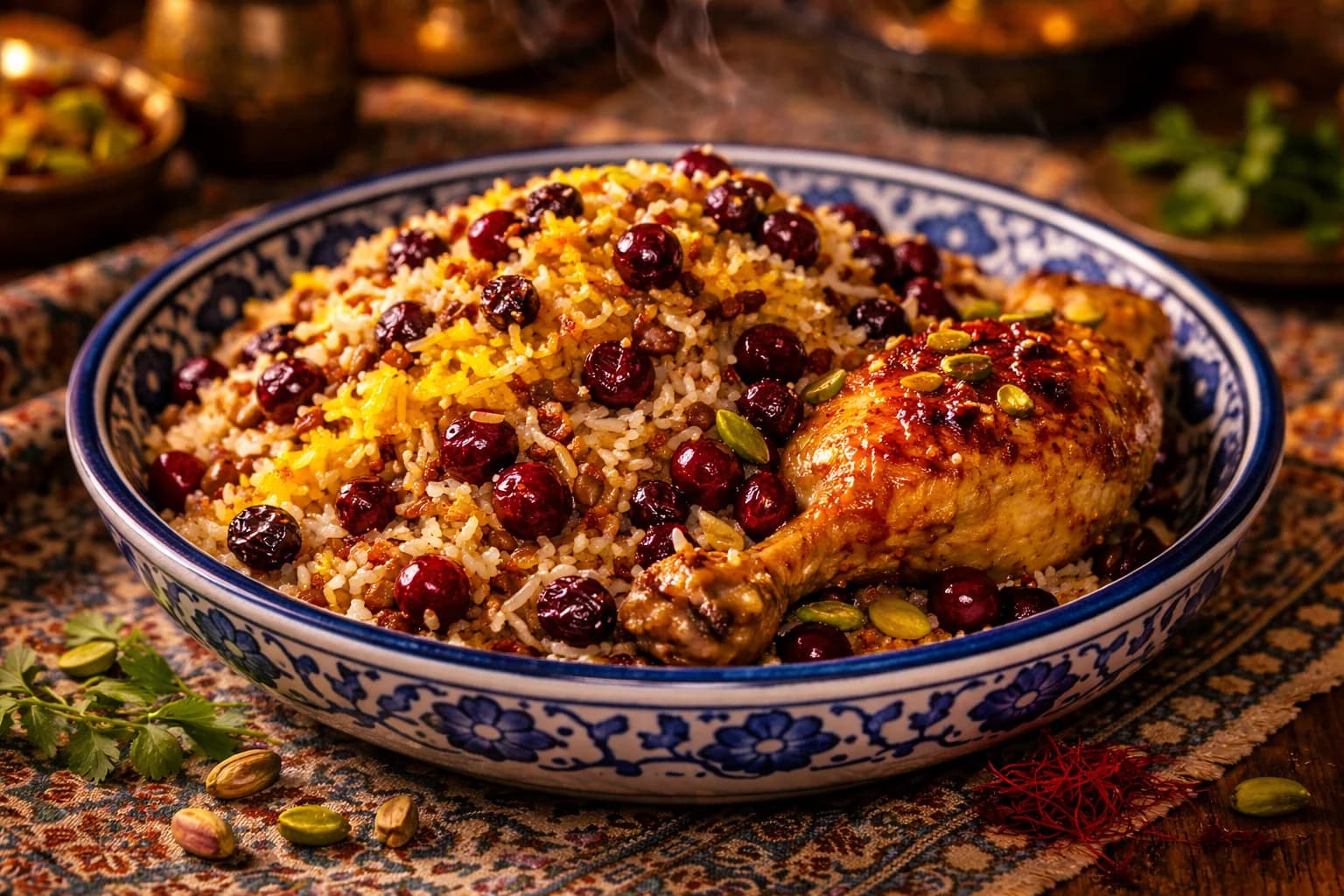
Die Berberitzenmischung über den Reis schöpfen, gleichmäßig verteilen, aber etwas weißen Reis für den Kontrast sichtbar lassen. Restliches Safranwasser obenauf träufeln. Hähnchenstücke um oder neben den Reis anrichten. Mit gerösteten Mandeln und Pistazien garnieren, falls verwendet. Tahdig seitlich oder dramatisch obenauf platziert servieren.
Ruhezeit Erforderlich
5 Min - Lässt den Tahdig sich leicht von den Topfseiten zurückziehen für einfacheres Lösen