
Moments Critiques
- •Ajouter les coings dès le départ — ils ont besoin de tout le temps de cuisson
- •Observer et obtenir la transformation de couleur ambrée
- •Manipuler délicatement les coings pour la présentation finale
Tremper les légumineuses toute la nuit
Placer les pois chiches et les haricots blancs dans des bols séparés, couvrir d'eau froide et tremper 8 à 12 heures ou toute la nuit. Égoutter et rincer avant utilisation.
Préparer les coings
Peler les coings avec un économe (la peau est dure). Couper en quatre et retirer le cœur dur avec les pépins. Couper chaque quartier en 2-3 tranches épaisses. Plonger immédiatement dans un bol d'eau froide additionnée de jus de citron pour éviter le brunissement.
Étape Critique
Le coing s'oxyde rapidement et brunit au contact de l'air. L'eau acidulée l'empêche et maintient les tranches claires pour leur belle transformation colorée pendant la cuisson.
Erreurs Courantes
- •Couper les tranches trop fines (elles se désintègrent)
- •Ne pas garder dans l'eau acidulée (brunissement avant cuisson)
- •Jeter les trognons — ils contiennent de la pectine qui épaissit naturellement le bouillon
Remplir la marmite avec les coings dès le départ
Placer les morceaux d'agneau dans une grande marmite. Ajouter les pois chiches égouttés, les haricots blancs, l'oignon coupé en quatre et les citrons séchés percés. Égoutter les quartiers de coing et les ajouter maintenant — ils ont besoin de tout le temps de cuisson pour se transformer. Ajouter le curcuma, la cannelle, le sel et le poivre. Couvrir d'eau d'environ 5 cm.
Étape Critique
Contrairement à la plupart des fruits, le coing DOIT être ajouté dès le départ. Il lui faut 2,5 à 3 heures pour ramollir complètement et développer sa couleur ambrée caractéristique. Un ajout tardif donne un coing dur et pâle.
Porter à ébullition et écumer
Porter à ébullition à feu vif. Écumer la mousse grise qui remonte à la surface, en continuant pendant 10-15 minutes jusqu'à ce que le bouillon soit relativement clair.
Longue cuisson à feu doux — observer la transformation du coing
Réduire à feu très doux. Couvrir avec le couvercle légèrement entrouvert. Laisser mijoter doucement pendant 2,5 heures. Vérifier de temps en temps le niveau de liquide et observer la transformation de couleur du coing — c'est la magie de ce plat.
Étape Critique
La lente transformation de couleur du coing est une réaction chimique qui nécessite du temps et une chaleur douce. Précipiter donne un fruit pâle et dur. La couleur ambre-rose indique que le coing est correctement cuit.
Ajouter les pommes de terre et la tomate
Après 2 heures (quand le coing est rosé), ajouter les pommes de terre coupées en quatre et la tomate. Ajouter le sucre si désiré pour rehausser la douceur du coing. Poursuivre la cuisson pendant encore 45-60 minutes.
Vérifier la cuisson
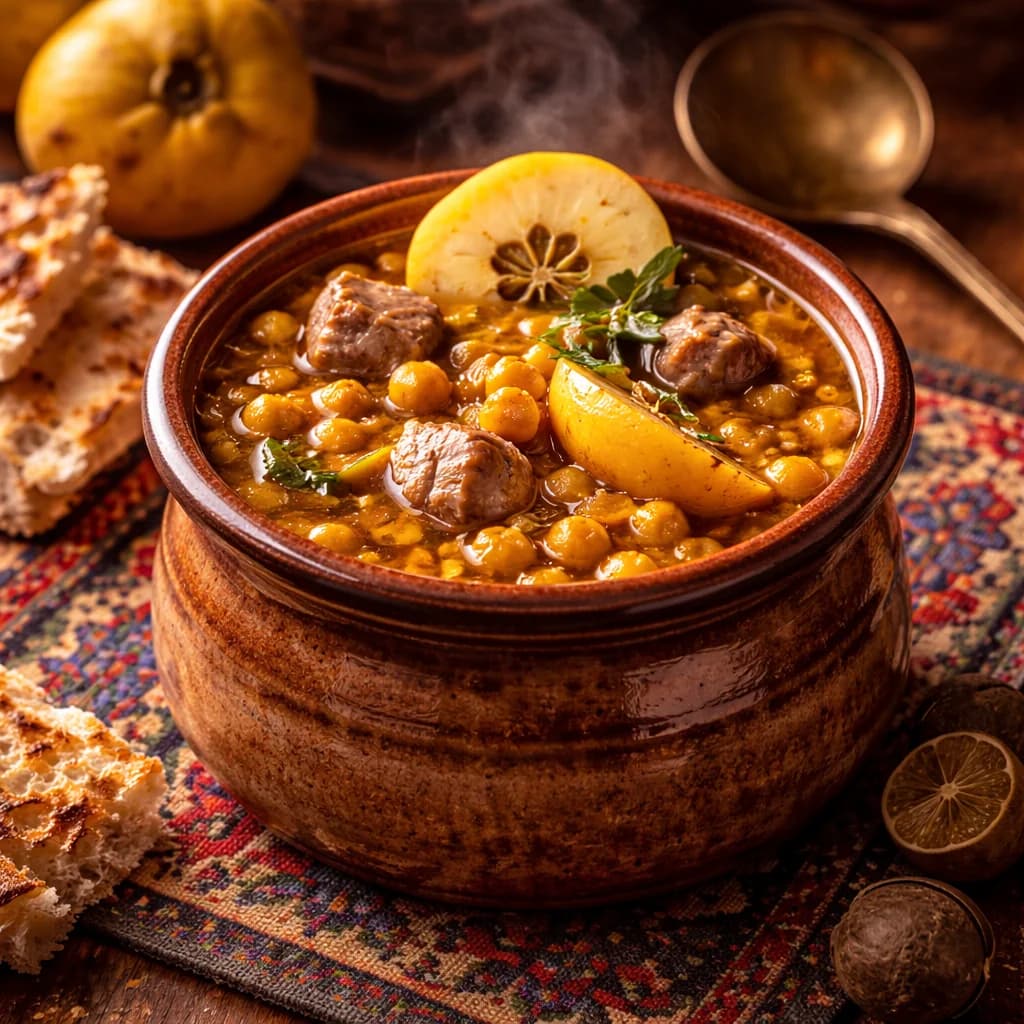
Tester tous les éléments : l'agneau se détache de l'os, les pois chiches et haricots sont complètement tendres (pas de texture farineuse), les pommes de terre sont molles, et — le plus important — le coing est d'un ambre profond et se perce facilement. Goûter le bouillon et ajuster l'assaisonnement.
Étape Critique
Si le coing est encore pâle ou dur, poursuivre la cuisson. La transformation de couleur et de texture est tout l'intérêt de cette variante.
Séparer et servir avec soin pour le coing
Transférer délicatement les solides dans un bol en manipulant le coing avec précaution pour garder les quartiers intacts. Pour cette version, beaucoup de familles écrasent la viande et les légumineuses mais gardent quelques quartiers de coing entiers sur le dessus pour la présentation. Servir d'abord le bouillon avec du pain, puis les solides écrasés couronnés de beaux quartiers de coing.