
Moments Critiques
- •Écumer le bouillon soigneusement au début
- •Maintenir un feu très doux pendant 2,5-3 heures
- •S'assurer que tous les composants sont complètement tendres avant l'écrasement
Tremper les légumineuses
Placer les pois chiches et les haricots blancs dans des bols séparés (ils peuvent avoir des temps de cuisson différents). Couvrir chaque portion d'eau froide d'au moins 8 cm. Tremper 8-12 heures ou toute la nuit. Égoutter et rincer avant utilisation.
Préparer la viande et les légumes
Couper l'agneau en gros morceaux (8-10 cm), en gardant les os. Couper l'oignon en quatre. Couper les tomates en quatre. Peler et couper les pommes de terre en quatre (garder dans l'eau froide jusqu'à utilisation). Percer chaque citron séché 3-4 fois avec un couteau pointu.
Erreurs Courantes
- •Couper la viande trop petite (elle se défait trop)
- •Oublier de percer les citrons séchés (les saveurs ne se libèrent pas)
Monter la marmite
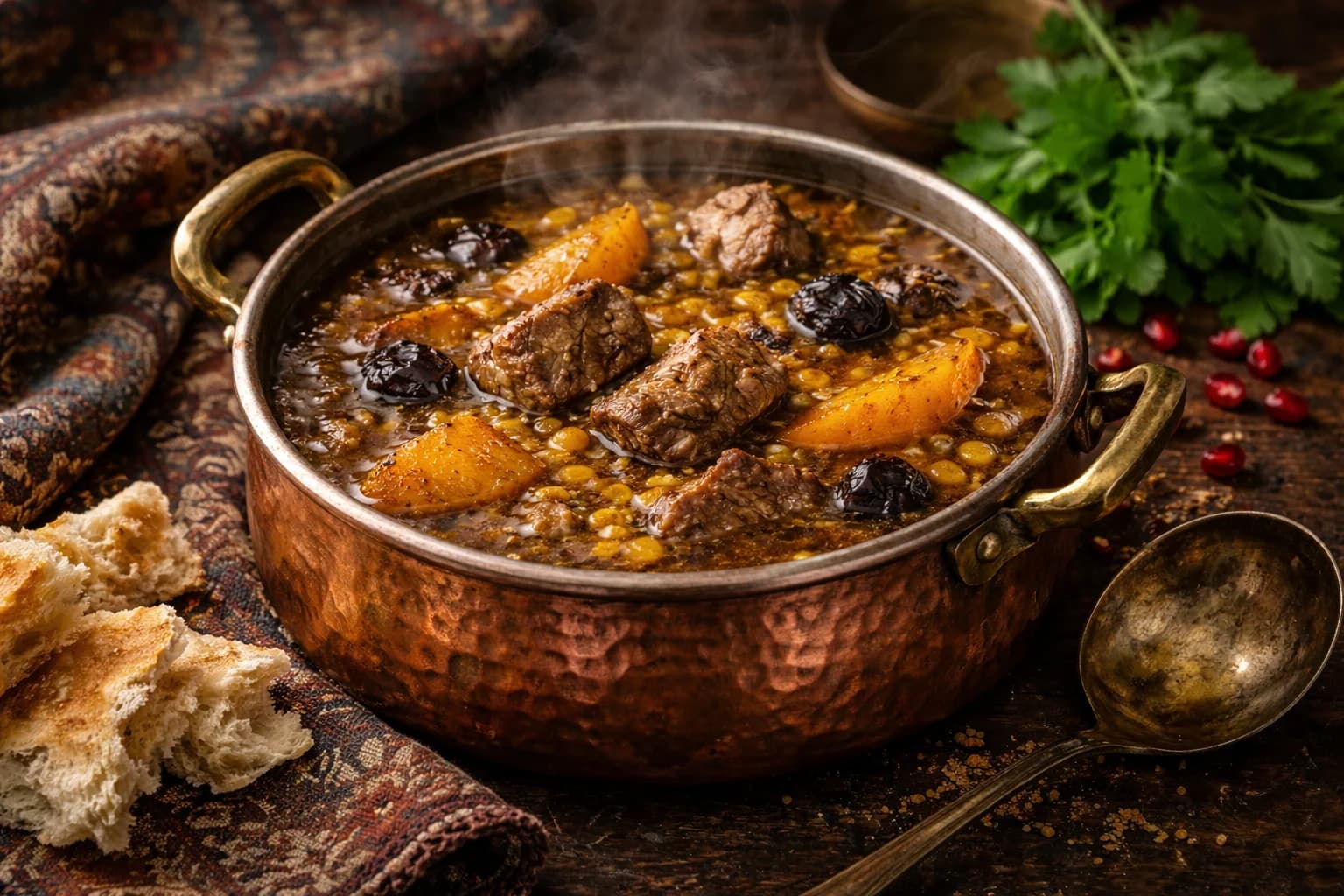
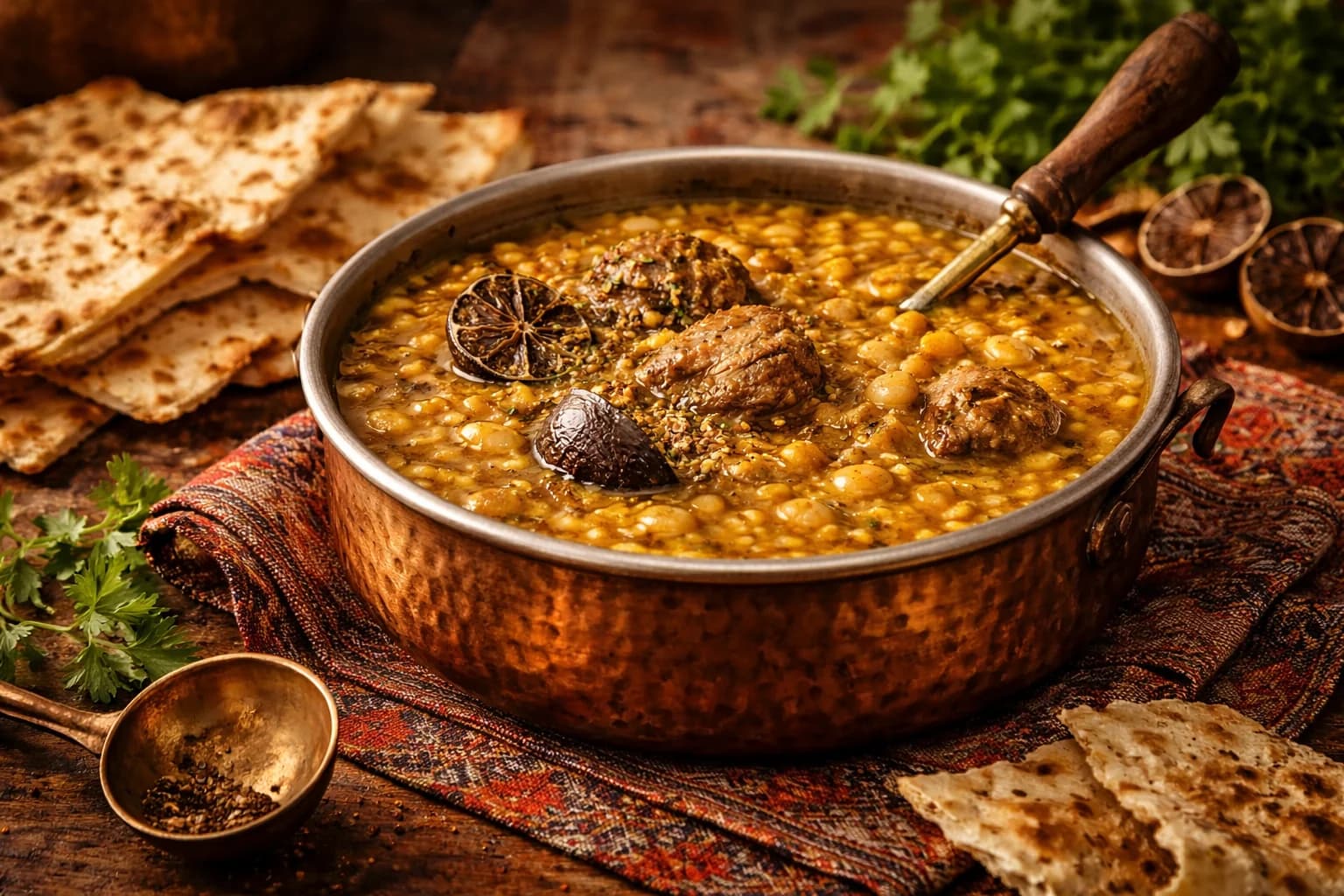
Dans un grand faitout, disposer les ingrédients en couches : placer l'agneau et la graisse d'agneau (si utilisée) au fond. Ajouter les pois chiches et haricots blancs trempés. Nicher les quartiers d'oignon et les citrons séchés percés. Ajouter le curcuma, le sel et le poivre. Verser l'eau pour couvrir le tout d'environ 5 cm.
Porter à ébullition et écumer
Placer le faitout à feu vif et porter à ébullition. En chauffant, une mousse grise (écume) remonte à la surface. L'écumer avec une cuillère et la jeter. Continuer l'écumage jusqu'à ce que le liquide soit relativement clair.
Étape Critique
L'écumage retire les impuretés et l'excès de gras qui rendraient le bouillon trouble et gras. Cette étape est indispensable pour un bouillon au goût net.
Erreurs Courantes
- •Sauter l'écumage (bouillon trouble et gras)
- •Remuer vigoureusement pendant l'écumage (redistribue l'écume)
Longue cuisson douce à feu doux
Après l'écumage, réduire à feu très doux. Couvrir avec le couvercle légèrement entrouvert. Laisser mijoter doucement pendant 2 heures, en vérifiant de temps en temps que le niveau de liquide reste suffisant (ajouter de l'eau chaude si nécessaire).
Étape Critique
Doux et lent est l'âme de l'abgoosht. Un feu vif durcit la viande. Le long mijotage extrait le collagène des os, créant un bouillon soyeux et riche. Cela ne peut pas être précipité.
Ajouter les pommes de terre et les tomates
Après 2 heures, ajouter les pommes de terre et tomates coupées en quatre. Si le liquide a beaucoup réduit, ajouter de l'eau chaude pour maintenir le niveau. Poursuivre la cuisson 45-60 minutes de plus.
Cuisson finale et vérification
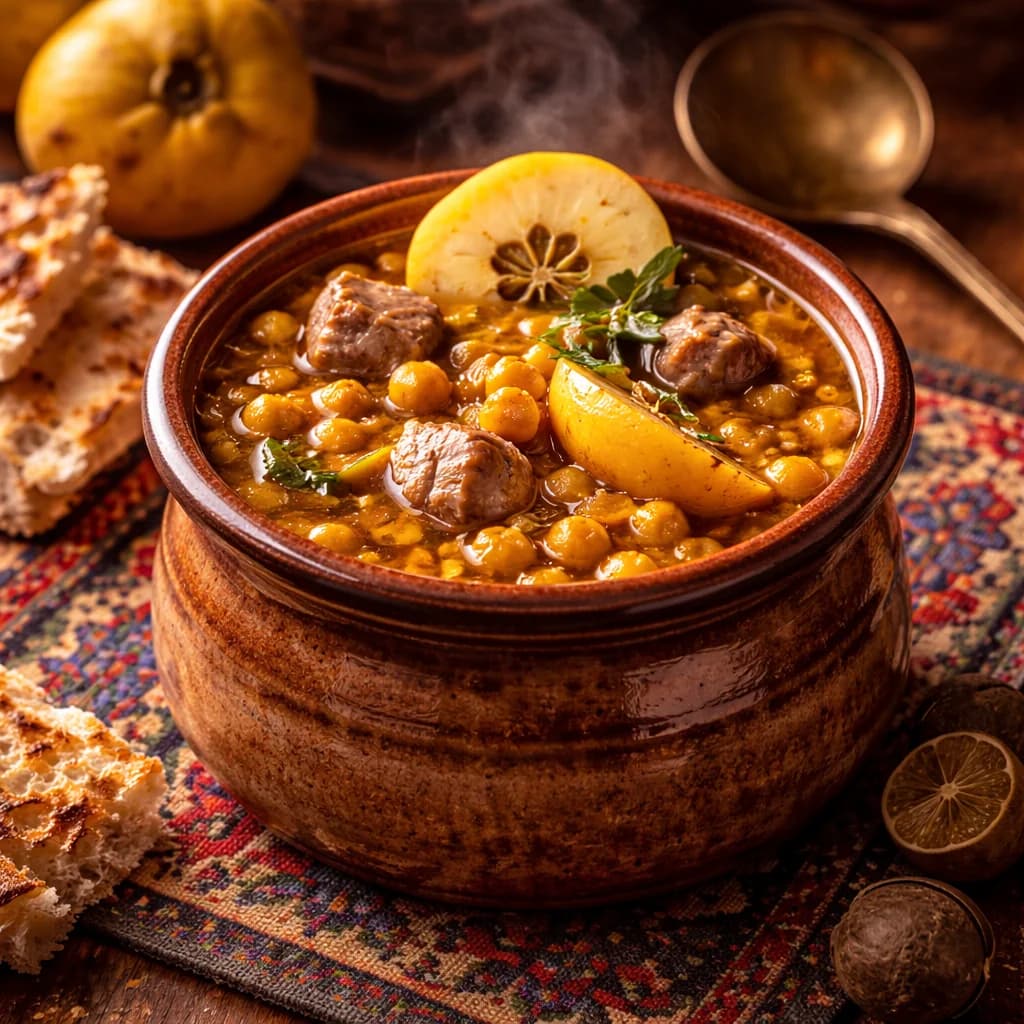
Le ragoût est prêt quand : l'agneau se détache facilement de l'os, les pois chiches et haricots sont complètement tendres (pas de texture farineuse), les pommes de terre sont molles partout. Goûter le bouillon et ajuster le sel — il doit être bien assaisonné et acidulé grâce aux citrons séchés.
Étape Critique
Des légumineuses insuffisamment cuites ou une viande coriace gâchent le plat. Tout doit être complètement tendre pour un bon écrasement. Les citrons séchés doivent être très mous — leur acidité doit imprégner tout le bouillon.
Erreurs Courantes
- •Légumineuses insuffisamment cuites (texture farineuse dans l'écrasé final)
- •Bouillon pas assez salé (goût plat)
- •Pas assez d'acidité des citrons séchés (ajouter un autre citron percé si nécessaire)
Séparer le bouillon et les solides
À l'aide d'une écumoire, transférer délicatement tous les solides dans un grand bol ou plat. Retirer et jeter les os (ou les garder pour un bouillon). Garder les citrons séchés — ils peuvent être écrasés dedans ou servis à part pour ceux qui veulent plus d'acidité. Garder le bouillon chaud dans la marmite.
Écraser les solides (goosht koobideh)
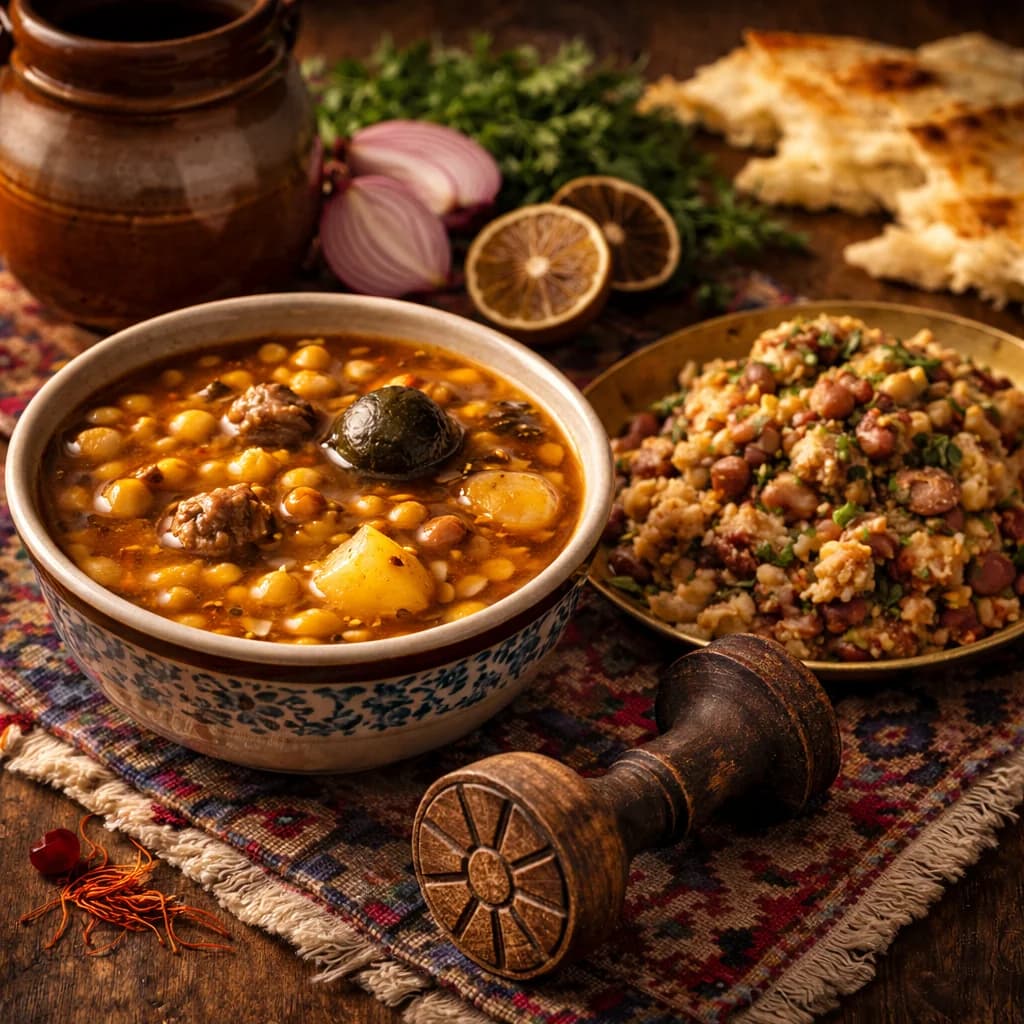
À l'aide d'un goosht-koob (pilon traditionnel), d'une grande fourchette ou d'un presse-purée, écraser les solides ensemble jusqu'à obtenir une pâte grossière et tartinable. La texture doit être rustique — pas lisse comme du houmous, mais cohérente. Certains la préfèrent plus grossière, d'autres plus lisse. Goûter et ajouter du sel si nécessaire.
Étape Critique
La texture du goosht koobideh est une question de goût personnel mais il doit être écrasable. Si l'écrasement est difficile, les composants n'ont pas cuit assez longtemps.
Servir en deux temps
Temps 1 (Ab — bouillon) : verser le bouillon chaud dans de petits bols. Déchirer des morceaux de pain sangak ou lavash et les faire tremper dans le bouillon. Déguster en buvant et en mangeant le pain imbibé. Temps 2 (Goosht) : tartiner le goosht koobideh écrasé sur du pain, ajouter des herbes fraîches, de l'oignon cru et du torshi. Manger comme des tartines ouvertes.