
Fesenjān (Pomegranate Walnut Stew)

Fesenjān (Pomegranate Walnut Stew)

فسنجان

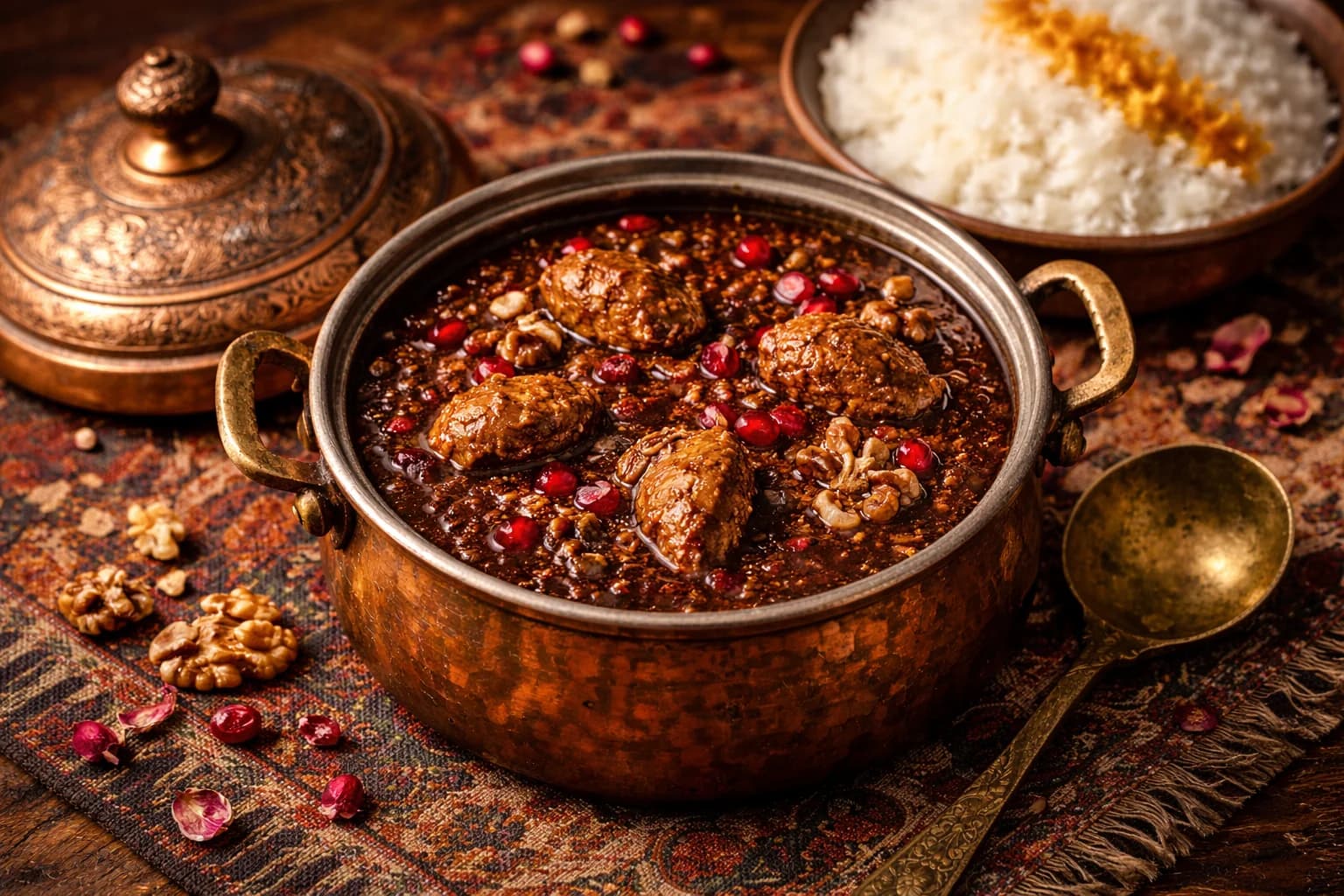
A luxurious, velvety stew of ground walnuts simmered in pomegranate molasses, enriched with warming spices and tender chicken. The sauce transforms from pale to deep mahogany as it cooks, developing an intoxicating sweet-sour complexity that is uniquely Persian.

stewPréparation: 20 minCuisson: 255 minintermediatePour 6

Note culturelle- Gilan

Fesenjān is considered one of Iran's most sophisticated dishes, reserved for special occasions and honored guests. Its roots trace to ancient Persia, and it remains a symbol of northern Iranian culinary heritage. The dish is traditionally served at Shab-e Yalda (winter solstice) celebrations.

Moments Critiques

  • Grinding walnuts to correct texture (not paste)
  • Balancing pomegranate molasses and sugar
  • Long simmer for color development (3-4 hours minimum, up to 6-7 hours)
1
PRÉPARATION5 min

Bloom the saffron

Grind saffron threads with a pinch of sugar using a mortar and pestle. Place in a small bowl, add 3 tbsp hot (not boiling) water, cover, and steep for at least 20 minutes.

Deep ruby-red liquid with intense color extraction
OdeurHoney-like, floral saffron aroma
Prepare saffron first so it has maximum steeping time
En attendant: Grind walnuts while saffron steeps
2
PRÉPARATION10 min

Grind the walnuts

Working in 2-3 batches, pulse walnuts in a food processor until they reach a coarse meal texture—finer than chopped but not a paste. Some small pieces (2-3mm) are desirable for texture.

Coarse walnut meal with some visible small pieces; no large chunks, no oily paste
OdeurFresh, slightly sweet walnut aroma—not rancid or bitter
TextureFeels like coarse sand when rubbed between fingers

Étape Critique

Walnut texture determines the final sauce consistency. Over-processed walnuts become oily paste and make the stew greasy. Under-processed chunks won't dissolve properly. The meal should hold together when squeezed but crumble when released.

Process in short pulses, checking frequently. Stop when mixture looks like wet sand.

Erreurs Courantes

  • Over-processing into paste (sauce becomes oily and heavy)
  • Under-processing (chunks won't incorporate)
  • Using old/rancid walnuts (bitter taste ruins the dish)
Point de contrôle: Squeeze a handful—it should clump then crumble. If it stays in a ball and feels oily, it's over-processed.
3
PRÉPARATION5 min

Prepare the chicken

Remove skin from chicken pieces (traditional for this dish). Pat dry with paper towels. Season lightly with salt and pepper.

Chicken is dry and evenly seasoned
Bone-in pieces stay more tender during the long simmer and add body to the sauce
Point de contrôle: Chicken should be at room temperature for even cooking
4
CUISSON15 min

Brown the onions

Heat oil in a large heavy-bottomed pot over medium-high heat. Add diced onions and sauté until deeply golden brown, about 12-15 minutes, stirring occasionally.

Onions are uniformly deep golden with caramelized edges
Medium-High190°C / 375°F
OdeurSweet, caramelized onion aroma
SonSteady sizzling that gradually softens
Well-browned onions contribute sweetness that balances the pomegranate's tartness
5
CUISSON8 min

Toast spices and add chicken

Add turmeric and cinnamon to onions, stir for 30 seconds until fragrant. Push onions aside and add chicken pieces. Brown lightly on both sides, about 3-4 minutes per side.

Chicken is lightly golden; spices have colored the onions
Medium-High190°C / 375°F
OdeurWarm cinnamon and earthy turmeric blooming
SonSizzling from chicken browning
Chicken doesn't need a deep sear here—it will cook thoroughly in the sauce
6
CUISSON3 min

Add walnuts and water

Add ground walnuts to the pot and stir to combine with onions and chicken. Pour in water and stir well, scraping up any browned bits from the bottom.

Mixture is pale beige/tan, walnuts are evenly distributed
OdeurRich, nutty aroma
The initial color will be pale—don't worry, it darkens dramatically during cooking
7
CUISSON5 min

Add pomegranate molasses and simmer

Add pomegranate molasses, sugar, salt, and cardamom (if using). Stir well to combine. Bring to a boil, then immediately reduce heat to low. Cover with lid slightly ajar.

Sauce has reddish-brown tinge; small bubbles forming
Bring to boil, then reduce to gentle simmer ~120°C/250°F
OdeurSweet-tart pomegranate aroma mingles with walnuts

Étape Critique

The balance of pomegranate molasses and sugar is crucial. Start with less, taste, and adjust. Different brands vary dramatically in sweetness and tartness.

Taste the sauce now and note the balance—you'll adjust at the end but knowing where you started helps

Erreurs Courantes

  • Adding all pomegranate molasses at once without tasting brand first
  • Boiling vigorously (walnuts can separate and sauce breaks)
8
CUISSON210 min

Long simmer for color and flavor development

Simmer uncovered on very low heat for 3-4 hours minimum, stirring every 15-20 minutes. The sauce will gradually darken from tan to deep mahogany brown. Walnut oils will begin to separate and pool on the surface. For thicker, darker fesenjān, continue simmering up to 6-7 hours—some traditional cooks simmer all afternoon.

Sauce transforms from pale beige to deep reddish-brown/mahogany; oil pools visibly on surface
LowBare simmer, ~120°C / 250°F
OdeurComplex, deep aroma—nutty, sweet, tangy all at once
SonVery occasional gentle bubbles
TextureSauce coats a spoon thickly; chicken is fork-tender

Étape Critique

This long, slow simmer is where the magic happens. The Maillard reaction between walnuts, pomegranate, and sugars creates the signature deep color and complex flavor. Rushing produces pale, one-dimensional fesenjān.

The oil separation is correct and traditional—it's walnut oil and should not be skimmed off

Erreurs Courantes

  • Heat too high (sauce scorches on bottom)
  • Covered pot (prevents reduction and color development)
  • Stopping too early (sauce still pale)
  • Stirring too infrequently (bottom burns)
Point de contrôle: At 1 hour, sauce should be noticeably darker. At 2 hours, medium brown. At 3-4 hours, deep mahogany. If still pale, continue cooking—patience is rewarded.
En attendant: Prepare rice with tahdig during the last hour of simmering
9
FINITION5 min

Balance the flavor

Taste the sauce carefully. Adjust the sweet-sour balance: add more pomegranate molasses for tartness, more sugar for sweetness. Add salt as needed. The ideal fesenjān has a harmonious sweet-sour taste with neither dominating.

Sauce is glossy and coats the back of a spoon
OdeurRich, complex, appetizing

Étape Critique

The sweet-sour balance is the soul of fesenjān. Regional preferences vary—Gilani style tends more sour, Tehran style sweeter. Adjust to your preference, but ensure neither extreme dominates.

The sauce will taste slightly more intense when served over plain rice, so balance accordingly

Erreurs Courantes

  • Too sour (add sugar 1 tbsp at a time)
  • Too sweet (add pomegranate molasses 1 tbsp at a time)
  • Under-salted (salt brings all flavors together)
10
FINITION10 min

Add saffron and rest

Stir in bloomed saffron. Remove from heat, cover, and let rest for 10 minutes to allow flavors to meld.

Golden saffron streaks through the dark sauce
OdeurSaffron aroma adds floral top notes
Saffron is optional but adds beautiful color contrast and another layer of flavor
11
FINITION

Garnish and serve

Transfer to a serving dish. Garnish with fresh pomegranate seeds and a few toasted walnut pieces. Serve immediately alongside chelow with tahdig.

Deep mahogany sauce studded with ruby pomegranate seeds and golden walnut pieces
The pomegranate seed garnish adds fresh tartness and beautiful color contrast against the dark sauce

Repos Requis

10 min - Allows sauce to thicken slightly and flavors to harmonize

Extras

Équipement

robot culinairegrande marmite lourdestandard

Préparer à l'Avance

  • Fesenjān improves significantly overnight—make a day ahead for best results.
  • Refrigerate up to 4 days or freeze up to 2 months.
  • Color deepens further as it rests.

Reheat gently over low heat, stirring frequently.

Add a splash of water if sauce has thickened too much.

Prepare fresh garnishes.

Servir Avec

🍚Chelow (plain Persian steamed rice) with tahdig—the simple rice balances the rich sauce

Accompagnements

  • Sabzi khordan (fresh herb platter)
  • Mast-o-khiar
  • Torshi (pickled vegetables)

Boissons

  • Pomegranate juice
  • Doogh
  • Light red wine (Pinot Noir)

Substitutions

pomegranate molassesReduce 500ml pomegranate juice with 100g sugar and 2 tbsp lemon juice until syrupy (about 45 min). Not identical but workable.
walnutsNo true substitute—pecans have similar fat content but different flavor. The dish requires walnuts.
chickenDuck is traditional alternative. Turkey thighs work. Lamb shanks for a heartier version.
saffronOmit entirely—color from sauce is sufficient. No flavor substitute.

Variations

Fesenjān-e Morgh (Quick Version)

Seared boneless chicken added at end for faster preparation

Mise à l'échelle

Doubles well but requires a larger pot and 30 extra minutes of simmering. The walnut-to-liquid ratio is crucial—maintain proportions exactly. Freezes well for up to 2 months.

Source

Régional · Northern Iran (Gilan/Mazandaran) home cooking

Originally a Caspian region specialty, now beloved throughout Iran. Traditionally made with duck or pheasant.

Recettes similaires