
Moments Critiques
- •Rôtir les aubergines jusqu'à ce qu'elles soient complètement effondrées et fumées
- •Égoutter soigneusement les aubergines
- •Poêle assez chaude pour que le mélange grésille en entrant
- •Croûte dorée développée avant le passage au four
- •Bien cuit à cœur (le couteau ressort propre)
Infuser le safran
Moudre les filaments de safran avec une pincée de sucre au mortier jusqu'à obtenir une poudre. Ajouter de l'eau chaude et laisser infuser au moins 30 minutes.
Rôtir les aubergines
Préchauffer le four. Piquer les aubergines plusieurs fois avec une fourchette pour éviter qu'elles n'éclatent. Poser sur une plaque recouverte de papier aluminium. Rôtir en les retournant à mi-cuisson, jusqu'à ce qu'elles soient complètement effondrées, très molles et que la peau soit carbonisée et ridée. Les aubergines doivent être totalement tendres quand on les pique.
Étape Critique
Un rôtissage complet est indispensable pour la saveur fumée et la texture soyeuse. Une aubergine insuffisamment cuite sera amère et ne s'écrasera pas correctement. L'aubergine doit être si molle qu'elle fond presque.
Erreurs Courantes
- •Rôtissage insuffisant (aubergine amère et ferme)
- •Oubli de piquer (l'aubergine explose)
- •Four trop froid (l'aubergine cuit à la vapeur au lieu de rôtir)
Refroidir et égoutter les aubergines
Transférer les aubergines rôties dans une passoire posée au-dessus d'un bol. Laisser refroidir 15 minutes. Une fois assez tièdes pour être manipulées, les ouvrir et récupérer la chair dans la passoire en jetant la peau. Laisser égoutter la chair 10 minutes en pressant délicatement de temps en temps pour évacuer l'excès de liquide.
Étape Critique
L'égouttage retire le liquide amer et empêche un kuku détrempé. La chair égouttée aura une saveur plus concentrée et liera mieux avec les œufs.
Écraser l'aubergine
Transférer la chair d'aubergine égouttée dans un bol. Écraser à la fourchette jusqu'à ce qu'elle soit défaite mais encore légèrement texturée — on veut de la variation, pas une purée lisse.
Faire revenir les aromates
Chauffer l'huile dans une poêle à feu moyen. Ajouter l'oignon en dés et cuire jusqu'à ce qu'il soit doré et fondant. Ajouter l'ail et cuire 1 minute de plus jusqu'à ce qu'il soit parfumé. Retirer du feu et laisser tiédir.
Battre les œufs avec les assaisonnements
Dans un grand bol, battre les œufs avec le safran infusé, le curcuma, le cumin (si utilisé), la menthe séchée (si utilisée), la farine, le sel et le poivre jusqu'à obtenir un mélange homogène.
Combiner tous les ingrédients
Ajouter l'aubergine écrasée, les oignons et l'ail revenus, les noix hachées (si utilisées) et le persil (si utilisé) au mélange d'œufs. Incorporer délicatement mais soigneusement jusqu'à ce que tout soit uniformément mélangé.
Chauffer la poêle avec l'huile
Préchauffer le four. Chauffer le reste d'huile dans une poêle allant au four à feu moyen jusqu'à ce que l'huile frémisse. Faire tourner pour enrober le fond et les parois.
Verser le mélange et cuire le dessous
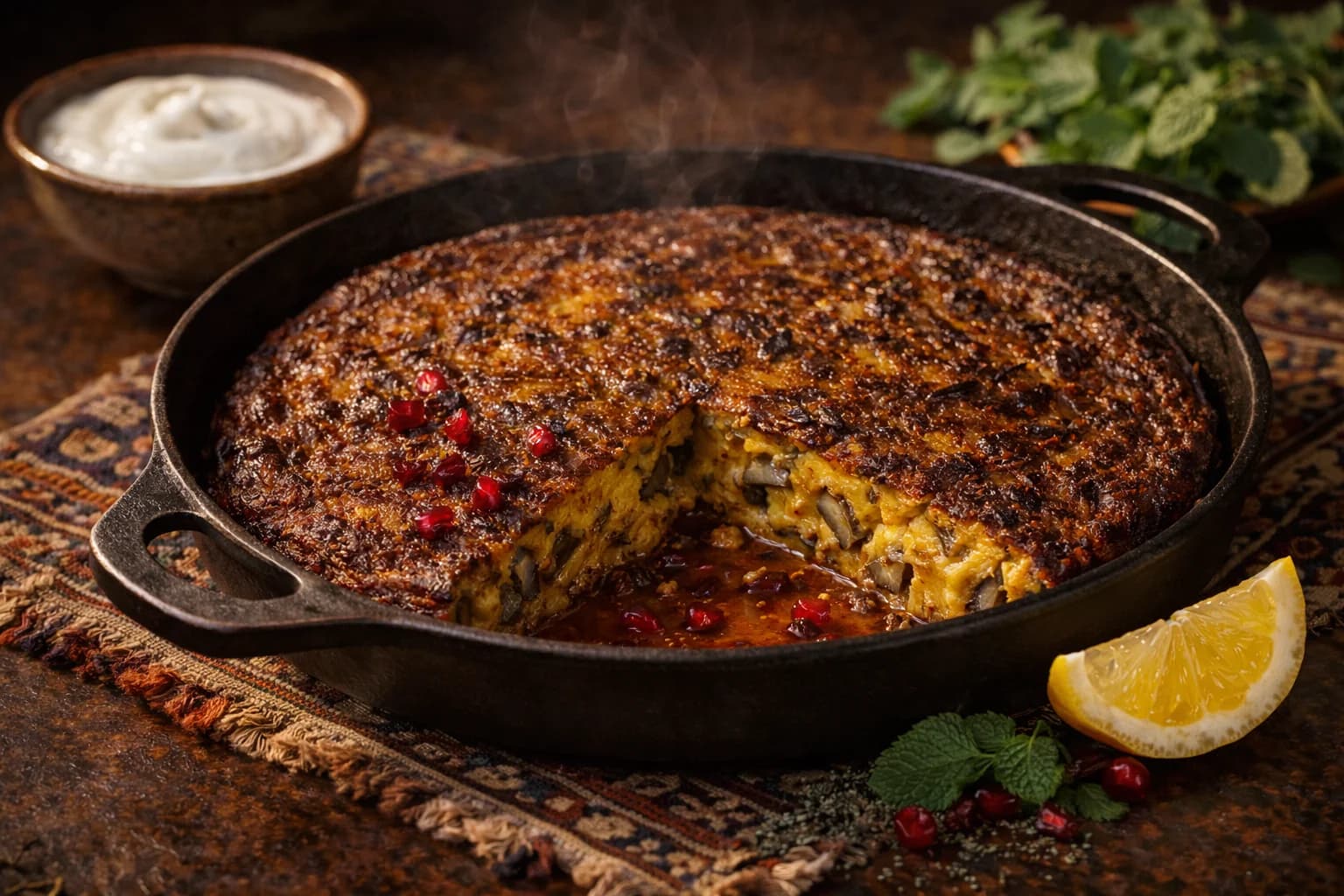
Verser le mélange aubergine-œufs dans la poêle chaude en l'étalant uniformément. Le mélange doit grésiller. Réduire à feu moyen-doux. Cuire sans toucher jusqu'à ce que le dessous soit doré et pris et que les bords commencent à se raffermir. Vérifier en soulevant un bord avec une spatule.
Étape Critique
Une croûte dorée sur le dessous est indispensable avant le passage au four. C'est ce qui donne au kuku son contraste caractéristique entre extérieur croustillant et intérieur fondant.
Finir au four
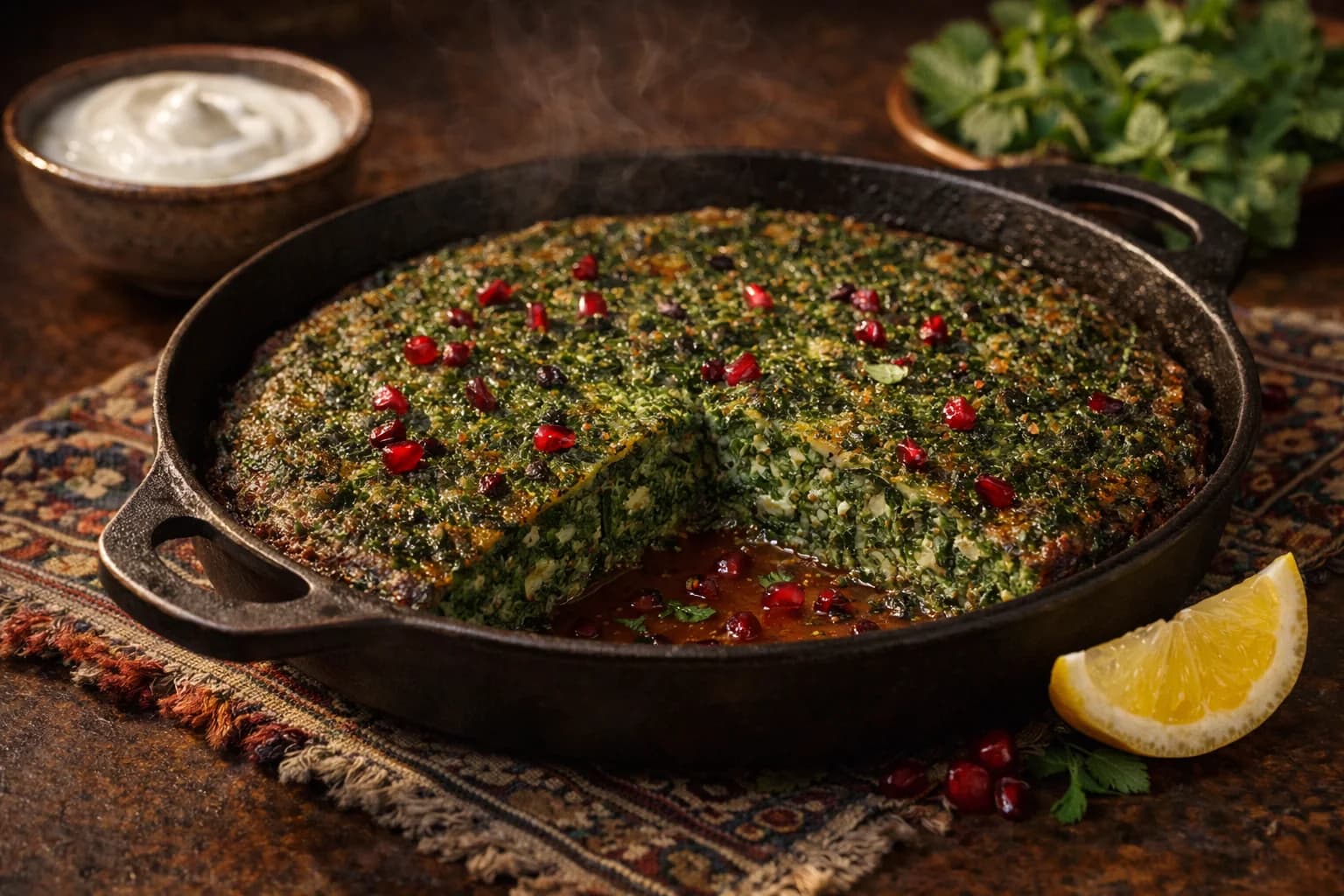
Transférer la poêle dans le four préchauffé. Cuire jusqu'à ce que le dessus soit pris, sec au toucher et légèrement doré. Un couteau planté au centre doit ressortir propre.
Facultatif : retourner pour une double croûte
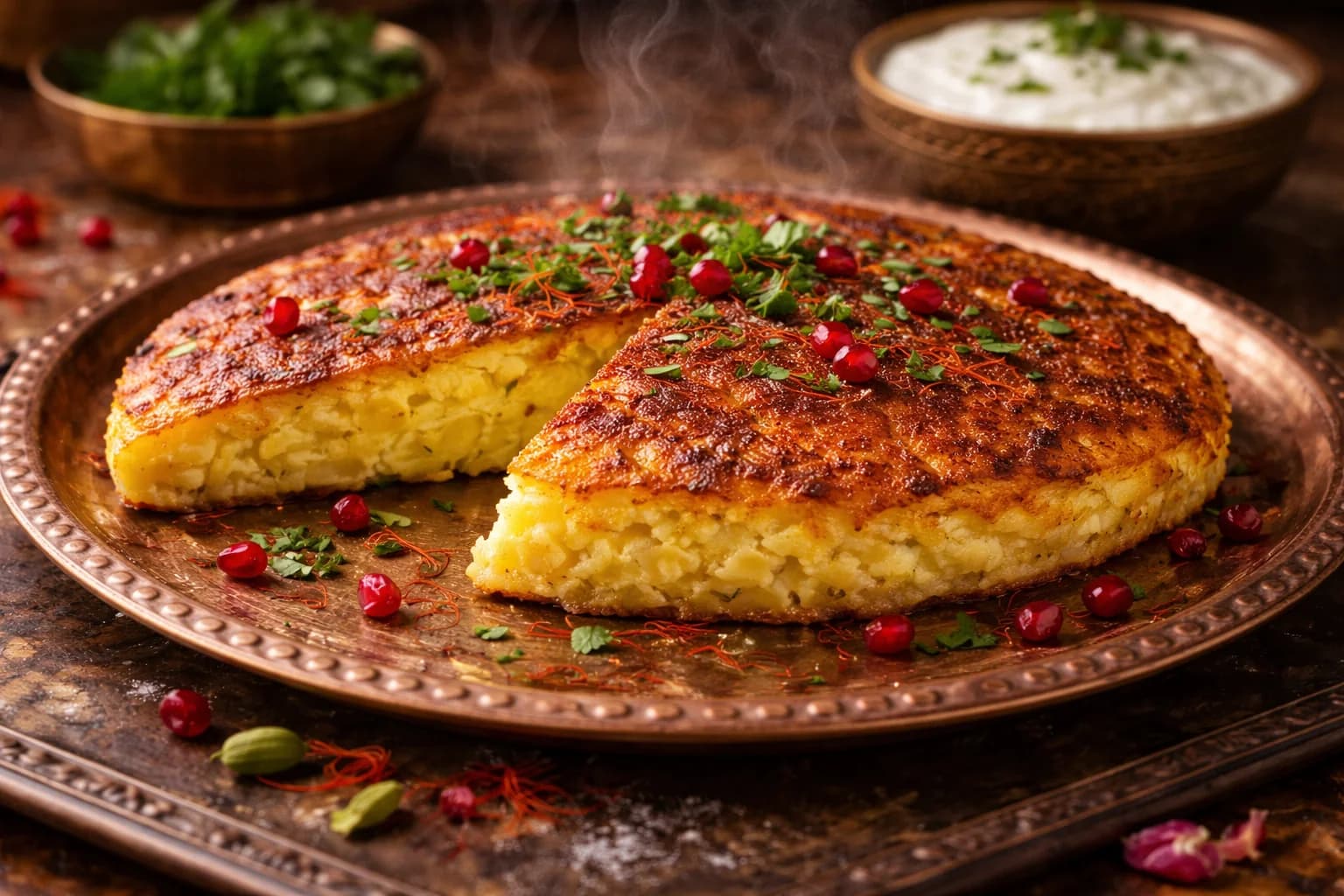
Pour une croûte croustillante des deux côtés : sortir du four. Poser une grande assiette plate sur la poêle et retourner le kuku sur l'assiette. Ajouter un peu d'huile dans la poêle, faire glisser le kuku avec le côté cuit vers le haut. Remettre au four pour dorer la seconde face.
Laisser reposer et servir
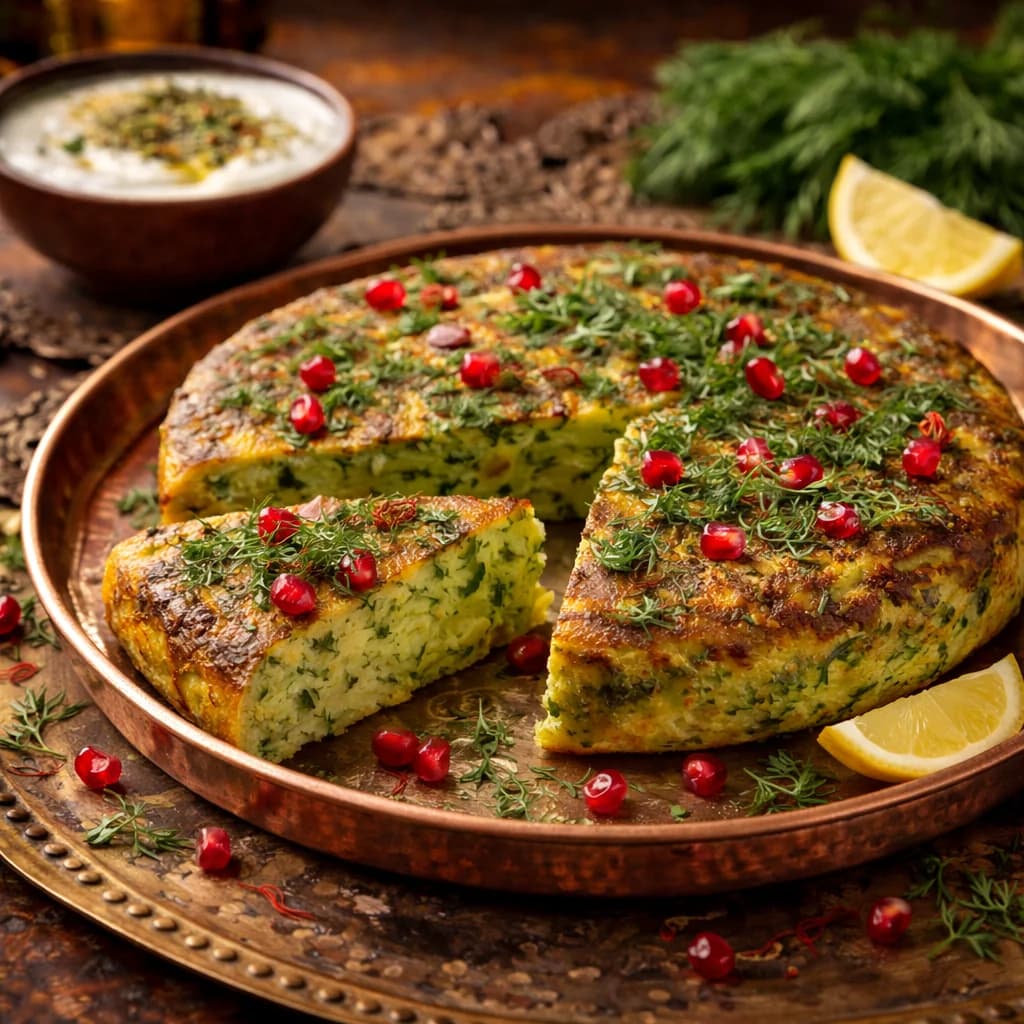
Sortir du four et laisser reposer 5 minutes dans la poêle. Faire glisser ou retourner sur un plat de service. Couper en parts. Servir chaud ou à température ambiante avec du yaourt, du pain et des herbes fraîches.
Suggestions de service traditionnelles
Servir les parts avec du yaourt nature ou du mast-o-khiar, du pain lavash chaud, du sabzi khordan (plateau d'herbes fraîches) et du torshi (légumes marinés). Également excellent en garniture de sandwich dans du lavash avec tomate, herbes et yaourt.
Repos Requis
5 min - Permet au kuku de prendre et facilite la découpe