
Moments Critiques
- •Bien essorer les pommes de terre
- •Poele assez chaude pour que le melange gresille a l'ajout
- •Developper une croute d'un beau dore profond avant de retourner
- •Retournement assure pour une dorure uniforme des deux cotes
- •Cuire a coeur sans bruler l'exterieur
Infuser le safran (si utilise)
Moudre les filaments de safran avec une pincee de sucre au mortier. Ajouter de l'eau chaude et laisser infuser au moins 20 minutes.
Peler et raper les pommes de terre
Peler les pommes de terre et les raper sur les gros trous d'une rape. Travailler rapidement : les pommes de terre s'oxydent et brunissent au contact de l'air. Placer les pommes de terre rapees dans un grand bol d'eau froide au fur et a mesure.
Rincer et egoutter les pommes de terre
Egoutter les pommes de terre rapees et rincer sous l'eau froide jusqu'a ce que l'eau soit claire : cela elimine l'exces d'amidon. Par lots, presser fermement les pommes de terre a la main ou dans un torchon propre pour eliminer le plus d'eau possible. Les pommes de terre doivent etre tres seches.
Étape Critique
L'exces d'humidite empeche le croustillant. Des pommes de terre humides cuisent a la vapeur au lieu de frire, donnant un kuku mou. Presser jusqu'a ce qu'il n'y ait plus d'eau.
Erreurs Courantes
- •Pas assez presse (kuku mou)
- •Pas rince (l'exces d'amidon le rend gluant)
- •Laisser reposer les pommes de terre pressees (elles liberent encore de l'eau)
Raper l'oignon (si utilise)
Raper l'oignon sur les petits trous de la rape. Contrairement au koobideh, conserver la pulpe et le jus : ils apportent saveur et humidite au kuku.
Battre les oeufs avec les assaisonnements
Dans un grand saladier, battre les oeufs avec le sel, le poivre, le curcuma, le safran infuse (si utilise), la farine et la levure chimique (si utilisee) jusqu'a obtenir un melange homogene.
Combiner tous les ingredients
Ajouter les pommes de terre bien essorees au melange d'oeufs. Ajouter l'oignon rape, l'ail et les herbes hachees si utilises. Bien melanger jusqu'a ce que les pommes de terre soient uniformement enrobees.
Chauffer l'huile dans la poele
Prechauffer le four si la methode au four est utilisee. Chauffer l'huile dans une poele antiadhesive ou bien culottee a feu moyen jusqu'a ce qu'elle miroite. L'huile doit etre genereuse : c'est elle qui cree la croute croustillante.
Étape Critique
Une huile genereuse est indispensable pour la croute croustillante qui definit un grand kuku sibzamini. Trop peu d'huile provoque l'adherence et une couleur pale.
Verser le melange dans la poele
Repartir soigneusement le melange de pommes de terre dans la poele chaude en pressant delicatement avec une spatule pour creer une couche compacte et reguliere. Presser particulierement les bords pour assurer un bon contact avec la poele. Le melange doit gresiller au contact.
Étape Critique
Le gresillement indique la bonne temperature pour la formation de la croute. Pas de gresillement signifie que la poele n'etait pas assez chaude. Un pressage regulier assure une cuisson uniforme.
Cuire la premiere face
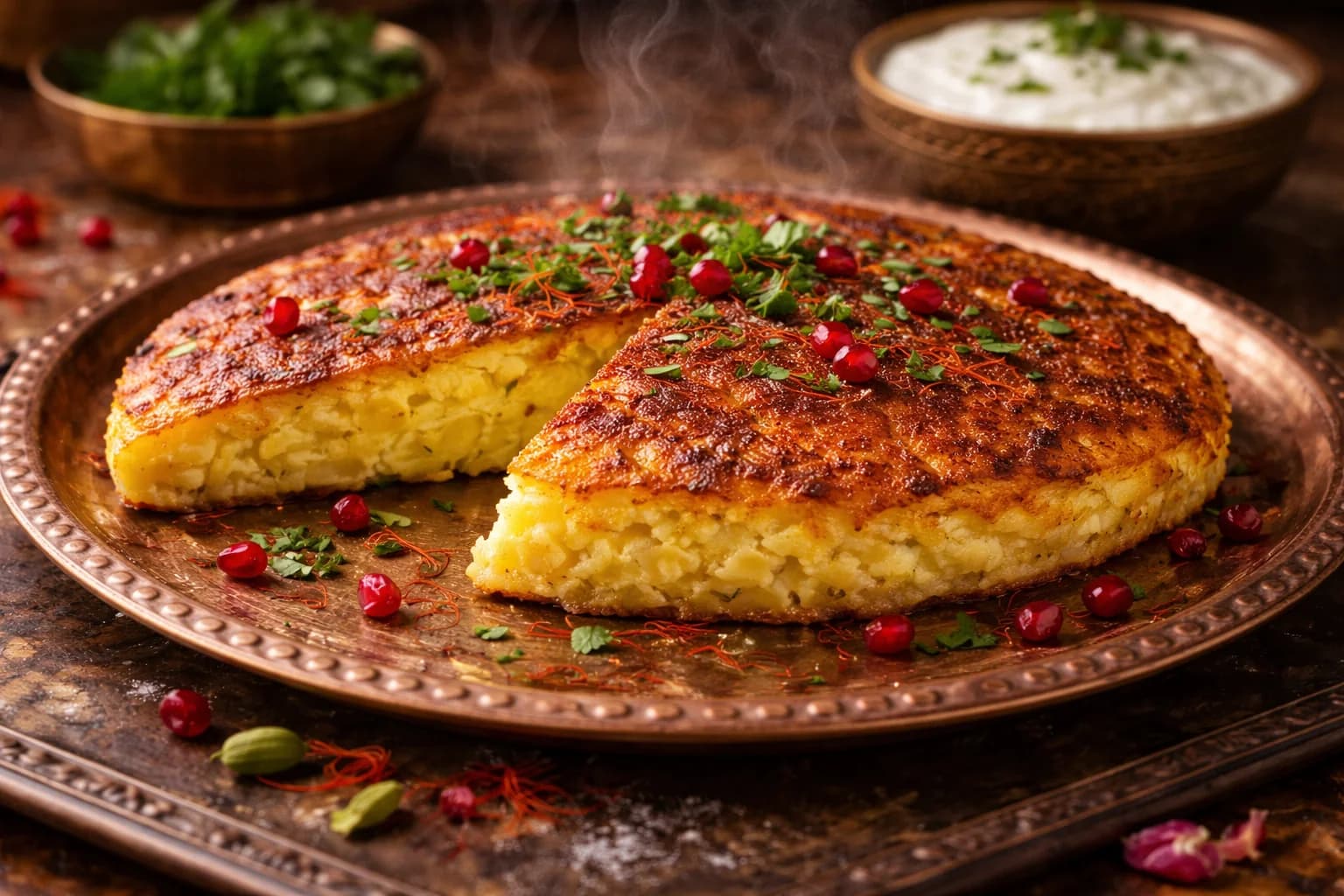
Reduire le feu a moyen-doux. Cuire sans toucher pendant 12 a 15 minutes jusqu'a ce que le dessous soit d'un beau dore profond et croustillant, et que les bords commencent a prendre. Soulever delicatement un bord avec la spatule pour verifier la couleur. Le dessous doit etre d'un brun dore profond, pas pale.
Étape Critique
La croute doree et croustillante est la marque d'un grand kuku sibzamini. La patience est indispensable : ne pas precipiter cette etape. Verifier la couleur avant de continuer.
Erreurs Courantes
- •Feu trop fort (brule avant d'etre cuit a coeur)
- •Cuisson insuffisante (dessous pale et mou)
- •Verifier trop souvent (perturbe la formation de la croute)
Retourner le kuku
Quand le dessous est d'un beau dore profond et que le kuku se deplace librement, il est temps de le retourner. Placer une grande assiette plate ou un couvercle sur la poele. Tenir fermement et retourner la poele pour que le kuku tombe sur l'assiette, face cuite vers le haut. Ajouter le reste d'huile dans la poele vide, faire tourner, puis faire glisser delicatement le kuku cote cru vers le bas.
Étape Critique
Ce retournement est ce qui donne au kuku sibzamini sa croute croustillante signature sur les deux faces. L'assurance compte : un retournement hesitant peut briser le kuku.
Cuire la seconde face
Poursuivre la cuisson a feu moyen-doux jusqu'a ce que la seconde face soit egalement doree et croustillante. Le kuku doit etre cuit a coeur : pas de pomme de terre crue au centre.
Methode alternative au four
Pour une methode moins exigeante : apres avoir cuit la premiere face sur la cuisiniere, au lieu de retourner, transferer la poele dans le four prechauffe. Cuire jusqu'a ce que le dessus soit pris et dore. Puis retourner sur une assiette et remettre dans la poele chaude quelques minutes pour rendre la seconde face croustillante.
Laisser reposer et servir
Faire glisser le kuku sur une planche a decouper ou un plat de service. Laisser reposer 5 minutes : cela facilite la decoupe et permet a l'interieur de finir de prendre. Couper en parts. Servir chaud ou a temperature ambiante.
Service traditionnel
Servir les parts avec du pain lavash, du yaourt nature, du mast-o-khiar, des herbes fraiches et du torshi (pickles). Pour les sandwiches, tartiner le lavash de yaourt, ajouter une tranche de kuku, de la tomate et des herbes. Le kuku sibzamini accompagne aussi merveilleusement les plats de riz.
Repos Requis
5 min - Permet a l'interieur de prendre completement et facilite la decoupe