
Moments Critiques
- •Saler les courgettes au moins 30 minutes
- •Essorer les courgettes très sèches
- •Poêle assez chaude pour que le mélange grésille en entrant
- •Croûte dorée développée avant le retournement
- •Cuire à cœur sans brûler l'extérieur
Infuser le safran (si utilisé)
Moudre les filaments de safran avec une pincée de sucre au mortier. Ajouter de l'eau chaude et laisser infuser au moins 20 minutes.
Râper les courgettes
Couper les extrémités des courgettes. Râper sur les gros trous d'une râpe à quatre faces.
Saler et égoutter les courgettes
Mettre les courgettes râpées dans une passoire posée au-dessus d'un bol. Saupoudrer de sel et bien mélanger. Laisser reposer au moins 30 minutes, jusqu'à 1 heure. Le sel extrait une quantité importante d'humidité — du liquide se collecte dans le bol.
Étape Critique
C'est l'étape la plus importante. La courgette est extrêmement riche en eau — si elle n'est pas correctement égouttée, le kuku sera détrempé et ne développera pas de croûte croustillante. Le sel assaisonne également la courgette de l'intérieur.
Erreurs Courantes
- •Pas assez de sel
- •Égouttage insuffisant (kuku détrempé)
- •Sauter entièrement cette étape
Essorer les courgettes
Après l'égouttage, prendre des poignées de courgettes et les presser fermement pour extraire le maximum de liquide restant. Alternativement, envelopper dans un torchon propre et tordre. Les courgettes doivent être aussi sèches que possible.
Étape Critique
Même après l'égouttage, la courgette retient de l'eau dans ses fibres. L'essorage retire cette humidité résiduelle. Plus la courgette est sèche, plus la croûte sera croustillante et meilleure sera la texture.
Préparer l'oignon
Râper l'oignon sur les petits trous de la râpe, ou le couper finement en dés. Si râpé, conserver la pulpe et le jus pour cette recette — cela ajoute de l'humidité que la farine absorbera.
Ciseler les herbes fraîches (si utilisées)
Ciseler finement l'aneth, le persil et la menthe. Les herbes doivent être finement ciselées mais pas réduites en pâte — on veut des paillettes visibles dans le kuku.
Battre les œufs avec les assaisonnements
Dans un grand bol, battre les œufs avec le safran infusé (si utilisé), le curcuma, la farine, la levure chimique (si utilisée), le sel et le poivre jusqu'à obtenir un mélange lisse et homogène.
Combiner tous les ingrédients
Ajouter les courgettes essorées, l'oignon râpé, l'ail (si utilisé) et les herbes ciselées au mélange d'œufs. Incorporer délicatement jusqu'à obtenir un mélange homogène. Si de la feta est utilisée, l'incorporer délicatement à la fin.
Chauffer la poêle avec l'huile
Chauffer l'huile dans une poêle antiadhésive à feu moyen jusqu'à ce qu'elle frémisse. Faire tourner pour enrober le fond et une partie des parois.
Verser le mélange et cuire le dessous
Verser le mélange courgette-œufs dans la poêle chaude et étaler uniformément à la spatule. Presser doucement pour créer une couche compacte et régulière. Le mélange doit grésiller au contact de la poêle. Réduire à feu moyen-doux.
Étape Critique
Le grésillement confirme la bonne température pour la formation de la croûte. Presser doucement pour éliminer les poches d'air et assurer une cuisson uniforme.
Cuire jusqu'à ce que le dessous soit doré
Cuire à feu moyen-doux sans toucher. Le dessous doit développer une croûte dorée et les bords doivent commencer à prendre. Soulever un bord avec une spatule pour vérifier — il doit être bien doré, pas pâle.
Étape Critique
La patience ici récompense avec la croûte croustillante qui rend le kuku spécial. Ne pas retourner avant que le dessous ne soit bien doré.
Retourner le kuku
Quand le dessous est doré et que le kuku bouge librement, c'est le moment de retourner. Poser une grande assiette plate sur la poêle. Tenir fermement et retourner pour que le kuku atterrisse sur l'assiette, côté cuit vers le haut. Ajouter le reste d'huile dans la poêle, faire tourner, puis faire glisser délicatement le kuku, côté cru vers le bas.
Cuire la seconde face
Poursuivre la cuisson à feu moyen-doux jusqu'à ce que la seconde face soit également dorée et le kuku cuit à cœur. Le centre doit être pris, pas humide.
Laisser reposer et servir
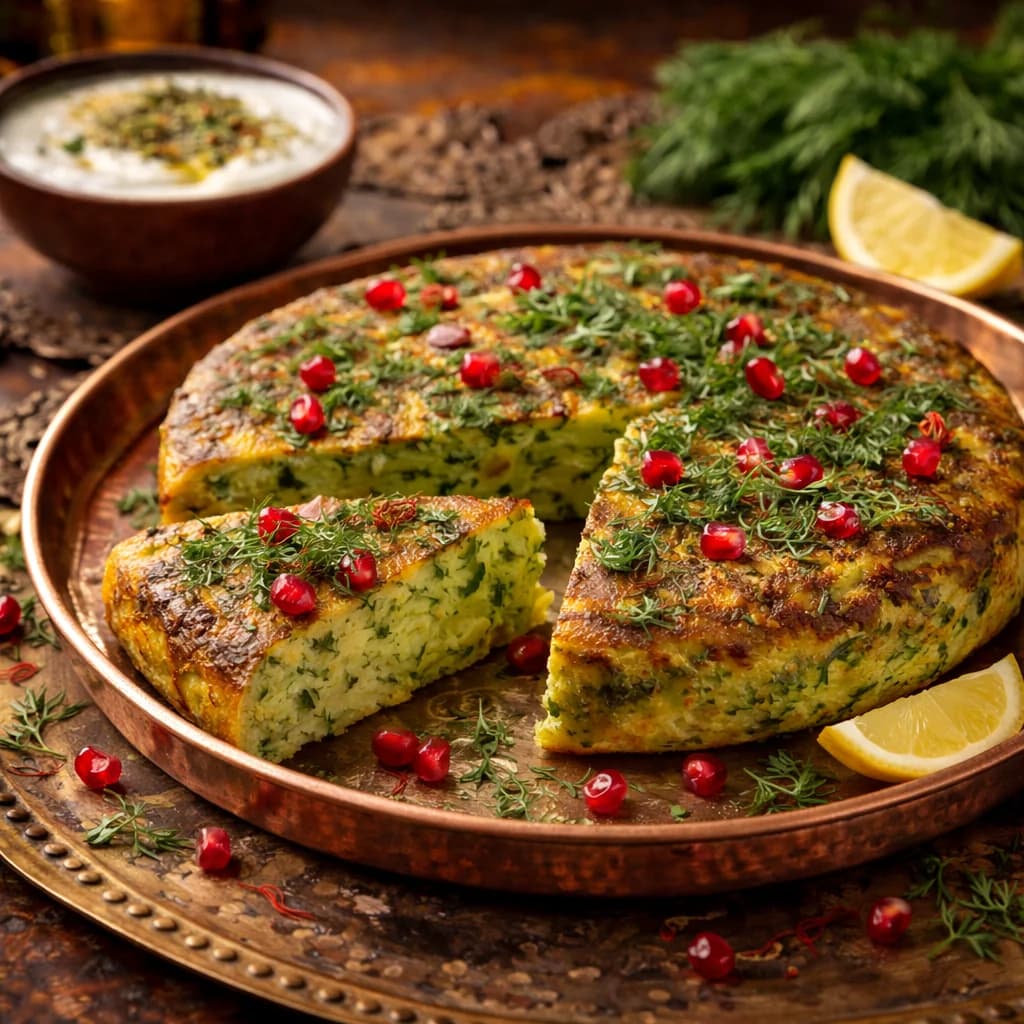
Faire glisser le kuku sur une planche ou un plat de service. Laisser reposer 5 minutes. Couper en parts. Servir chaud ou à température ambiante.
Service traditionnel
Servir les parts avec du yaourt nature ou du mast-o-khiar, du pain lavash et des herbes fraîches. Le kuku kadoo est plus léger que les autres kukus et s'accompagne à merveille d'une simple salade pour un repas léger complet.
Repos Requis
5 min - Permet au kuku de prendre et facilite la découpe