
Moments Critiques
- •Manipulation soigneuse pour préserver la forme des cerises
- •Macération pour extraire le jus naturel
- •Mijotage doux (pas d'ébullition vigoureuse)
- •Test de la bonne consistance
- •Ajout de l'eau de rose hors du feu
Préparer les cerises
Rincer délicatement les griottes et retirer toutes les queues. Deux options : laisser les noyaux (traditionnel — les noyaux apportent une subtile saveur d'amande et aident les cerises à garder leur forme) ou les dénoyauter soigneusement avec un dénoyauteur (plus facile à manger mais les cerises peuvent perdre leur forme). Si vous dénoyautez, travailler au-dessus d'un bol pour récupérer le précieux jus.
Étape Critique
Une manipulation soigneuse préserve la forme des cerises — une manipulation brusque les écrase. Pour le dénoyautage, un véritable dénoyauteur vaut l'investissement. Tout jus libéré doit être récupéré.
Erreurs Courantes
- •Écraser les cerises par une manipulation brusque
- •Jeter le jus libéré lors du dénoyautage
Macérer avec le sucre
Placer les cerises dans une grande marmite épaisse. Ajouter le sucre et le jus de citron. Mélanger délicatement pour enrober uniformément les cerises. Couvrir et laisser macérer à température ambiante pendant 4 à 8 heures, ou toute la nuit au réfrigérateur. Le sucre va extraire le jus des cerises, créant un sirop.
Étape Critique
La macération extrait délicatement le jus des cerises sans cuisson, préservant leur forme et créant une base de sirop naturelle. Cela produit une meilleure texture que la cuisson directe des cerises dans le sirop.
Commencer la cuisson
Ajouter l'eau et les gousses de cardamome écrasées (et la gousse de vanille si utilisée) dans la marmite. Placer sur feu moyen et porter lentement à ébullition, en remuant doucement pour dissoudre le sucre restant. Réduire à feu moyen-doux et laisser mijoter doucement.
Laisser mijoter jusqu'à épaississement
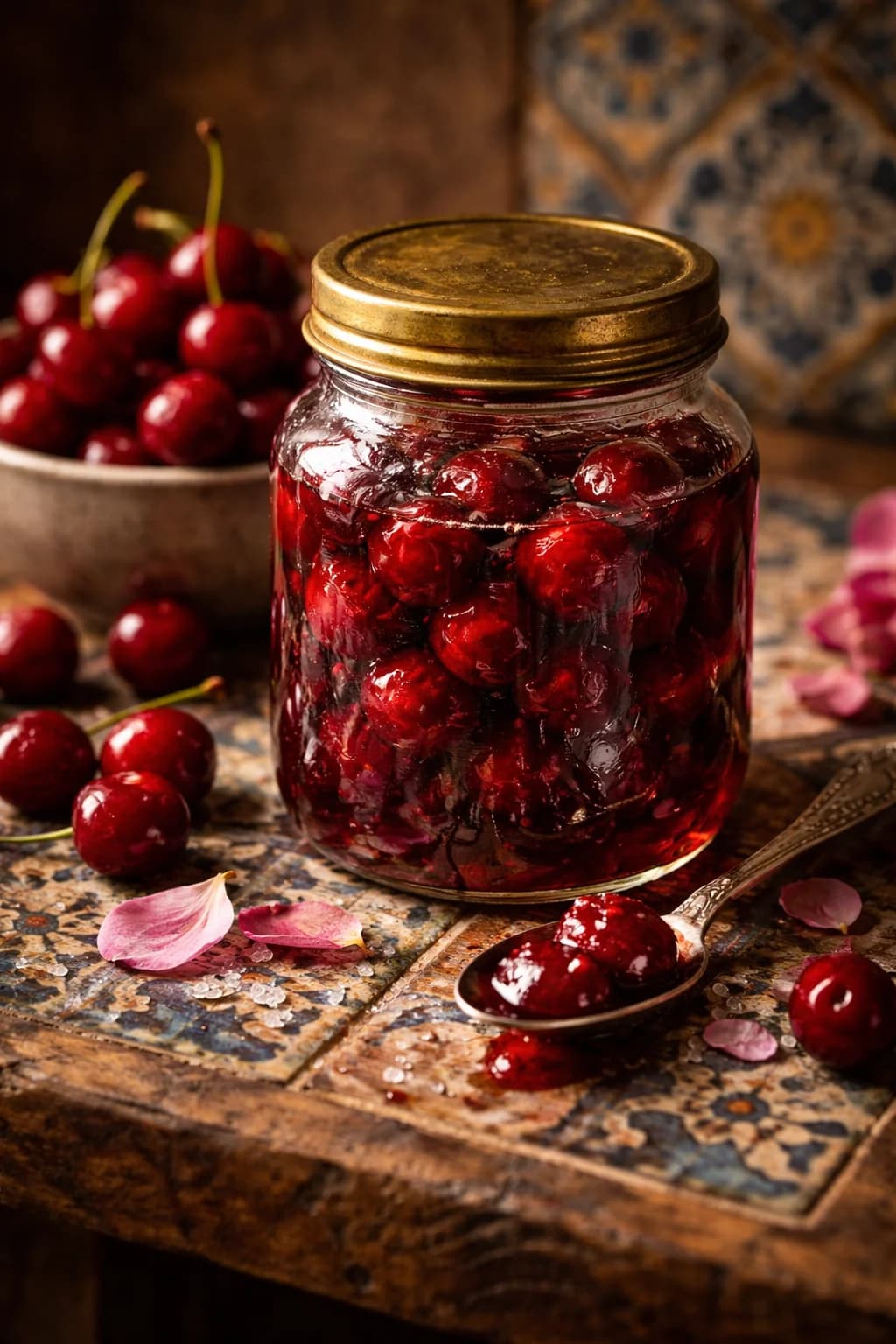
Continuer à mijoter doucement, en remuant occasionnellement et très délicatement. Écumer toute mousse qui monte à la surface. Le sirop s'épaissira graduellement et les cerises deviendront légèrement translucides tout en gardant leur forme. La couleur s'approfondira vers un grenat riche.
Étape Critique
La confiture doit mijoter suffisamment longtemps pour que le sirop épaississe et que les cerises soient légèrement confites, mais pas au point que les cerises se désagrègent. Un remuage doux empêche l'accrochage sans écraser les fruits.
Tester la cuisson
Tester la confiture : le sirop doit napper la cuillère abondamment et couler lentement. Faire le test de l'assiette froide — une goutte sur une assiette froide doit plisser quand on la pousse après refroidissement. Les cerises doivent être légèrement translucides mais garder leur forme.
Ajouter l'eau de rose
Retirer du feu. Si vous utilisez de l'eau de rose, l'incorporer doucement. La note florale doit être subtile, complémentant plutôt que dominant la saveur de cerise. Retirer et jeter les gousses de cardamome et la gousse de vanille si vous les trouvez.
Mettre la confiture en bocaux
Verser la confiture chaude dans des bocaux en verre propres et stérilisés, en répartissant uniformément les cerises et le sirop. Laisser 1 cm d'espace en haut. Essuyer les bords et fermer hermétiquement. Pour une conservation longue durée, stériliser au bain-marie pendant 10 minutes.
Laisser reposer et servir
Laisser la confiture refroidir complètement et reposer au moins un jour — les saveurs se mêlent et se développent. Servir à température ambiante avec du pain frais et du beurre, sur du yaourt ou de la glace, ou comme garniture pour le riz au lait. Une fois ouvert, réfrigérer et consommer dans les 2 mois.
Repos Requis
1440 min - Les saveurs se développent et se mêlent ; meilleur après au moins un jour