
Moments Critiques
- •Coupe uniforme des carottes (julienne)
- •Blanchiment approprié (ramolli mais ferme)
- •Cuisson lente et douce (ne pas presser)
- •Test de la bonne consistance
- •Ajout de l'eau de rose hors du feu
Infuser le safran
Moudre les filaments de safran avec une pincée de sucre au mortier et au pilon. Ajouter de l'eau chaude et laisser infuser au moins 15 minutes. Le liquide doit être d'un orange doré profond.
Préparer les carottes
Peler les carottes. Couper en fines julienne (allumettes d'environ 5 cm de long et 3 mm d'épaisseur) ou utiliser une mandoline pour des coupes uniformes. Alternativement, couper en fines rondelles ou utiliser de petits emporte-pièces pour des formes. Une taille uniforme assure une cuisson régulière.
Étape Critique
Une épaisseur uniforme assure une cuisson régulière de tous les morceaux. Trop épais et ils seront durs ; trop fins et ils se désagrègeront. Les coupes en julienne (allumettes) sont traditionnelles et élégantes.
Blanchir les carottes
Porter une casserole d'eau à ébullition. Ajouter les bâtonnets de carotte et blanchir jusqu'à ce qu'ils soient légèrement ramollis mais encore fermes — ils doivent plier mais ne pas être entièrement cuits. Égoutter soigneusement et sécher en tamponnant.
Étape Critique
Le blanchiment précuit partiellement les carottes pour qu'elles absorbent correctement le sirop. Les carottes crues n'absorbent pas bien le sirop ; les carottes trop cuites deviennent pâteuses dans la confiture.
Préparer le sirop
Dans une grande marmite épaisse, combiner le sucre, l'eau et le jus de citron. Chauffer à feu moyen en remuant jusqu'à dissolution complète du sucre. Ajouter les gousses de cardamome écrasées (et le zeste d'orange si utilisé). Porter à ébullition, puis réduire à un frémissement.
Ajouter les carottes et cuire lentement
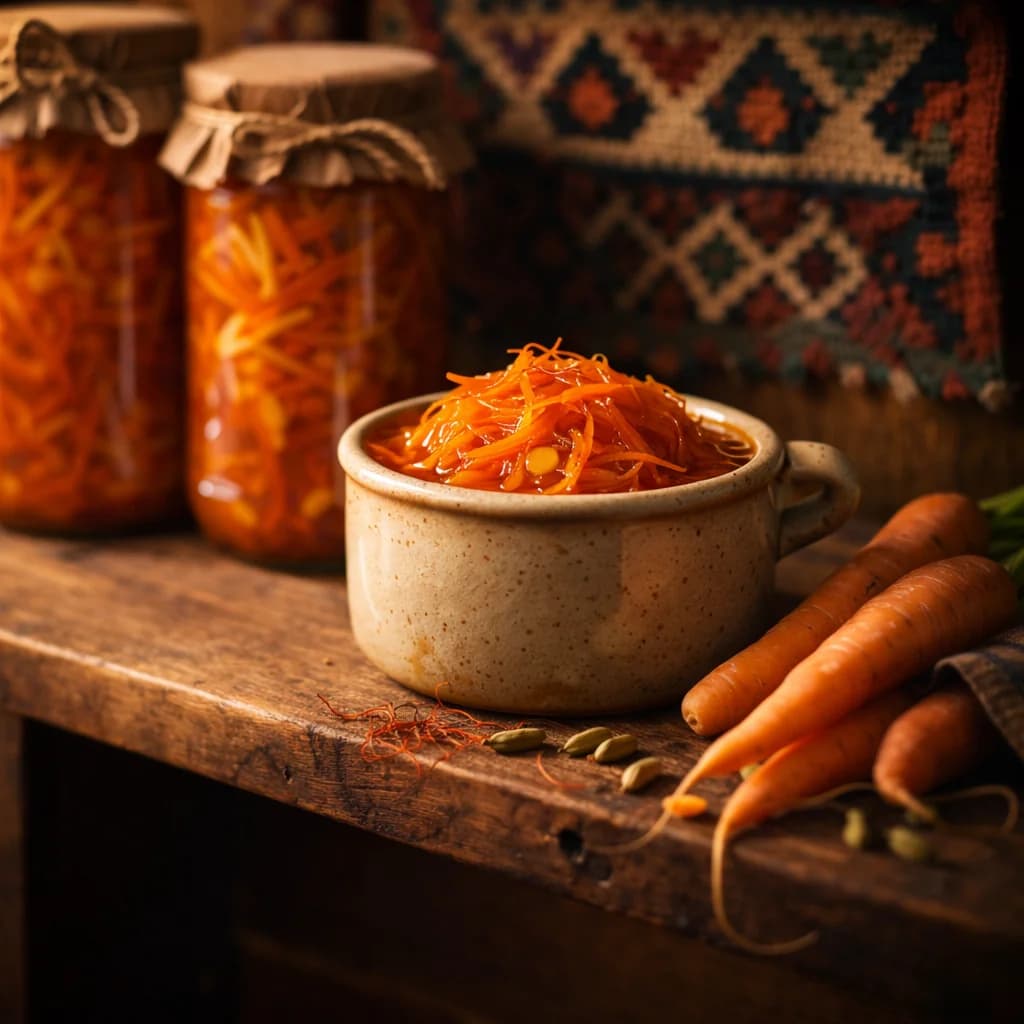
Ajouter les carottes blanchies et le safran infusé (avec tout son liquide) dans le sirop. Mélanger doucement pour répartir. Laisser mijoter doucement à feu doux, en remuant occasionnellement. Les carottes deviendront graduellement translucides et le sirop s'épaissira.
Étape Critique
La cuisson lente permet aux carottes d'absorber le sirop et de se confire sans se désagréger. Un feu vif rendrait l'extérieur mou tandis que l'intérieur resterait ferme.
Tester la cuisson
Tester la confiture : les carottes doivent être translucides et tendres mais pas pâteuses — elles doivent garder leur forme. Le sirop doit napper une cuillère épaissement et couler lentement. Faire le test de l'assiette froide : une goutte sur une assiette froide doit plisser quand poussée après refroidissement.
Ajouter l'eau de rose
Retirer du feu. Incorporer l'eau de rose. L'arôme floral doit compléter, non dominer, le safran et la carotte. Goûter et en ajouter si désiré. Retirer et jeter les gousses de cardamome si vous les trouvez.
Étape Critique
Ajouter l'eau de rose hors du feu préserve son arôme délicat.
Ajouter les fruits secs (facultatif) et mettre en bocaux
Si vous utilisez des fruits secs, incorporer les amandes et/ou pistaches effilées. Verser la confiture chaude dans des bocaux en verre propres et stérilisés, en laissant 1 cm d'espace en haut. Essuyer les bords et fermer hermétiquement. Pour une conservation longue durée, stériliser au bain-marie pendant 10 minutes.
Laisser reposer et servir
Laisser la confiture refroidir complètement et reposer au moins un jour — les saveurs se développent avec le temps. Servir à température ambiante avec du pain frais, du beurre et du thé. Une fois ouvert, réfrigérer et consommer dans les 2 mois.
Repos Requis
1440 min - Les saveurs se développent avec le temps ; meilleur après au moins un jour