
Moraba-ye Beh (Persian Quince Preserve)

Moraba-ye Beh (Persian Quince Preserve)

مربای به

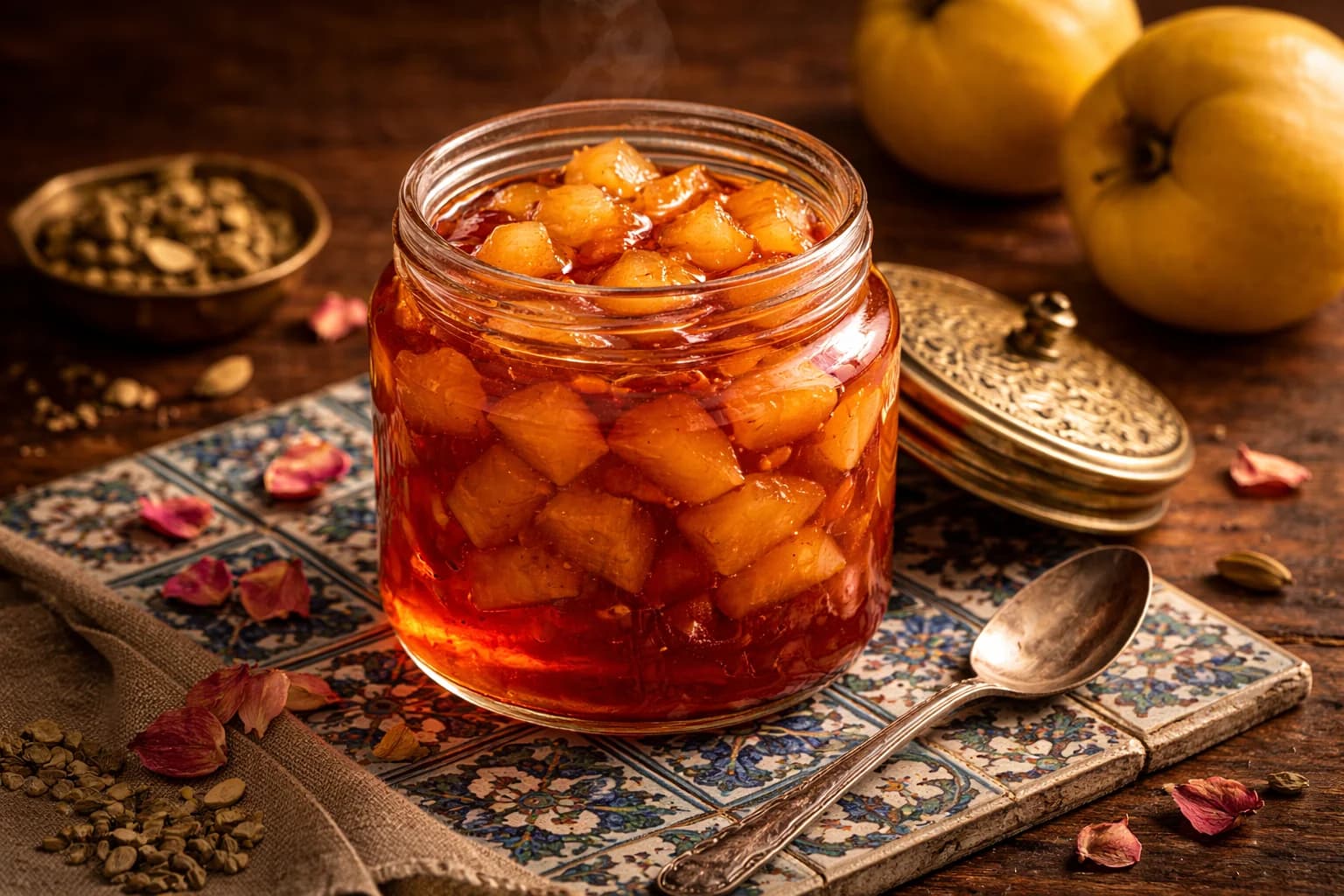
Golden, jewel-like pieces of quince suspended in a fragrant, ruby-tinged syrup perfumed with cardamom and rosewater—moraba-ye beh is the queen of Persian preserves. The humble quince, rock-hard and astringent when raw, transforms through slow cooking into something magical: tender, translucent, and deeply honeyed, with a flavor that's part apple, part pear, and entirely its own. This ancient preserve captures autumn's fleeting quince season in jars of amber sweetness, to be spooned over bread at breakfast, served alongside tea, or used to crown rice puddings. The process requires patience, but the result is extraordinary.

jamPréparation: 45 minCuisson: 150 minintermediatePour 48

Note culturelle

Quince (beh) has deep roots in Persian culture—the fruit is native to the Caucasus and Persia, and appears throughout Persian poetry as a symbol of love and beauty. The word 'marmalade' itself derives from 'marmelo,' the Portuguese word for quince, showing how this fruit's preserves spread from Persia westward. In Iran, moraba-ye beh is a prized autumn tradition: families buy cases of quinces when they appear briefly in markets, filling the kitchen with their intoxicating perfume before transforming them into jars of golden preserve. The preserve is served at breakfast with fresh bread and butter, alongside tea as a sweet accompaniment, or spooned over desserts. The slow cooking that turns the pale quince flesh deep amber-red is part of the magic—the fruit's high pectin content creates a naturally thick, jewel-like preserve without added pectin.

Moments Critiques

  • Preventing browning with lemon water
  • Saving peels and cores for pectin
  • Macerating with sugar (minimum 4 hours)
  • Long, slow cooking for color transformation
  • Cold plate test for doneness
  • Adding rosewater off heat
1
PRÉPARATION30 min

Prepare the quinces

Wash the quinces well, rubbing off the fuzzy coating on the skin. Peel the quinces (reserve peels and cores), quarter them, and remove the hard core. Cut into slices or chunks about 1cm thick. Immediately place in a bowl of water with half the lemon juice to prevent browning.

Pale yellow quince pieces in acidulated water; peels and cores reserved separately
OdeurIntensely fragrant—floral, honey-like, the signature quince perfume
TextureRock-hard fruit; difficult to cut

Étape Critique

Quinces oxidize (brown) quickly when cut—the lemon water prevents this. The peels and cores contain pectin that helps the preserve set, so save them.

Quinces are extremely hard—use a sharp, sturdy knife and work carefully. The fruit should be ripe (golden yellow, very fragrant) but will still be rock-hard. This is normal.

Erreurs Courantes

  • Not working quickly enough (browning)
  • Discarding peels and cores (contain pectin)
2
PRÉPARATION30 min

Make pectin stock from scraps

Place the quince peels and cores in a small saucepan with 250ml water. Simmer for 20-30 minutes until the liquid is reduced by half and slightly syrupy. Strain and reserve this pectin-rich liquid; discard the solids.

Pale pink, slightly viscous liquid
OdeurConcentrated quince aroma
SonGentle simmering
TextureSlightly syrupy when cooled
This pectin stock helps the preserve set and adds flavor. Don't skip it—quince peels and cores are full of natural pectin.
En attendant: Prepare while the quince slices macerate in step 3
3
PRÉPARATION240 min

Macerate with sugar

Drain the quince slices and place in a large heavy pot. Add the sugar and remaining lemon juice. Toss to coat the fruit evenly. Cover and let macerate at room temperature for at least 4 hours, or overnight in the refrigerator. The sugar will draw out moisture from the quinces.

Quince slices coated in sugar; liquid accumulating at bottom
OdeurSweet quince
TextureSugar dissolving; syrup forming

Étape Critique

Maceration draws moisture from the fruit, creating a syrup and helping the fruit absorb sugar evenly. This step produces a better-textured preserve than simply cooking fruit in syrup.

Overnight maceration is ideal—the quinces release more juice and the flavors begin to develop. Stir occasionally if you remember.
4
CUISSON10 min

Begin cooking

Add the 500ml water, the reserved pectin stock, and the crushed cardamom pods (and vanilla bean if using) to the pot with the macerated quinces. Bring to a boil over medium-high heat, stirring to dissolve any remaining sugar. Reduce heat to medium-low and simmer gently.

Bubbling gently; quince pieces floating in syrup
Medium-LowGentle simmer
OdeurSweet, aromatic—cardamom blooming
SonGentle bubbling
TextureLiquid and syrupy
The long, slow cooking is essential—don't rush with high heat. Low and slow produces the best color and texture.
5
CUISSON150 min

Slow cook until transformed

Continue simmering gently for 2-3 hours, stirring occasionally. The quinces will gradually transform: first softening, then becoming translucent, and finally turning from pale yellow to amber to deep ruby-red. The syrup will thicken and the fruit will become tender but intact.

Color progression: pale yellow → golden → amber → ruby-red; fruit is translucent
Gentle, steady simmer
OdeurDeepening, caramelized, honeyed aroma
SonThick bubbling
TextureFruit is tender when pierced; syrup coats spoon heavily

Étape Critique

The color transformation is the magic of quince preserve—it happens through long, slow cooking as the tannins in the fruit react with heat. Rushing prevents the color development. The final color should be deep amber to ruby.

Stir gently to avoid breaking the fruit. The exact time depends on your quinces and heat level. Don't stop until you achieve the ruby-amber color.
Point de contrôle: After 1 hour: fruit softening, still pale. After 2 hours: turning golden-amber, translucent. After 2.5-3 hours: deep amber to ruby, tender throughout.
6
CUISSON5 min

Test for doneness

Test the preserve: place a small spoonful on a cold plate and refrigerate for 2 minutes. Push with your finger—if it wrinkles and holds its shape, it's ready. The fruit should be tender throughout (test with a fork) and the syrup should coat a spoon thickly.

Syrup wrinkles when pushed; fruit is deep colored and translucent
OdeurRich, concentrated quince-caramel
SonThick, slow bubbling
TextureSyrup sheets off spoon; fruit tender but holding shape

Étape Critique

Underdone preserve will be runny and won't set properly. Overdone will be too thick and the fruit may become mushy. The cold plate test is reliable.

If the preserve isn't ready, continue cooking and test every 10 minutes. Quince has lots of natural pectin, so it will set well once the right concentration is reached.
7
FINITION3 min

Add rosewater and saffron

Remove from heat. Stir in the rosewater and bloomed saffron (if using). The floral notes should be present but not overwhelming. Taste and adjust—you can add more rosewater if desired. Remove the cardamom pods and vanilla bean if you can find them.

Deep ruby preserve with golden saffron threads visible
OdeurRosewater blooming in the warm preserve—intoxicating

Étape Critique

Adding rosewater off heat preserves its delicate aroma. Adding it too early would cook off the floral notes.

Start with 3 tablespoons rosewater and add more to taste. The intensity varies by brand. Some families prefer more, some less.
8
FINITION15 min

Jar the preserve

Ladle the hot preserve into clean, sterilized glass jars, leaving 1cm headspace. Wipe rims clean and seal tightly. For long-term storage, process in a boiling water bath for 10 minutes. Otherwise, let cool and refrigerate.

Beautiful ruby-amber preserve in clear jars; fruit pieces visible
OdeurIntense quince-rose-cardamom
SonLids sealing as they cool
Jarring while hot is important for a good seal. Sterilize jars by running through dishwasher or washing in very hot water. Store in a cool, dark place.
9
FINITION4320 min

Rest and serve

Let the preserve rest for at least a few days before serving—the flavors continue to develop. Serve at room temperature with fresh bread and butter, alongside tea, or over yogurt, ice cream, or rice pudding. Once opened, refrigerate and use within 2-3 months.

Jewel-like preserve spooned onto plate; deep ruby color
OdeurComplex—quince, rose, cardamom, honey notes
TextureThick syrup; tender fruit that holds shape
Moraba-ye beh is traditionally served at Persian breakfasts alongside fresh bread, butter, and tea. It also makes a beautiful topping for desserts or a thoughtful gift.

Repos Requis

4320 min - Flavors develop and meld over several days; best after at least a week

Extras

Équipement

grande marmite lourdeglass jars with lidswooden spoonsharp knife or mandolinestandard

Préparer à l'Avance

  • Moraba-ye beh IS a make-ahead food—it must be made when quinces are in season (autumn) and keeps for a year or more properly sealed.
  • Unopened jars stored in cool, dark place keep indefinitely.
  • Once opened, refrigerate and use within 2-3 months.

N/A—served at room temperature or cold

Servir Avec

Accompagnements

  • Fresh bread (noon barbari, noon taftoon)
  • Butter
  • Clotted cream (sarshir)
  • Feta cheese
  • Over rice pudding or ice cream

Boissons

  • Persian tea (essential)
  • The classic pairing is bread, butter, preserve, and tea

Substitutions

quincesNo substitute—quince is unique. The preserve cannot be made with apples or pears, though quince-apple combinations work (use 2/3 quince, 1/3 apple).
rosewaterEssential for Persian character. Can reduce amount but don't omit. Orange blossom water creates a different but acceptable variation.
cardamomEssential for traditional flavor. Ground cardamom (1 tsp) can substitute for pods but the flavor is slightly different.
sugarWhite granulated is traditional. Can use part honey (replace up to 25% of sugar) for different flavor profile.

Mise à l'échelle

This recipe makes approximately 1.5 liters of preserve. Scale based on quince availability—the fruit has a short season in autumn. The preserve keeps for a year or more, so make plenty when quinces are available. The long cooking time is the same regardless of batch size.

Source

Traditionnel · Traditional Persian cuisine

Quince (beh) holds a special place in Persian culture—the fruit appears in ancient Persian poetry and art, symbolizing love and fertility. Quince preserves have been made in Persia for centuries, the slow transformation of the hard fruit into golden sweetness considered almost alchemical.

Recettes similaires

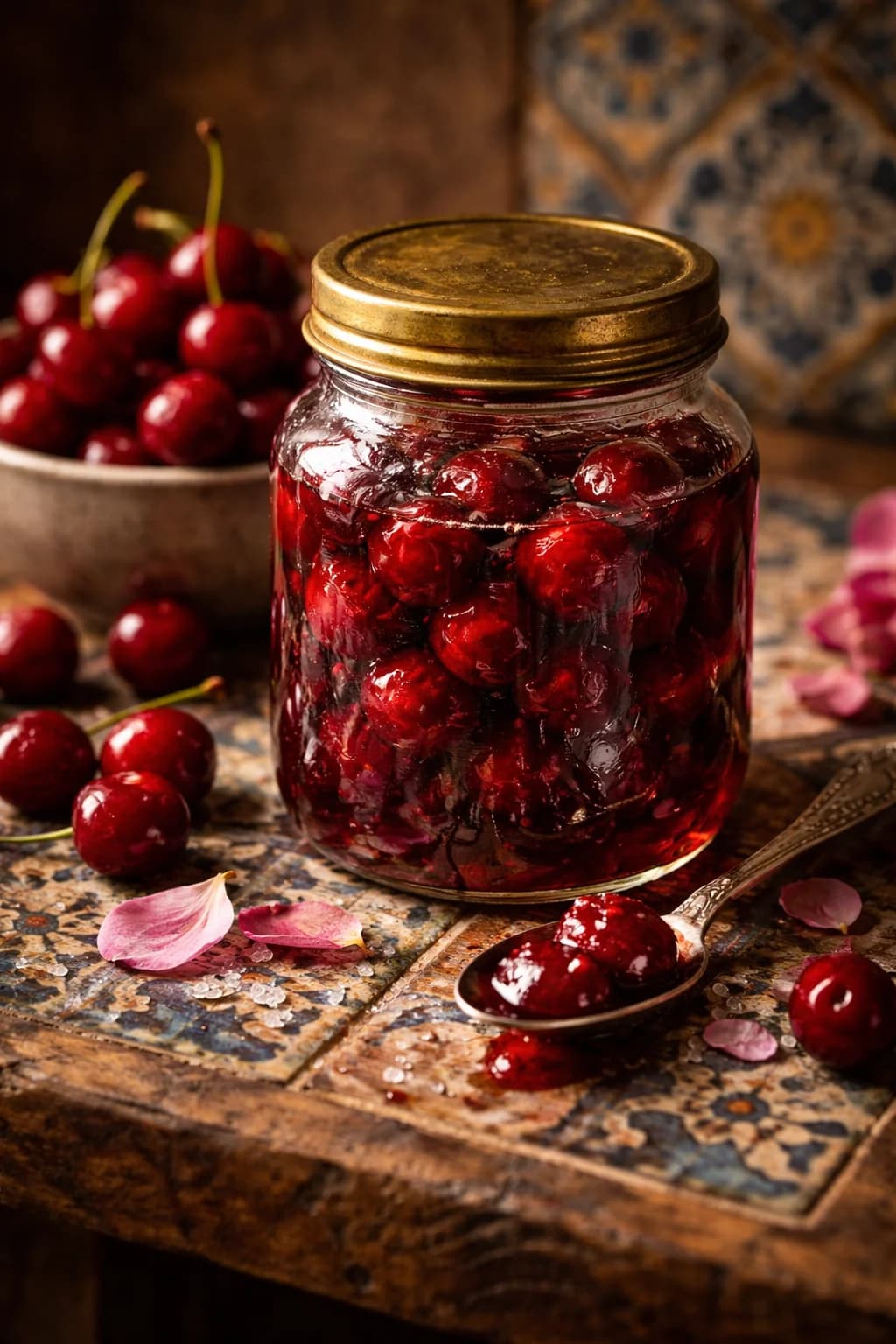
Moraba-ye Albaloo (Persian Sour Cherry Preserve)

Moraba-ye Albaloo (Persian Sour Cherry Preserve)

Jewel-like whole sour cherries suspended in a garnet-red syrup, delicately perfumed with cardamom and a whisper of rosewater—moraba-ye albaloo is summer captured in a jar. Unlike the syrup (sharbat) that uses cherry juice, this preserve keeps the cherries whole and plump, each one a burst of sweet-tart intensity. The brief sour cherry season in early summer is a time of frenzied preserving, as families transform the fleeting fruit into jars of ruby treasure to enjoy year-round. Spooned over bread at breakfast or used to crown rice puddings and ice cream, moraba-ye albaloo is one of Persia's most beloved preserves.

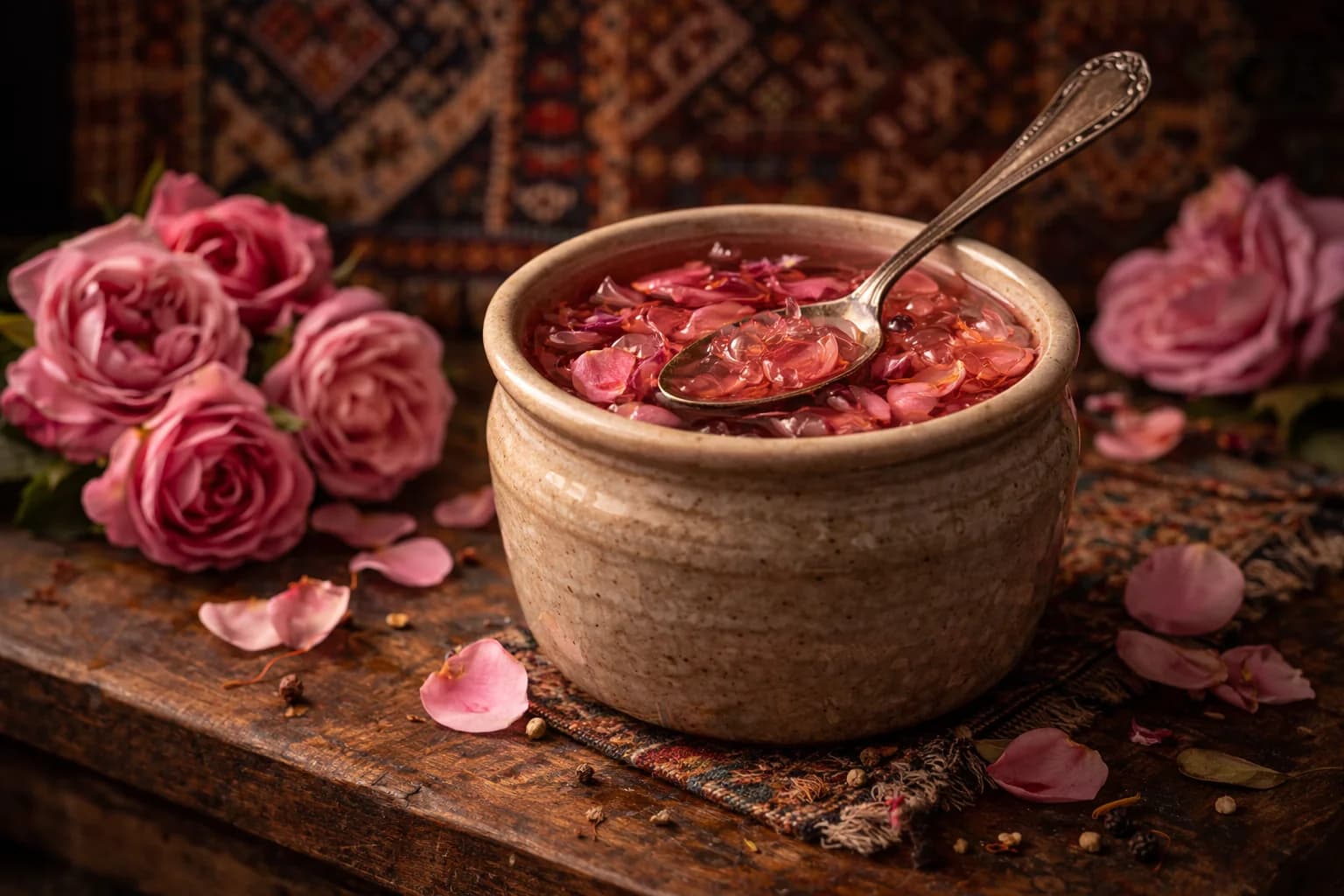
Moraba-ye Gol (Persian Rose Petal Preserve)

Moraba-ye Gol (Persian Rose Petal Preserve)

Delicate rose petals suspended in a blush-pink syrup, impossibly fragrant and achingly beautiful—moraba-ye gol is poetry in a jar. This ethereal preserve captures the essence of Persian gardens in late spring, when damask roses bloom in profusion and the air is heavy with their perfume. Each petal is carefully prepared and slowly candied until translucent and silken, the syrup becoming infused with pure rose essence. Served sparingly—a spoonful is a meditation—moraba-ye gol is the most romantic of all Persian preserves, given as gifts between lovers and offered to honored guests. Making it is an act of devotion; eating it is an experience of transcendence.

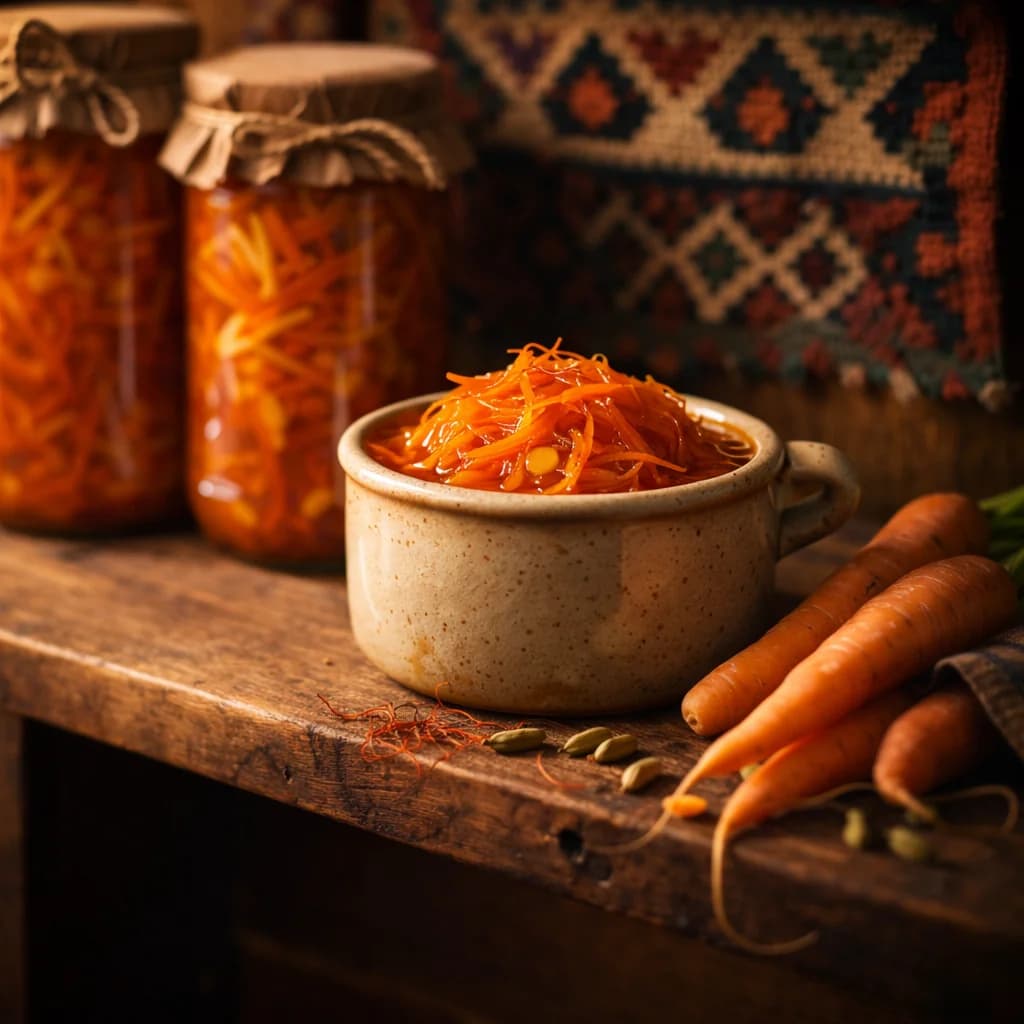
Moraba-ye Havij (Persian Carrot Preserve)

Moraba-ye Havij (Persian Carrot Preserve)

Tender slivers of carrot suspended in a golden, fragrant syrup scented with cardamom, rosewater, and saffron—moraba-ye havij transforms the humble carrot into something unexpectedly elegant. This traditional preserve showcases the Persian genius for turning simple ingredients into luxurious sweets. The carrots are cut into delicate julienne strips or decorative shapes, then slowly candied until translucent and jewel-like. The result is subtly sweet with a pleasant, gentle chew, the carrot's natural earthiness balanced by floral aromatics. A jar of moraba-ye havij on the breakfast table, glowing orange-gold in the morning light, is one of Persian cuisine's quiet pleasures.