Noon Barbari (Persian Sesame Flatbread)

Noon Barbari (Persian Sesame Flatbread)

نان بربری

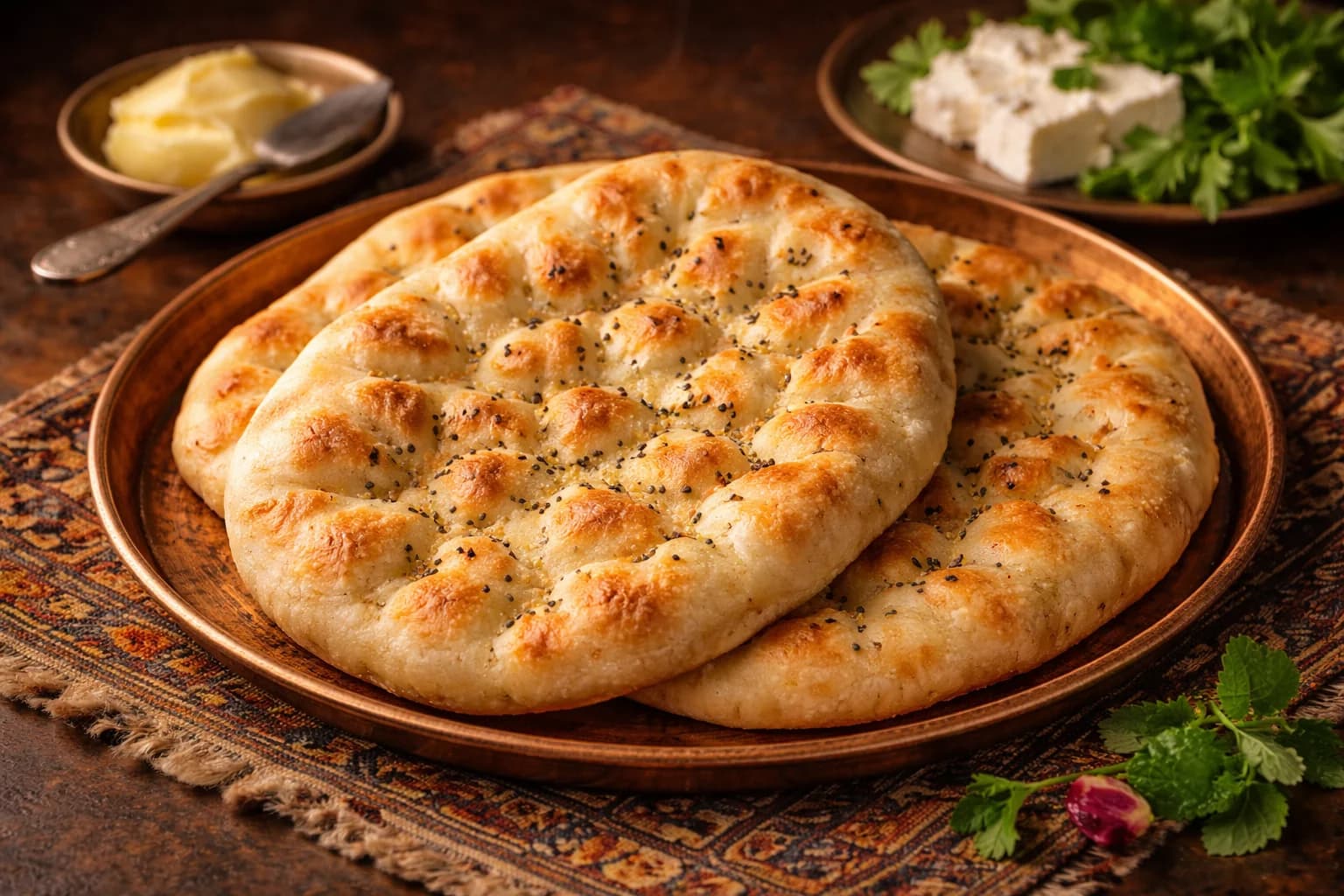
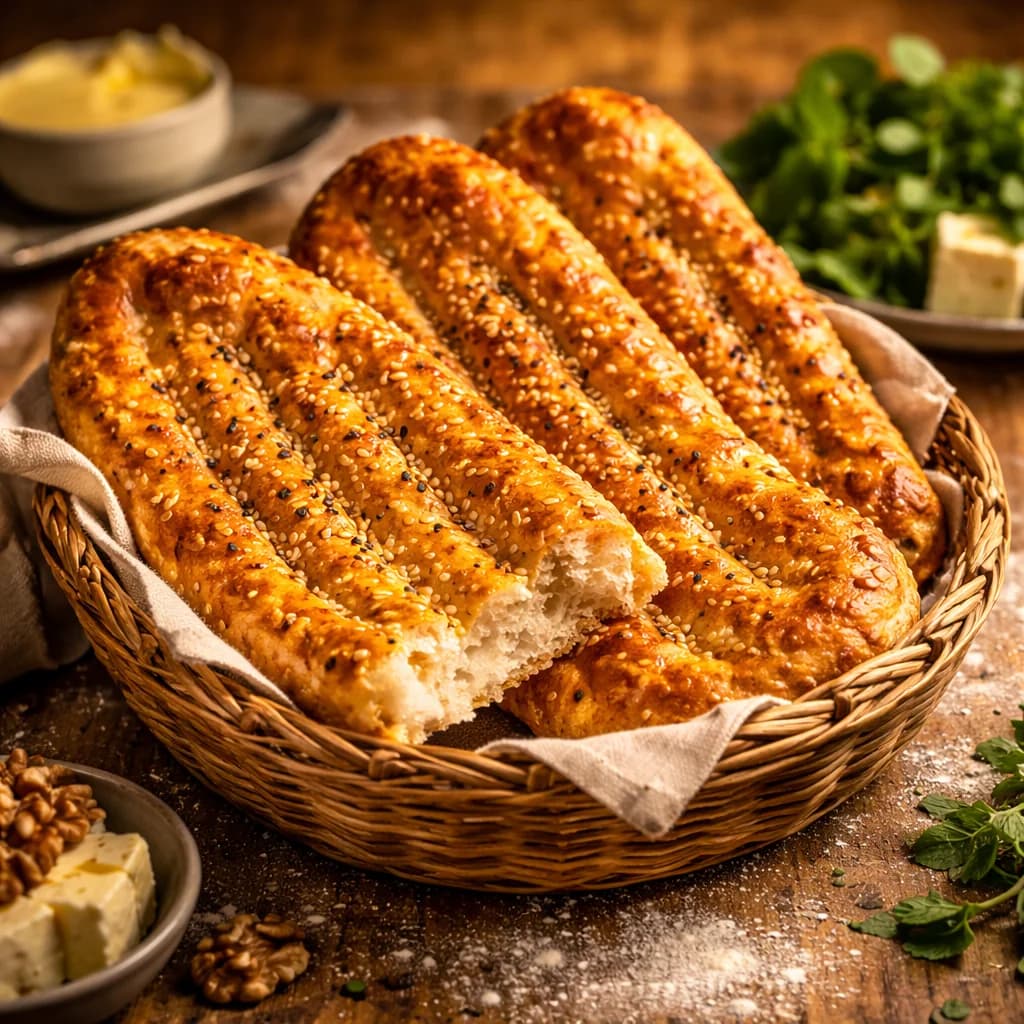
The king of Persian breads—a magnificent golden flatbread with a thick, chewy crust, soft interior, and distinctive ridged surface glistening with romaal (a flour-oil glaze) and scattered with sesame or nigella seeds. Barbari is substantial and satisfying, with a texture somewhere between focaccia and Turkish pide. Fresh from the oven, it fills the kitchen with an irresistible aroma and offers that perfect combination of crispy crust and pillowy crumb. This is the bread of Persian breakfasts, torn into pieces and served with feta cheese, fresh herbs, walnuts, and sweet tea.

breadPréparation: 30 minCuisson: 20 minintermediatePour 4

Note culturelle

Barbari is one of Iran's most beloved breads, particularly associated with breakfast. The name likely derives from the Barbar (or Hazara) people of northeastern Iran/Afghanistan who are credited with creating it. In Iran, fresh barbari is purchased daily from neighborhood bakeries (noonvai), arriving home still warm and fragrant. It's traditionally served with feta cheese (panir), fresh herbs, walnuts, jam, honey, and sweet tea—the classic Persian breakfast spread called 'sobhooneh.' The distinctive ridged pattern isn't just decorative; it creates channels that pool with the glossy romaal glaze and provides textural contrast between the crispy ridges and softer grooves. Barbari is also beloved for making sandwiches and is essential for the breakfast dish 'kaleh pacheh' (lamb head and feet soup).

Moments Critiques

  • Proper kneading for gluten development
  • Full first rise (doubled in size)
  • Very hot oven with preheated stone
  • Creating distinct ridges
  • Generous romaal application
  • Baking until deep golden (not pale)
1
PRÉPARATION12 min

Mix the dough

In a large bowl or stand mixer, combine the bread flour, instant yeast, salt, and sugar. Add the warm water and 30ml oil. Mix until a shaggy dough forms, then knead for 8-10 minutes by hand or 5-6 minutes in a stand mixer with dough hook until smooth and elastic. The dough should be soft and slightly tacky but not sticky.

Smooth, elastic dough; springs back when poked
OdeurYeasty, flour
SonSlapping against bowl/counter
TextureSoft, smooth, slightly tacky

Étape Critique

Proper gluten development is essential for barbari's chewy texture. The dough needs enough kneading to become smooth and elastic. Underkneaded dough won't have the proper structure.

The dough should pass the 'windowpane test'—stretch a small piece thin enough to see light through without tearing. If it tears, knead more.
2
PRÉPARATION105 min

First rise

Shape the dough into a ball and place in a lightly oiled bowl. Cover with plastic wrap or a damp towel. Let rise in a warm place for 1.5-2 hours until doubled in size.

Dough has doubled; looks puffy and airy
OdeurYeasty, fermented
TextureLight, airy; leaves indent when poked
For the best rise, find a warm spot (25-30°C / 77-86°F). An oven with just the light on works well. Don't rush this step—good fermentation develops flavor.
3
PRÉPARATION3 min

Prepare the romaal glaze

While the dough rises, make the romaal: in a small bowl, whisk together 30g flour, 30ml oil, and 60ml water until smooth. It should be the consistency of thin pancake batter. Set aside.

Smooth, pourable glaze; no lumps
OdeurFlour and oil
SonWhisking
TextureThin, smooth, pourable

Étape Critique

Romaal is what gives barbari its characteristic glossy, golden crust. Without it, the bread looks and tastes different. The glaze must be smooth—lumps will show on the finished bread.

If the glaze thickens while sitting, add a little more water. It should flow easily from a brush.
4
PRÉPARATION30 min

Preheat oven and pizza stone

At least 30 minutes before baking, place a pizza stone or baking steel on the middle rack and preheat oven to 250°C (480°F) or as high as your oven goes. The stone must be thoroughly heated.

Oven fully preheated; stone is very hot
250°C / 480°F or higher

Étape Critique

A very hot oven and preheated stone are essential for the quick initial rise (oven spring) and crispy crust. Without proper heat, barbari will be dense and pale.

If you don't have a pizza stone, preheat an inverted baking sheet. A baking steel is even better than a stone—it conducts heat more efficiently.
5
PRÉPARATION10 min

Divide and shape

Turn the risen dough onto a lightly floured surface. Divide into 4 equal pieces (about 260g each). Working with one piece at a time, shape into an oval about 25cm long and 12cm wide (roughly the size of a large slipper). The dough should be about 1.5-2cm thick. Place on parchment paper.

Oval-shaped dough pieces; uniform thickness
OdeurYeasty dough
TextureSoft, pliable dough
Don't deflate the dough too much when shaping—you want to preserve some of the air bubbles. Work gently. Traditional barbari is oval, not round.
6
PRÉPARATION5 min

Create the ridges

Using your fingertips, press parallel grooves lengthwise into each shaped dough, creating 4-5 ridges running the length of the bread. Press firmly enough to create distinct channels but not so hard you go through to the bottom. The grooves should be about 2cm apart.

Distinct parallel ridges running lengthwise; grooves about 5mm deep
TextureDough yields under fingers

Étape Critique

The ridged pattern is barbari's signature. The grooves hold pools of romaal glaze, creating flavor pockets and textural contrast. Without ridges, it's not proper barbari.

Use all your fingertips together, dragging them down the length of the dough. Some bakers use a fork or special tool. The ridges will puff up slightly during baking but remain distinct.
7
PRÉPARATION12 min

Apply romaal and toppings

Brush the romaal glaze generously over each shaped bread, making sure it pools in the grooves. Sprinkle sesame seeds (and nigella seeds if using) evenly over the surface. Let rest for 10-15 minutes while the oven finishes preheating.

Glossy glaze with seeds adhered; glaze pooled in ridges
OdeurFlour and oil on dough
TextureWet, glossy surface
Be generous with the romaal—it creates the characteristic golden crust. The resting time allows the glaze to set slightly and gives the dough a final mini-rise.
8
CUISSON14 min

Bake

Carefully transfer the bread (on the parchment paper) onto the hot pizza stone. Bake for 12-15 minutes until deeply golden brown, puffed, and the ridges are crispy. The bottom should sound hollow when tapped. Bake one or two at a time depending on your oven size.

Deep golden-brown crust; darker ridges; puffed and beautiful
250°C / 480°F
OdeurBaking bread—intoxicating, yeasty, toasty
SonSubtle crackling as crust forms
TextureCrispy crust; hollow sound when tapped

Étape Critique

Proper baking creates the contrast between crispy crust and soft interior. Underbaking results in pale, soft crust; overbaking makes it too hard. The color should be deep golden, not pale.

If using a baking sheet instead of a stone, baking may take a few minutes longer. Watch for color—deep golden is the goal.
Point de contrôle: The bread should be noticeably puffed, deep golden (not just light gold), and the bottom should be firm and sound hollow.
9
FINITION5 min

Cool briefly and serve

Transfer to a wire rack. Let cool for just 5 minutes—barbari is best served warm. Tear or cut into pieces. Serve with feta cheese, fresh herbs, walnuts, jam, and tea for traditional Persian breakfast.

Golden, glossy bread with distinct ridges; sesame-studded surface
OdeurFresh bread—irresistible
SonCrispy crust crackles slightly
TextureCrispy outside, soft and chewy inside
Barbari is best fresh and warm. It can be reheated in a 180°C oven for 5 minutes or briefly toasted. Freeze extras wrapped well—they reheat beautifully.

Repos Requis

105 min - Dough must rise fully for proper texture

Extras

Équipement

stand mixer or handspizza stone or baking steelbaking sheetpastry brushbench scraperstandard

Préparer à l'Avance

  • Dough can be made ahead and refrigerated overnight after first rise (slow cold fermentation improves flavor).
  • Bring to room temperature before shaping.
  • Baked barbari freezes well for up to 2 months—wrap tightly.

Reheat frozen or day-old barbari in 180°C oven for 5-7 minutes until crispy again.

Can also toast lightly.

Servir Avec

Accompagnements

  • Feta cheese (panir)
  • Fresh herbs (sabzi khordan)
  • Walnuts
  • Honey
  • Jam (moraba)
  • Butter
  • Cream (sarshir)

Boissons

  • Persian tea (essential)
  • Sweet tea especially

Substitutions

bread flourAll-purpose flour works but produces slightly less chewy texture. For best results, use high-protein bread flour (12-14% protein).
pizza stoneA baking steel is even better. An inverted baking sheet works in a pinch but won't produce quite as crispy a bottom.
sesame seedsNigella seeds (siah daneh/kalonji) are equally traditional. Poppy seeds work. Some barbari has no seeds at all.
romaalEssential for authentic barbari. Some recipes use just oil or egg wash, but the flour-oil-water glaze is traditional and creates the characteristic finish.

Mise à l'échelle

This recipe makes 4 large barbari breads. Scale up for larger gatherings—barbari freezes well. The dough is forgiving and can be made in larger batches. Professional bakeries use special ovens, but excellent results are achievable at home with a pizza stone or baking steel.

Source

Traditionnel · Traditional Persian cuisine

The name 'barbari' is believed to come from the Barbar people of northeastern Iran who popularized this bread. It's one of the four main breads sold in Iranian bakeries (alongside sangak, lavash, and taftoon) and is particularly beloved for breakfast.

Recettes similaires

Noon Lavash (Persian Paper-Thin Flatbread)

Noon Lavash (Persian Paper-Thin Flatbread)

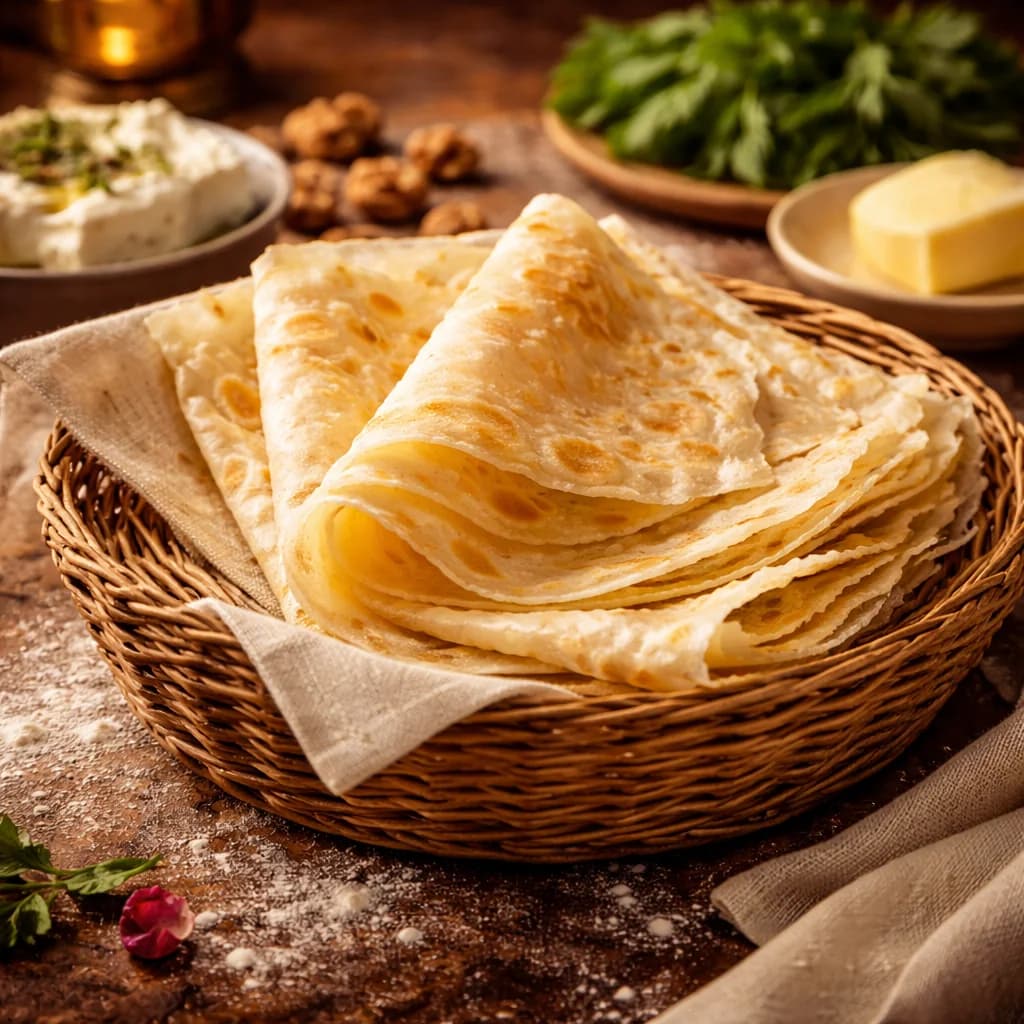
The most versatile of Persian breads—paper-thin sheets that can be soft and pliable for wrapping kebabs and herbs, or dried to a satisfying cracker-like crispness for scooping dips and breaking into soups. Lavash is ancient, practical, and elegant, its simplicity belying its importance in Persian cuisine. Made from just flour, water, and salt, rolled impossibly thin and baked in moments, lavash has sustained travelers, nomads, and families for millennia. Fresh lavash folds like fabric; dried lavash shatters like delicate glass. Both forms are essential to the Persian table.

Noon Sangak (Persian Pebble-Baked Flatbread)

Noon Sangak (Persian Pebble-Baked Flatbread)

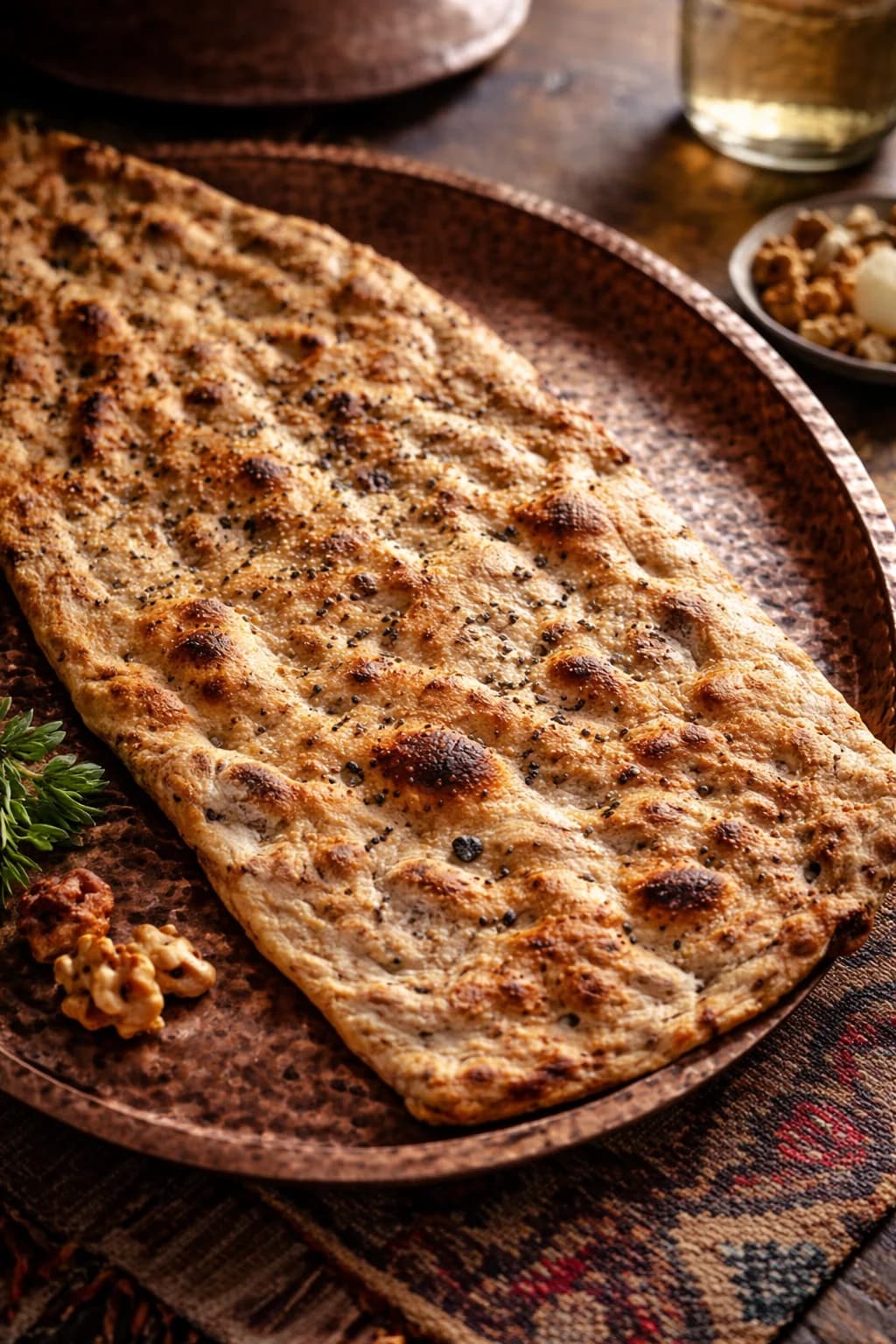
The most dramatic and ancient of Persian breads—a large, rustic whole wheat flatbread baked directly on a bed of hot river pebbles, emerging with a distinctive dimpled surface and an incomparable smoky, nutty flavor. Sangak (meaning 'little stones') dates back over a thousand years and was traditionally the bread of the Persian army, baked in portable ovens. Its irregular, almost primitive appearance belies its sophisticated flavor—the whole wheat dough develops deep, complex tastes, while the stone-contact creates a uniquely crispy, charred underside. This is artisan bread in its most elemental form.

Noon Taftoon (Persian Soft Dimpled Flatbread)

Noon Taftoon (Persian Soft Dimpled Flatbread)

A pillowy, dimpled flatbread with a soft, tender crumb and slightly chewy crust—taftoon is the everyday bread of Persian homes, perfect for scooping up stews, soaking up sauces, and tearing apart at the family table. Its characteristic dimpled surface, created by pressing fingertips or a special tool into the dough, isn't just decorative—it ensures even cooking and creates texture variation in every bite. Traditionally baked slapped against the walls of a clay tandoor, taftoon emerges warm, fragrant, and irresistibly soft. This is comfort bread at its finest.