
Noon Lavash (Persian Paper-Thin Flatbread)

Noon Lavash (Persian Paper-Thin Flatbread)

نان لواش

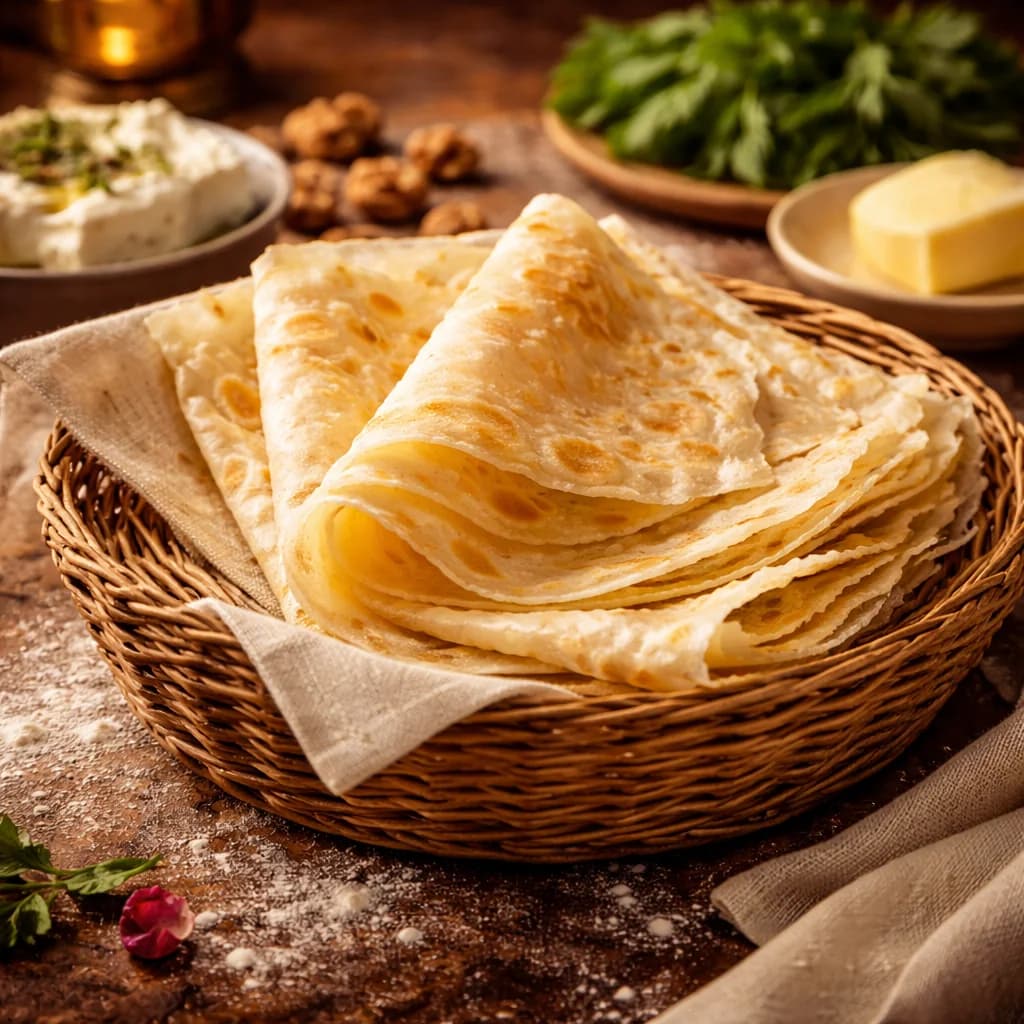
The most versatile of Persian breads—paper-thin sheets that can be soft and pliable for wrapping kebabs and herbs, or dried to a satisfying cracker-like crispness for scooping dips and breaking into soups. Lavash is ancient, practical, and elegant, its simplicity belying its importance in Persian cuisine. Made from just flour, water, and salt, rolled impossibly thin and baked in moments, lavash has sustained travelers, nomads, and families for millennia. Fresh lavash folds like fabric; dried lavash shatters like delicate glass. Both forms are essential to the Persian table.

breadPréparation: 20 minCuisson: 30 minintermediatePour 8

Note culturelle

Lavash is among humanity's oldest breads, with a history spanning at least 3,000 years. In Persian culture, lavash serves countless purposes: soft lavash wraps kebabs and herbs, creating the beloved 'kebab dar noon' (kebab in bread); dried lavash is crumbled into ash (soup) or served alongside dips. Traditionally baked against the scorching walls of a tandoor oven, lavash emerges thin as parchment and slightly blistered. It dries quickly and can be stored for months—nomadic peoples carried dried lavash on journeys, rehydrating it with water or broth when needed. The bread-making process itself is communal: women traditionally gather to roll and bake lavash together, the repetitive work accompanied by conversation and song. UNESCO has recognized lavash-making as an important cultural heritage.

Moments Critiques

  • Proper kneading for elastic dough
  • Adequate resting (minimum 1 hour)
  • Rolling paper-thin (1-2mm)
  • Hot dry pan for quick cooking
  • Proper treatment after cooking (covered = soft, uncovered = crispy)
1
PRÉPARATION12 min

Make the dough

In a large bowl, combine the flour and salt. If using yeast, add it to the flour. Make a well in the center and add the warm water and oil (if using). Mix until a shaggy dough forms, then knead for 8-10 minutes until smooth and elastic. The dough should be soft but not sticky—add small amounts of flour or water as needed.

Smooth, elastic dough; springs back when poked
OdeurClean flour smell; slight yeast if using
SonSlapping against counter
TextureSmooth, soft, pliable

Étape Critique

Proper kneading develops gluten, which allows the dough to be rolled paper-thin without tearing. Underkneaded dough will tear and resist rolling.

The dough should be soft—err on the side of slightly sticky rather than dry. You can always add flour when rolling, but dry dough won't roll thin.
2
PRÉPARATION60 min

Rest the dough

Shape the dough into a ball and place in a lightly oiled bowl. Cover with plastic wrap or a damp towel. Let rest at room temperature for at least 1 hour. If using yeast, it will rise slightly; if not, the rest still relaxes the gluten for easier rolling.

Dough is relaxed and slightly puffy
OdeurSlightly fermented if using yeast
TextureSoft, relaxed, easy to stretch

Étape Critique

Resting relaxes the gluten, making the dough much easier to roll thin. Freshly kneaded dough resists rolling and springs back. Rested dough is pliable and cooperative.

Longer rest (up to 3 hours) makes rolling even easier. The dough can also be refrigerated overnight—bring to room temperature before rolling.
3
PRÉPARATION5 min

Divide the dough

Turn the rested dough onto a lightly floured surface. Divide into 8 equal pieces (about 80g each). Shape each piece into a smooth ball. Cover with a towel and let rest for 10 minutes while you heat the pan.

Eight smooth dough balls
TextureSmooth balls, slightly sticky
This second rest after dividing allows the gluten to relax again after handling. Even 10 minutes makes a difference for rolling.
4
PRÉPARATION5 min

Heat the cooking surface

Heat a large cast iron skillet, griddle, or flat pan over medium-high heat. The surface should be very hot but not smoking. Test with a small piece of dough—it should sizzle immediately and start to bubble within seconds.

Pan is very hot; no visible smoke; dough sizzles on contact
Medium-HighSurface should be around 230°C / 450°F
SonTest dough sizzles immediately

Étape Critique

The pan must be hot enough to cook the thin lavash quickly—too cool and it dries out before cooking; too hot and it burns before cooking through.

Cast iron is ideal for its even heat retention. A dry pan (no oil) is traditional. Adjust heat as you go—the first lavash is often a test.
5
PRÉPARATION3 min

Roll out the lavash

On a well-floured surface, roll one dough ball into a very thin sheet—as thin as you can manage without tearing, ideally about 1-2mm thick. The shape can be round, oval, or irregular. Traditional lavash is paper-thin and almost translucent in places. If adding seeds, sprinkle on the surface and press in with the rolling pin.

Paper-thin dough; can almost see through it; very large and flat
OdeurFlour
SonRolling pin on dough
TextureThin, delicate, pliable

Étape Critique

Thinness is the defining characteristic of lavash. Thick lavash is a different bread entirely. The dough should be thin enough to be almost translucent—this creates the signature texture whether soft or crispy.

Roll from the center outward, rotating the dough frequently. Use plenty of flour to prevent sticking. If the dough springs back, let it rest another minute.
6
CUISSON1 min

Bake the lavash

Carefully transfer the rolled lavash to the hot, dry pan. It will immediately start to bubble and puff in spots—this is correct. Cook for 30-60 seconds until the bottom has golden spots and the top is set. Flip and cook another 20-30 seconds. The bread should have characteristic bubbles and light brown spots.

Bubbling surface; golden-brown spots; cooked through but still pliable
Medium-HighHot dry pan
OdeurToasting bread—slightly nutty
SonSizzling, slight popping from bubbles
TexturePuffing, becoming set

Étape Critique

Quick, hot cooking creates the characteristic bubbles and spots while keeping the bread pliable. Overcooking dries it out (fine if you want crispy lavash); undercooking leaves raw spots.

The bubbles and uneven color are features, not flaws. Work quickly—thin bread cooks fast. Have your next dough ball rolled and ready.
7
CUISSON2 min

Stack or dry the lavash

For soft lavash: immediately transfer to a stack, covering with a clean kitchen towel. The steam keeps them soft and pliable. Stack all the cooked lavash under the towel. For crispy lavash: let them cool on a wire rack without stacking—they'll dry crisp within minutes.

Soft: stack under towel, pliable. Crispy: single layer on rack, hardening
OdeurFresh bread
SonSoft: quiet. Crispy: crackling as it dries
TextureSoft: flexible. Crispy: rigid, snaps when bent

Étape Critique

How you treat the lavash immediately after cooking determines whether it's soft or crispy. Under a towel = soft and pliable for wrapping. On a rack = crispy for dipping/breaking.

You can have some of each—stack some under a towel for soft, leave others out to crisp. The same bread, two different textures.
8
CUISSON20 min

Continue with remaining dough

Repeat rolling and cooking with the remaining dough balls. Work in a rhythm: while one lavash cooks, roll the next. Add each cooked lavash to the stack (for soft) or rack (for crispy). Adjust heat if needed—the pan can get hotter as you work.

Stack of lavash growing; consistent color and bubbling
OdeurContinuously toasting bread
SonSizzling, occasional puffing
TextureEach lavash similar quality
The process becomes rhythmic once you find your groove. Don't worry if the first one or two are imperfect—they're still delicious.
9
FINITION2 min

Serve or store

Soft lavash: serve immediately or within a few hours. Use for wrapping kebabs, scooping dips, or eating with cheese and herbs. Store wrapped in plastic or a towel; refrigerate for 3 days or freeze for months. Crispy lavash: serve for dipping or breaking into soups. Store in an airtight container at room temperature for weeks.

Beautiful thin bread with characteristic bubbles and spots
OdeurFresh, wheaty
SonSoft: quiet. Crispy: crackling
TextureSoft: fabric-like. Crispy: delicate, shattering
To refresh soft lavash that's dried out, sprinkle with water and microwave for 10-15 seconds, or warm in a towel in a low oven. Dried lavash can be re-softened by draping over a pot of steaming water.

Repos Requis

60 min - Gluten must relax for easy rolling; dough should be soft and pliable

Extras

Équipement

rolling pinlarge cast iron skillet or griddleclean kitchen towelsstandard

Préparer à l'Avance

  • Dough can be refrigerated for up to 3 days—bring to room temperature before rolling.
  • Soft lavash freezes excellently for months—thaw and warm before serving.
  • Crispy lavash keeps in airtight container for weeks.

Soft: warm in dry pan for 20 seconds, or microwave with damp paper towel.

Crispy: no reheating needed.

Stale soft lavash can be crisped in a dry pan or oven.

Servir Avec

Accompagnements

  • Kebabs (wrapped in lavash)
  • Feta cheese (panir)
  • Fresh herbs (sabzi khordan)
  • Any dip—hummus, kashk-e bademjan, borani
  • Ash (soup)—crumbled into it

Boissons

  • Persian tea
  • Doogh

Substitutions

all purpose flourBread flour makes slightly chewier lavash. Whole wheat can replace up to half. Gluten-free flour won't work—gluten is essential for thinness.
yeastYeast is optional—unleavened lavash is equally traditional. Yeast adds slight puffiness and flavor complexity. Without yeast, resting time is still essential for gluten relaxation.
cooking surfaceCast iron is ideal. Stainless steel or non-stick work but may not brown as evenly. A pizza stone in the oven works for larger lavash.

Mise à l'échelle

This recipe makes 8 large lavash sheets. Scale easily—the dough is simple and forgiving. Lavash keeps well: soft lavash can be frozen; dried lavash keeps for weeks in an airtight container. Traditional lavash can be enormous (up to 1 meter); home versions are sized to your pan.

Source

Traditionnel · Traditional Persian and Caucasian cuisine

Lavash is one of the oldest breads in the world, originating in the Armenian highlands and spreading throughout Persia, the Caucasus, and Central Asia. UNESCO recognized Armenian lavash as Intangible Cultural Heritage. In Iran, lavash is one of the four main bakery breads and is prized for its versatility.

Recettes similaires

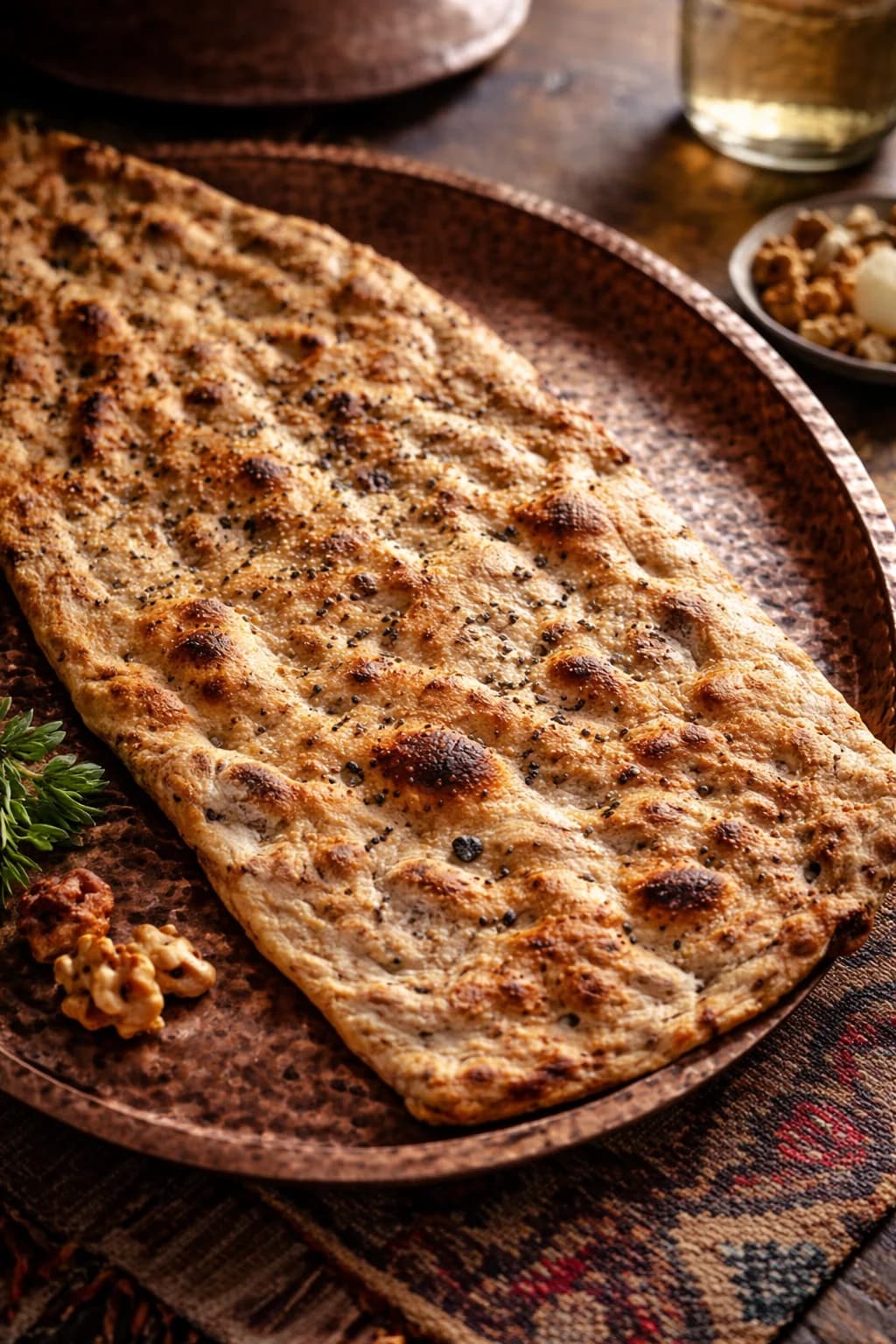
Noon Sangak (Persian Pebble-Baked Flatbread)

Noon Sangak (Persian Pebble-Baked Flatbread)

The most dramatic and ancient of Persian breads—a large, rustic whole wheat flatbread baked directly on a bed of hot river pebbles, emerging with a distinctive dimpled surface and an incomparable smoky, nutty flavor. Sangak (meaning 'little stones') dates back over a thousand years and was traditionally the bread of the Persian army, baked in portable ovens. Its irregular, almost primitive appearance belies its sophisticated flavor—the whole wheat dough develops deep, complex tastes, while the stone-contact creates a uniquely crispy, charred underside. This is artisan bread in its most elemental form.

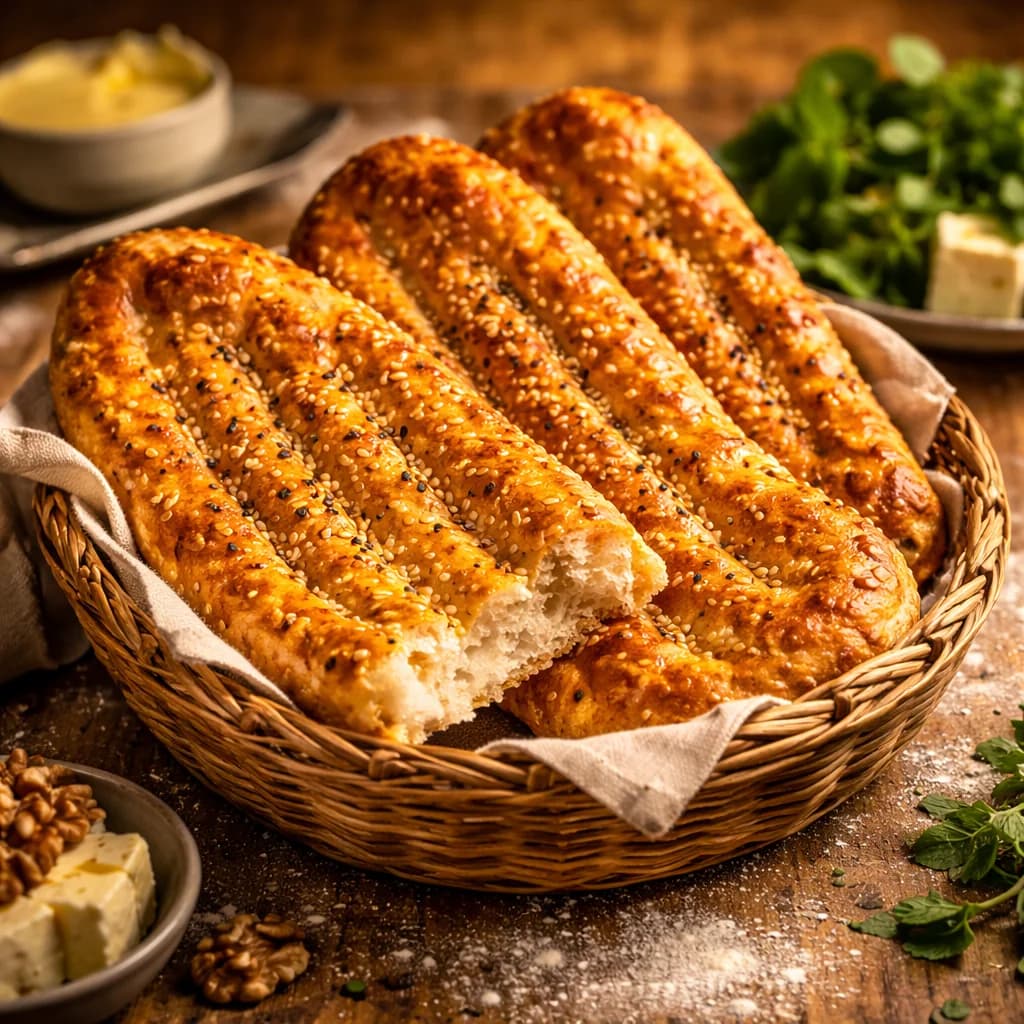
Noon Barbari (Persian Sesame Flatbread)

Noon Barbari (Persian Sesame Flatbread)

The king of Persian breads—a magnificent golden flatbread with a thick, chewy crust, soft interior, and distinctive ridged surface glistening with romaal (a flour-oil glaze) and scattered with sesame or nigella seeds. Barbari is substantial and satisfying, with a texture somewhere between focaccia and Turkish pide. Fresh from the oven, it fills the kitchen with an irresistible aroma and offers that perfect combination of crispy crust and pillowy crumb. This is the bread of Persian breakfasts, torn into pieces and served with feta cheese, fresh herbs, walnuts, and sweet tea.

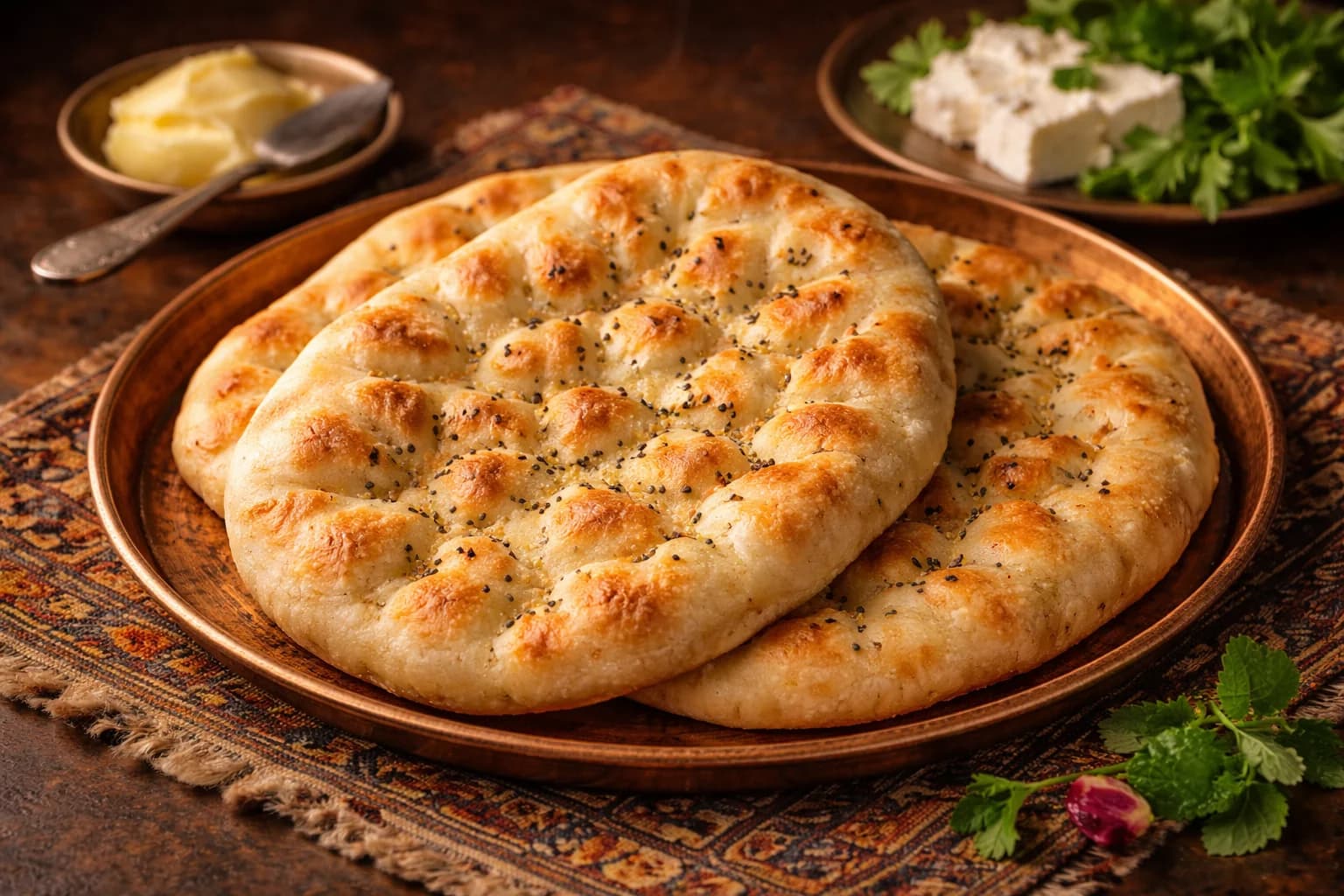
Noon Taftoon (Persian Soft Dimpled Flatbread)

Noon Taftoon (Persian Soft Dimpled Flatbread)

A pillowy, dimpled flatbread with a soft, tender crumb and slightly chewy crust—taftoon is the everyday bread of Persian homes, perfect for scooping up stews, soaking up sauces, and tearing apart at the family table. Its characteristic dimpled surface, created by pressing fingertips or a special tool into the dough, isn't just decorative—it ensures even cooking and creates texture variation in every bite. Traditionally baked slapped against the walls of a clay tandoor, taftoon emerges warm, fragrant, and irresistibly soft. This is comfort bread at its finest.