
Sabzi Khordan (Persian Fresh Herb Platter)

Sabzi Khordan (Persian Fresh Herb Platter)

سبزی خوردن

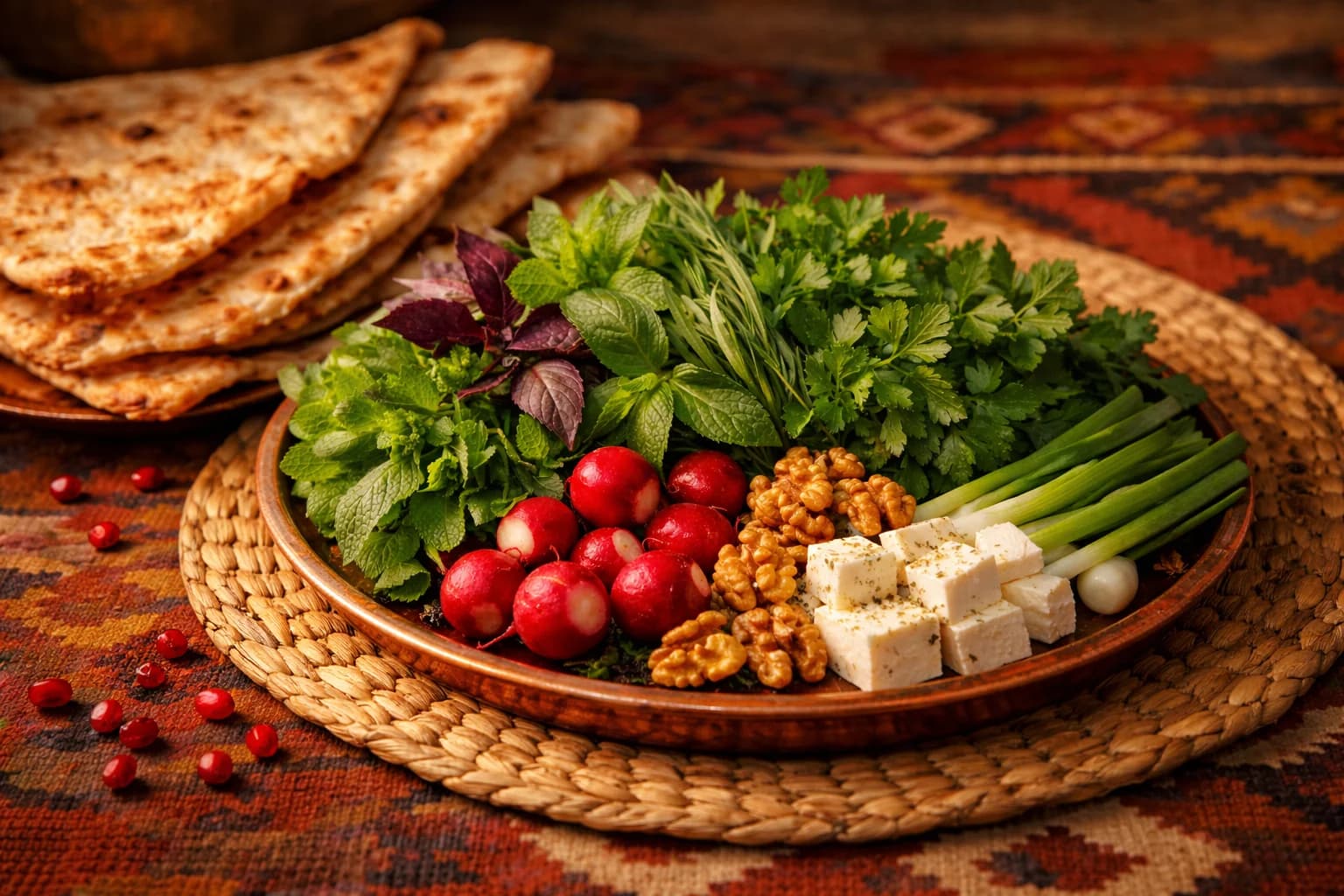
Not a recipe but a ritual—a generous platter of fresh herbs, radishes, spring onions, and sometimes cheese and walnuts that graces every Persian table. The name means literally 'herbs to eat,' and guests pluck whole leaves and sprigs to wrap in bread, eat alongside stews, or simply nibble between bites. This living centerpiece represents the Persian reverence for fresh herbs as not just garnish but essential components of every meal, believed to aid digestion and balance rich dishes.

appetizerPréparation: 15 minCuisson: 0 mineasyPour 8

Note culturelle

Sabzi khordan—literally 'eating herbs'—is as essential to the Persian table as rice itself. No meal is complete without this generous platter of fresh herbs, which diners eat throughout the meal: wrapped in bread with cheese and walnuts, tucked alongside bites of stew, or simply eaten on their own between courses. Persians believe fresh herbs aid digestion (especially important with rich foods), freshen the breath, and provide essential nutrients. The selection varies by season and region, but basil, mint, and tarragon are considered essential. The platter should always look abundant and inviting—a sparse sabzi khordan suggests a stingy host.

Moments Critiques

  • Washing herbs thoroughly (multiple rinses)
  • Keeping herbs whole—not chopped
  • Arranging beautifully for abundance
  • Keeping fresh until service
1
PRÉPARATION8 min

Wash the herbs thoroughly

Fill a large bowl or clean sink with cold water. Submerge all the herbs and swish vigorously to dislodge dirt and grit—herbs can be very sandy. Lift herbs out (don't pour through, which redistributes grit), drain the water, and repeat 2-3 times until no sand remains at the bottom of the bowl. Herbs should be pristinely clean.

Clean water with no grit; herbs are bright and clean
OdeurFresh, vibrant herb aromas released by water
SonSwishing water
TextureHerbs are clean and free of grit

Étape Critique

Gritty herbs ruin the sabzi khordan experience. Herbs, especially basil and cilantro, trap sand and dirt. Multiple washes are essential—don't rush this step.

Lift herbs out of the water rather than draining through them. Letting the grit settle, then lifting the herbs out, is more effective than pouring.

Erreurs Courantes

  • Only washing once (gritty herbs)
  • Pouring herbs through water instead of lifting out
  • Not checking the bottom of the bowl for grit
2
PRÉPARATION5 min

Dry the herbs gently

Shake off excess water. Lay herbs on clean kitchen towels or paper towels and pat gently to dry. Alternatively, use a salad spinner very gently—herbs bruise easily. The herbs should be dry but not limp or damaged.

Herbs are dry but still perky and fresh-looking
OdeurIntense fresh herb fragrance
TextureDry to touch but not wilted
Don't crush or bruise the herbs—they should look vibrant and alive on the platter. Pat gently, don't rub.
3
PRÉPARATION3 min

Prepare the vegetables

Trim the radishes, leaving a bit of stem if they have nice leaves—the leaves are edible and pretty. Trim the root ends of spring onions and remove any wilted outer layers. Both should look fresh and inviting.

Trimmed, attractive radishes and spring onions
OdeurPeppery radish, mild onion
TextureCrisp and firm
Choose radishes with fresh green leaves if possible—they add beauty to the platter and are delicious to eat
4
PRÉPARATION2 min

Prepare the cheese (if using)

Cut the feta into 1-2cm cubes, or slice into pieces. Persian lighvan cheese is traditional, but any good-quality feta works. Keep some pieces larger for visual interest.

Cubed or sliced white feta
OdeurTangy, salty cheese
TextureFirm but creamy
Bulgarian feta is a good substitute for Persian lighvan—it's creamier than Greek feta. The cheese is traditional and adds protein and richness to the herb wraps.
5
FINITION5 min

Arrange the platter

Select a large, attractive platter. Arrange the herbs in loose bunches, keeping different herbs in distinct groupings so diners can choose what they want. Don't chop or separate leaves—the herbs should remain in sprigs for guests to pluck. Place radishes and spring onions around or among the herbs. If using, add cheese cubes and walnuts in small mounds or bowls.

Abundant, beautiful arrangement of green herbs with colorful vegetables and white cheese
OdeurIntensely aromatic—the herbs perfume the table
TextureFresh, vibrant, alive

Étape Critique

Presentation matters—sabzi khordan should look generous and inviting. A sparse or carelessly arranged platter reflects poorly on the host. Take time to make it beautiful.

Think of it like a flower arrangement—varied heights, textures, and colors. The platter should look abundant and effortlessly elegant.
6
FINITION1 min

Keep fresh and serve

If not serving immediately, cover loosely with damp paper towels and refrigerate for up to 2-3 hours. Before serving, mist lightly with water if herbs look dry. Place the platter on the table within reach of all diners, with fresh bread alongside.

Fresh, vibrant platter ready to serve
OdeurFresh herbs perfuming the dining area
TextureHerbs remain crisp and perky
Sabzi khordan stays at the table throughout the meal. Replenish if it starts to look depleted—abundance is part of Persian hospitality.
7
FINITION

How to eat sabzi khordan

Diners pluck whole herb leaves and sprigs, radishes, and spring onion pieces throughout the meal. The classic way to eat them: tear off a piece of bread, add a few herb leaves, a piece of cheese, maybe a walnut, and wrap into a small bundle. Eat between bites of the main meal, or as an appetizer. Herbs are also tucked into bites of stew or eaten alongside kebabs.

Small bread bundle with herbs, cheese, and walnut inside
There's no wrong way to eat sabzi khordan—nibble herbs on their own, wrap them in bread, or add them to your plate alongside other foods. The platter is meant to be interactive.

Extras

Équipement

large platterbowl for soakingstandard

Préparer à l'Avance

  • Wash and dry herbs up to 4-5 hours ahead; store wrapped in damp paper towels in plastic bag in refrigerator.
  • Arrange platter up to 1 hour before serving; cover with damp towels and refrigerate.

N/A—always served fresh and cold

Servir Avec

🍚Present at every Persian meal with rice

Accompagnements

  • Alongside all Persian foods
  • Particularly with kebabs
  • With stews (khoresh)
  • With bread and cheese as an appetizer

Boissons

  • Doogh
  • Black tea

Substitutions

persian basilItalian sweet basil or Thai basil both work. Persian basil (rayhan) is slightly smaller-leaved and more intensely aromatic.
tarragonEssential to authentic sabzi khordan and has no true substitute. French tarragon is correct; avoid Russian tarragon (much milder). If unavailable, increase other herbs but note the absence.
persian fetaBulgarian feta is closest. Greek feta works but is firmer and saltier. French feta is also good. The goal is a creamy, tangy cheese.
radishesRed radishes are standard. French breakfast radishes, watermelon radishes, or daikon slices all work for variety.

Mise à l'échelle

Scale by adding more bunches of each herb. For a large gathering, simply increase quantities and use a larger platter. The sabzi khordan should look abundant and generous—it's as much about visual impact as eating.

Source

Traditionnel · Traditional Persian cuisine

Present at virtually every Persian meal from humble family dinners to elaborate celebrations. The tradition dates back centuries and reflects the Persian belief in the medicinal and digestive properties of fresh herbs.

Recettes similaires

Borani Esfenaj (Persian Spinach Yogurt Dip)

Borani Esfenaj (Persian Spinach Yogurt Dip)

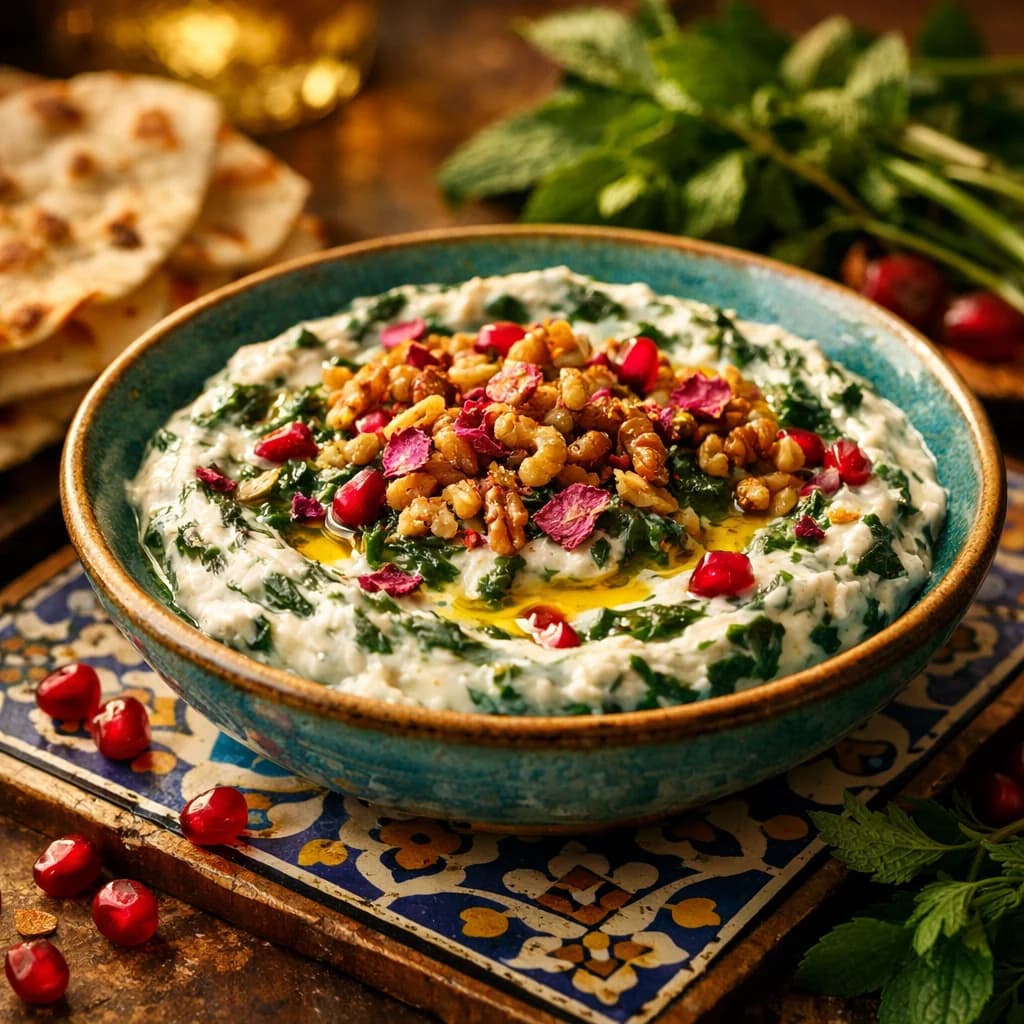
A vibrant, verdant dip of garlicky sautéed spinach folded into thick, tangy yogurt—cool, creamy, and deeply satisfying. The spinach is cooked with generous garlic until silky, then combined with yogurt and crowned with toasted walnuts, sometimes dried rose petals, and a drizzle of olive oil. Named after the legendary Persian queen Pourandokht (Buran), borani represents the elegant simplicity of Persian mezze—humble ingredients elevated through technique and balance.

Mast-o-Khiar (Persian Cucumber Yogurt)

Mast-o-Khiar (Persian Cucumber Yogurt)

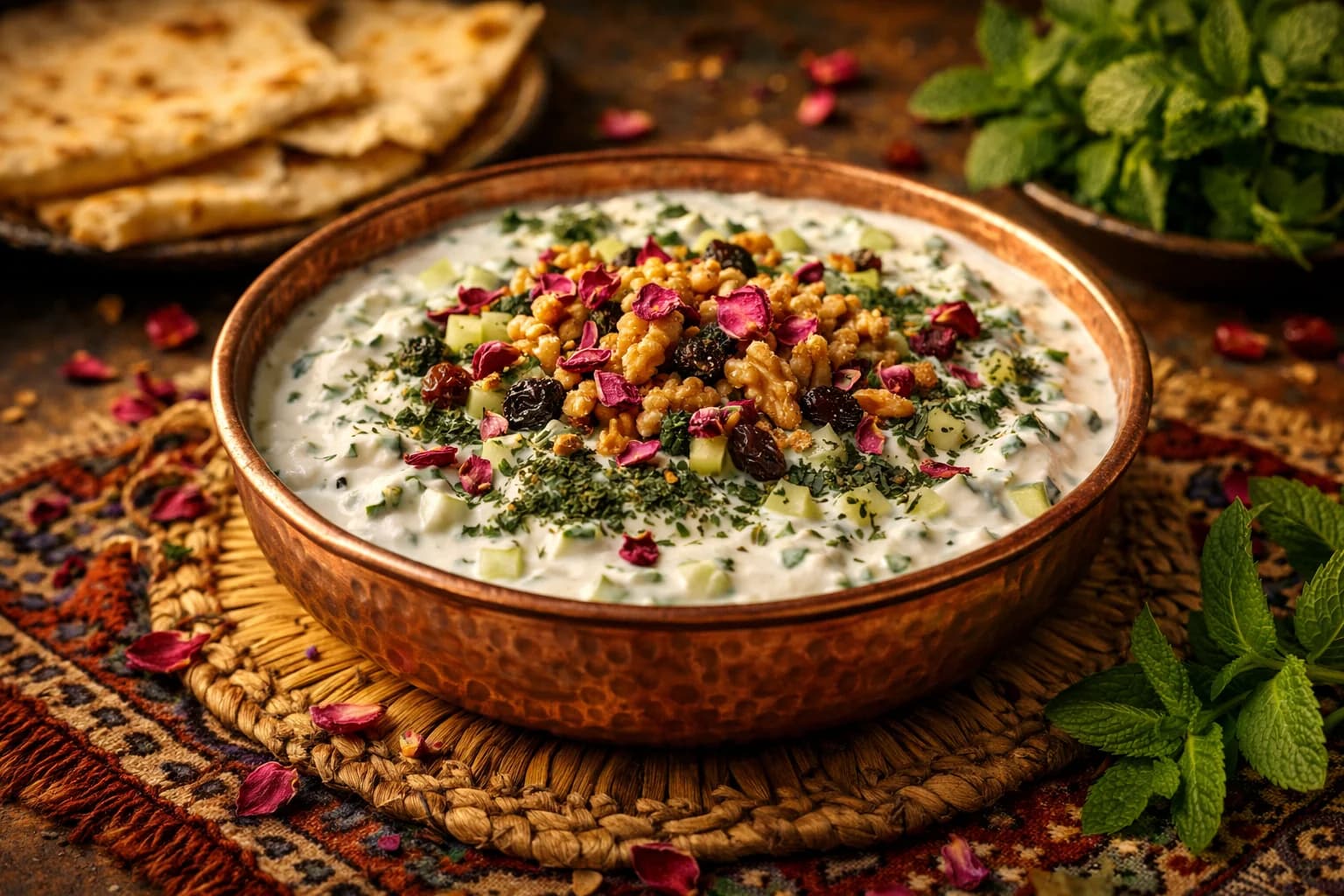
The essential Persian yogurt dip—cool, creamy yogurt studded with crisp cucumber, fragrant dried mint, and often enriched with walnuts, raisins, and rose petals. Unlike Greek tzatziki, Persian mast-o-khiar is thicker, more aromatic, and often includes surprising sweet elements that create a uniquely Persian flavor profile. Found at every Persian table from simple family dinners to elaborate celebrations, this refreshing dip is the perfect cooling counterpoint to rich stews and smoky kebabs.

Kashk-e Bademjan (Eggplant with Kashk)

Kashk-e Bademjan (Eggplant with Kashk)

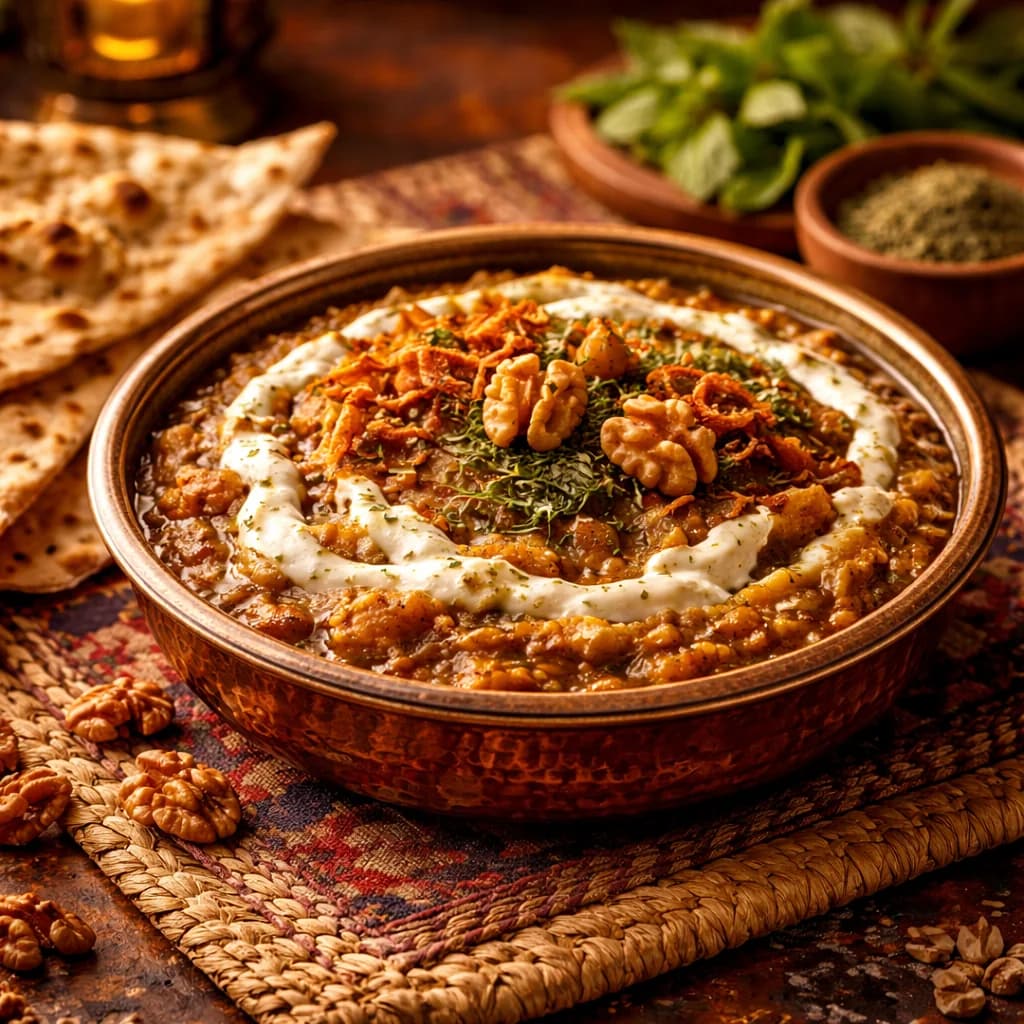
A velvety, tangy eggplant dip crowned with crispy fried onions, toasted walnuts, and fragrant dried mint—Persian mezze at its most elegant. The star ingredient is kashk, a fermented whey product that adds a distinctive tangy, slightly funky depth unlike anything else. Silky roasted eggplant is combined with sautéed onions, garlic, and generous swirls of kashk, then topped with a dramatic garnish of deeply caramelized onions. Complex, addictive, and uniquely Persian.