
Kritische Momente
- •Brühe zu Beginn gründlich abschäumen
- •Sehr niedrige Köcheltemperatur für 2,5–3 Stunden aufrechterhalten
- •Sicherstellen, dass alle Komponenten vor dem Stampfen vollständig weich sind
Hülsenfrüchte einweichen
Kichererbsen und weiße Bohnen in separate Schüsseln geben (sie können unterschiedliche Garzeiten haben). Jede Portion mit kaltem Wasser bedecken, mindestens 8 cm hoch. Für 8–12 Stunden oder über Nacht einweichen. Vor der Verwendung abgießen und abspülen.
Fleisch und Gemüse vorbereiten
Lamm in große Stücke schneiden (8–10 cm), Knochen dabei lassen. Zwiebel vierteln. Tomaten vierteln. Kartoffeln schälen und vierteln (bis zur Verwendung in kaltem Wasser aufbewahren). Jede getrocknete Limette 3–4 Mal mit einem scharfen Messer einstechen.
Häufige Fehler
- •Fleisch zu klein schneiden (zerfällt zu sehr)
- •Vergessen, die getrockneten Limetten einzustechen (Geschmack kann nicht entweichen)
Den Topf befüllen
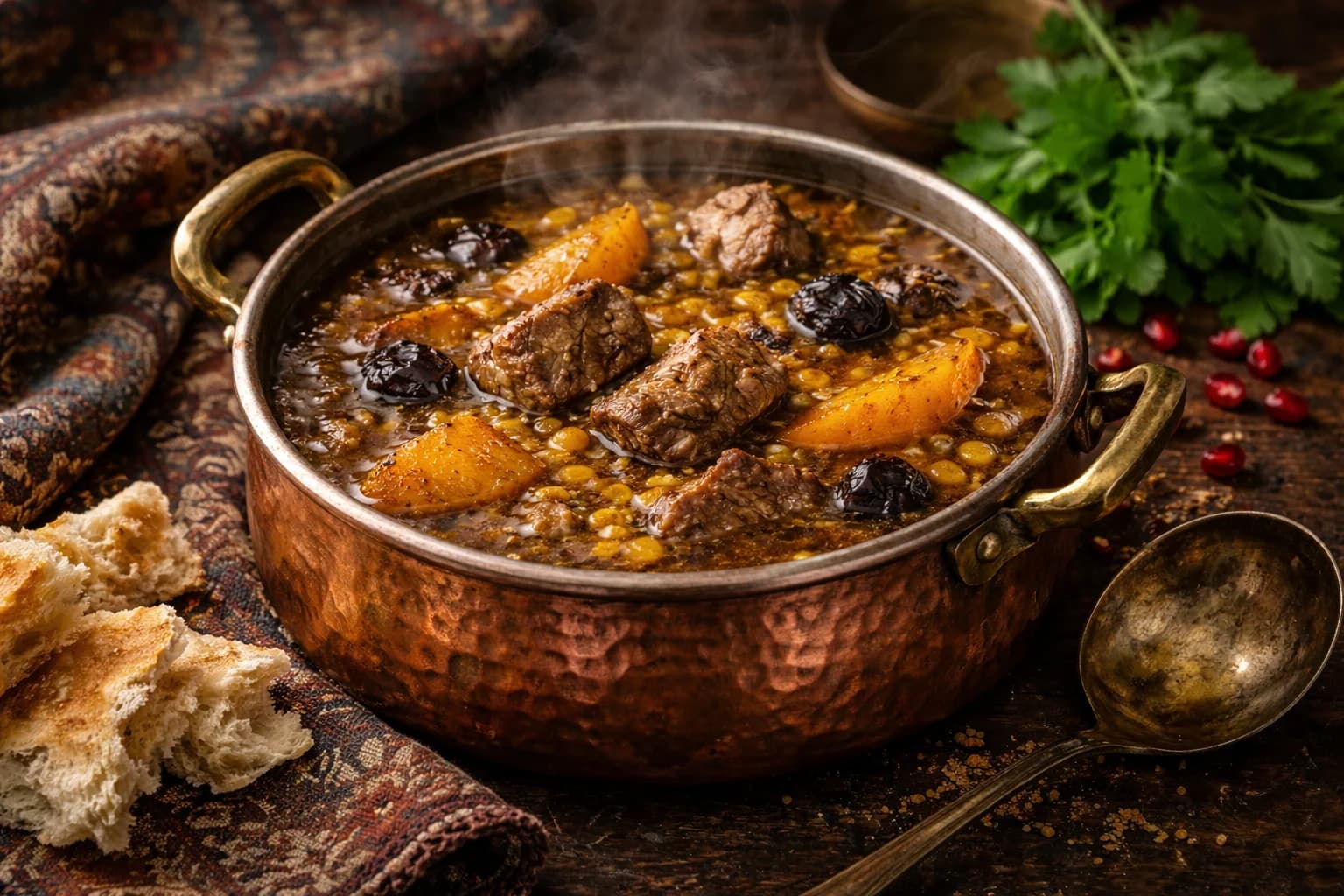
In einem großen schweren Topf die Zutaten schichten: Lamm und Lammfett (falls verwendet) auf den Boden legen. Eingeweichte Kichererbsen und weiße Bohnen hinzufügen. Zwiebelstücke und eingestochene getrocknete Limetten dazwischen setzen. Kurkuma, Salz und Pfeffer hinzufügen. Wasser angießen, bis alles um etwa 5 cm bedeckt ist.
Zum Kochen bringen und abschäumen
Den Topf auf hohe Hitze stellen und zum Kochen bringen. Beim Erhitzen steigt grauer Schaum (Trüb) an die Oberfläche. Diesen mit einem Löffel abschöpfen und entsorgen. Weiter abschäumen, bis die Flüssigkeit relativ klar ist.
Kritischer Schritt
Das Abschäumen entfernt Verunreinigungen und überschüssiges Fett, die die Brühe trüb und fettig machen würden. Dieser Schritt ist für eine sauber schmeckende Brühe unerlässlich.
Häufige Fehler
- •Abschäumen überspringen (trübe, fettige Brühe)
- •Kräftiges Rühren beim Abschäumen (verteilt den Schaum wieder)
Langes, sanftes Köcheln
Nach dem Abschäumen die Hitze auf sehr niedrig reduzieren. Den Topf mit leicht geöffnetem Deckel abdecken. Für 2 Stunden sanft köcheln lassen und gelegentlich prüfen, ob die Flüssigkeitsmenge ausreicht (bei Bedarf heißes Wasser nachfüllen).
Kritischer Schritt
Niedrig und langsam ist die Seele des Abgoosht. Hohe Hitze macht das Fleisch zäh. Das lange Köcheln extrahiert Kollagen aus den Knochen und schafft eine seidig-reiche Brühe. Dies kann nicht beschleunigt werden.
Kartoffeln und Tomaten hinzufügen
Nach 2 Stunden geviertelte Kartoffeln und Tomaten in den Topf geben. Falls die Flüssigkeit stark reduziert ist, heißes Wasser nachfüllen. Weitere 45–60 Minuten köcheln lassen.
Abschließendes Garen und Prüfen
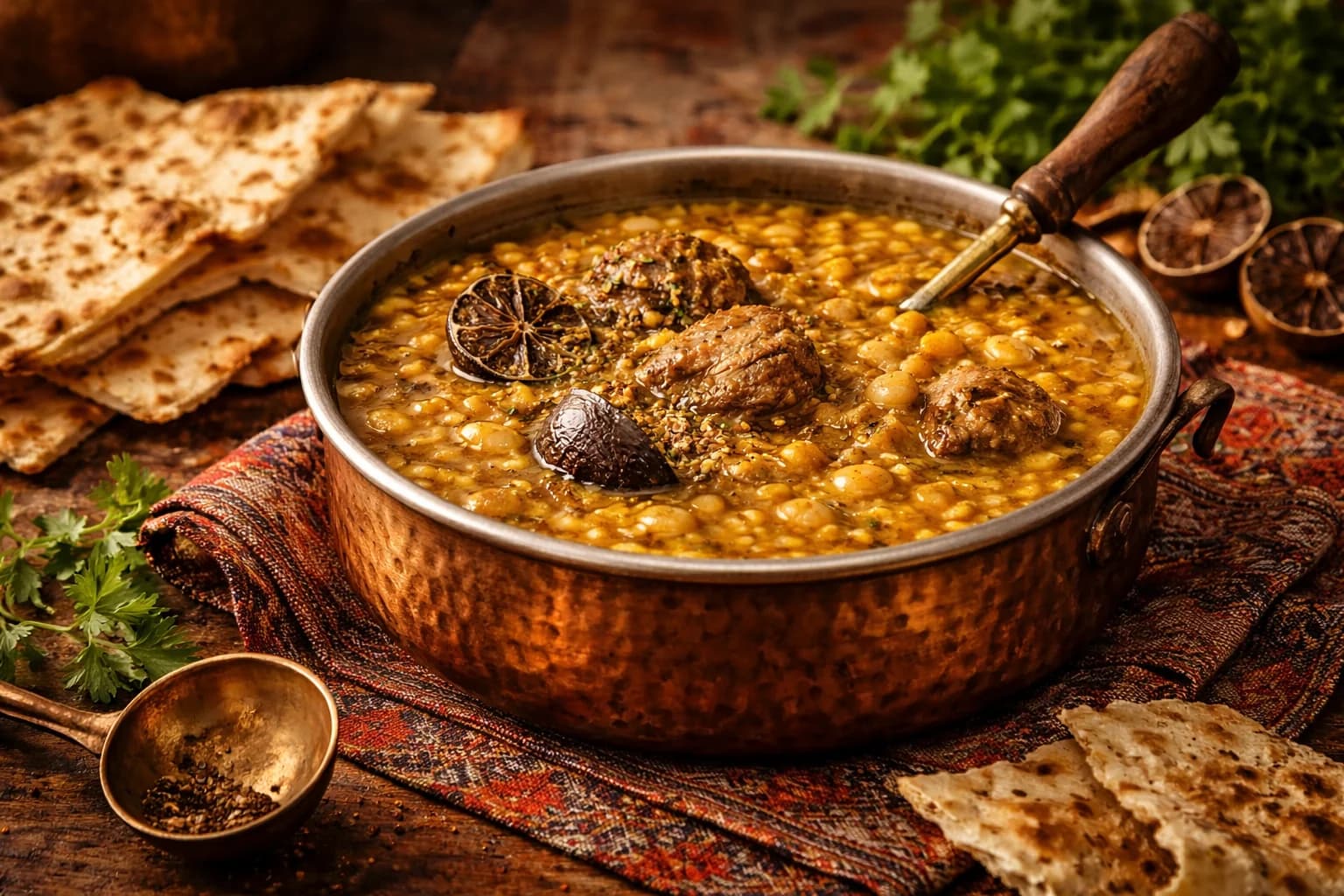
Der Eintopf ist fertig, wenn: das Lamm leicht vom Knochen fällt, Kichererbsen und Bohnen vollständig weich sind (keine kreidige Konsistenz), die Kartoffeln durchgegart sind. Brühe abschmecken und Salz anpassen – sie sollte gut gewürzt und durch die getrockneten Limetten säuerlich sein.
Kritischer Schritt
Nicht ausreichend gegarte Hülsenfrüchte oder zähes Fleisch ruinieren das Gericht. Alles muss vollständig weich sein, damit es sich richtig stampfen lässt. Die getrockneten Limetten sollten sehr weich sein – ihre Säure sollte die ganze Brühe durchziehen.
Häufige Fehler
- •Hülsenfrüchte nicht ausreichend garen (kreidige Konsistenz im fertigen Stampf)
- •Brühe zu wenig salzen (schmeckt flach)
- •Nicht genug Säure der getrockneten Limetten (bei Bedarf eine weitere eingestochene Limette hinzufügen)
Brühe und feste Zutaten trennen
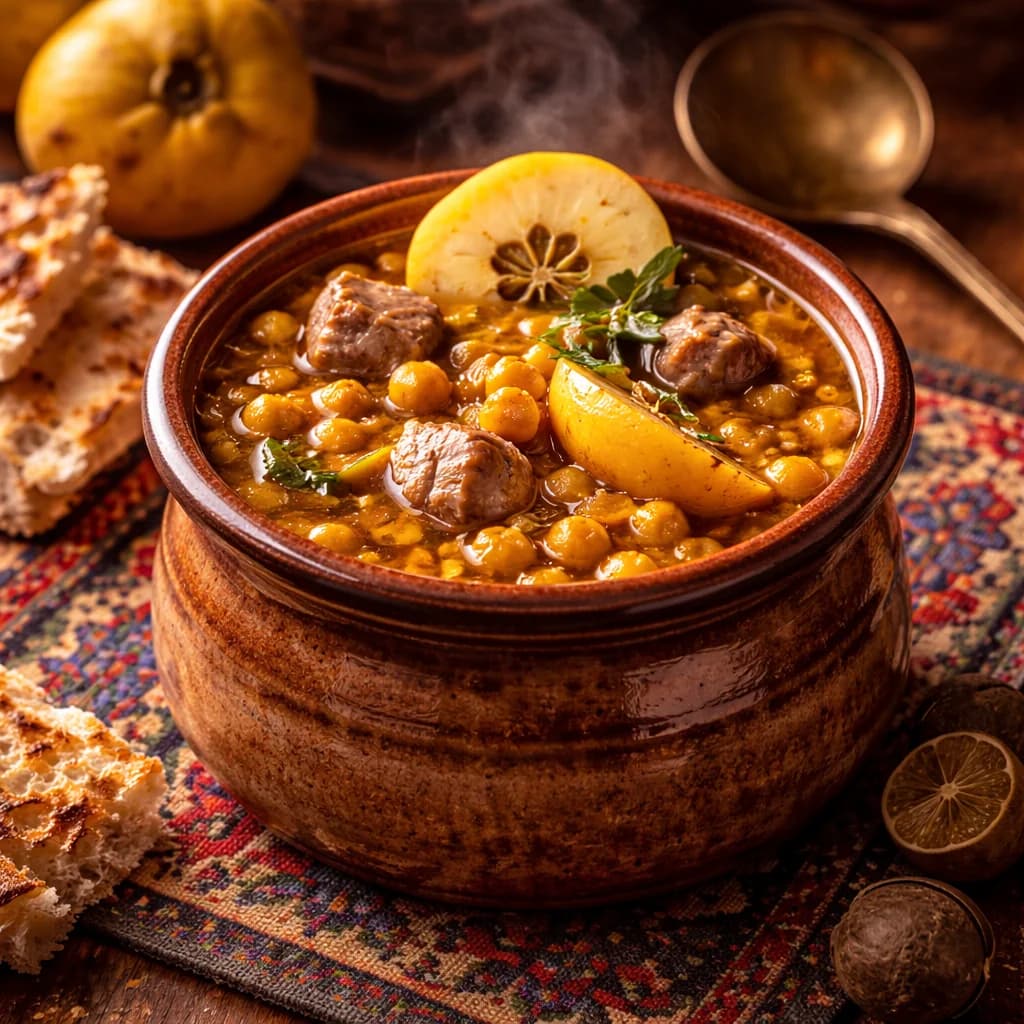
Mit einem Schaumlöffel alle festen Zutaten vorsichtig in eine große Schüssel oder auf eine Platte umfüllen. Knochen herausnehmen und entsorgen (oder für Brühe aufbewahren). Die getrockneten Limetten behalten – sie können mitgestampft oder separat für alle serviert werden, die extra Säure mögen. Die Brühe im Topf warm halten.
Die festen Zutaten stampfen (Goosht Koobideh)
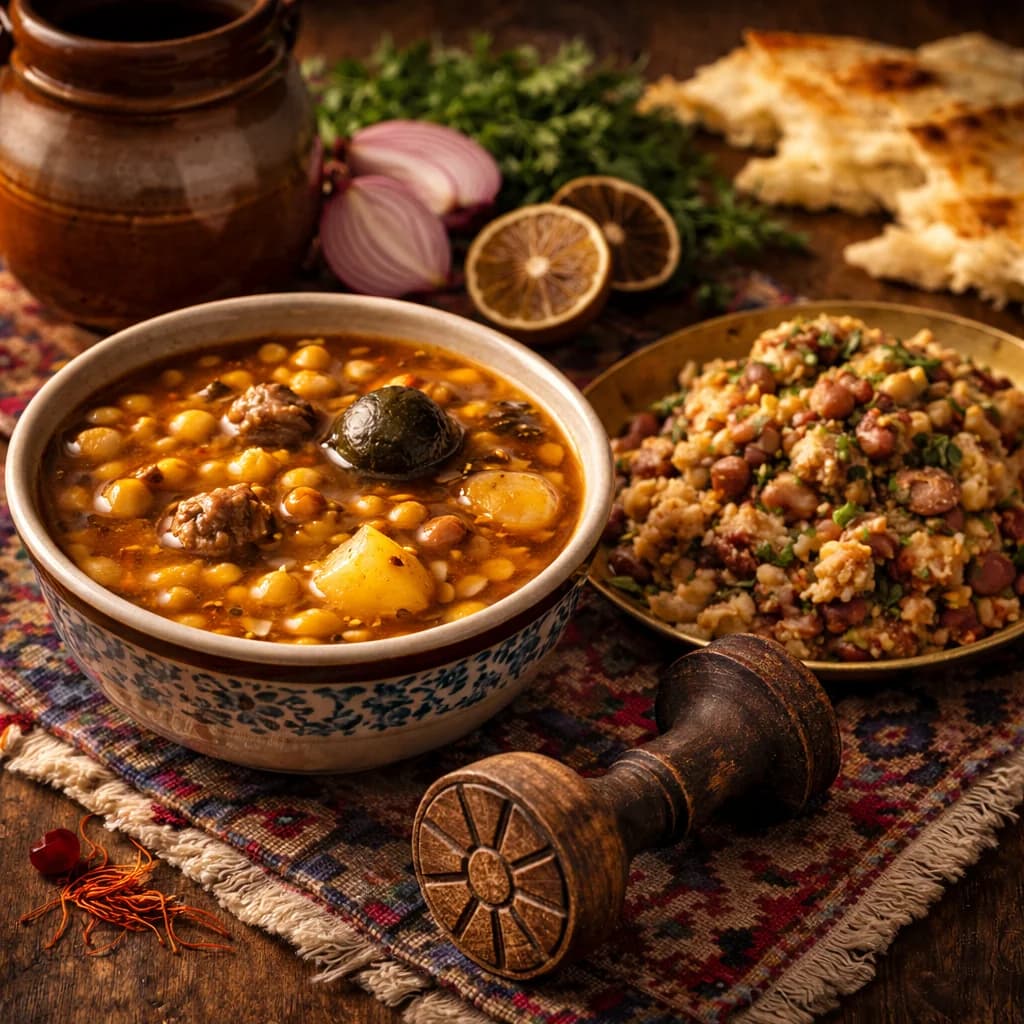
Mit einem Goosht-Koob (traditioneller Stampfer), einer großen Gabel oder einem Kartoffelstampfer die festen Zutaten zusammenstampfen, bis eine grobe, streichfähige Paste entsteht. Die Konsistenz sollte rustikal sein – nicht glatt wie Hummus, aber zusammenhängend. Manche bevorzugen es gröber, andere feiner. Bei Bedarf Salz nachsalzen.
Kritischer Schritt
Die Konsistenz des Goosht Koobideh ist Geschmackssache, aber er muss stampfbar sein. Wenn das Stampfen schwer fällt, wurden die Komponenten nicht lange genug gegart.
In zwei Gängen servieren
Gang 1 (Ab – Brühe): Heiße Brühe in kleine Schüsseln schöpfen. Sangak- oder Lavash-Brot reißen und in die Brühe legen. Brühe schlürfen und das getränkte Brot essen. Gang 2 (Goosht): Den gestampften Goosht Koobideh auf Brot streichen, frische Kräuter, rohe Zwiebel und Torshi dazugeben. Als belegte offene Sandwiches essen.