
Kritische Momente
- •Quitten von Anfang an hinzufügen – sie brauchen die volle Garzeit
- •Die Bernsteinfarb-Transformation beobachten und erreichen
- •Behutsamer Umgang mit der Quitte für die abschließende Präsentation
Hülsenfrüchte über Nacht einweichen
Kichererbsen und weiße Bohnen in separate Schüsseln geben, mit kaltem Wasser bedecken und 8–12 Stunden oder über Nacht einweichen. Vor der Verwendung abgießen und abspülen.
Die Quitten vorbereiten
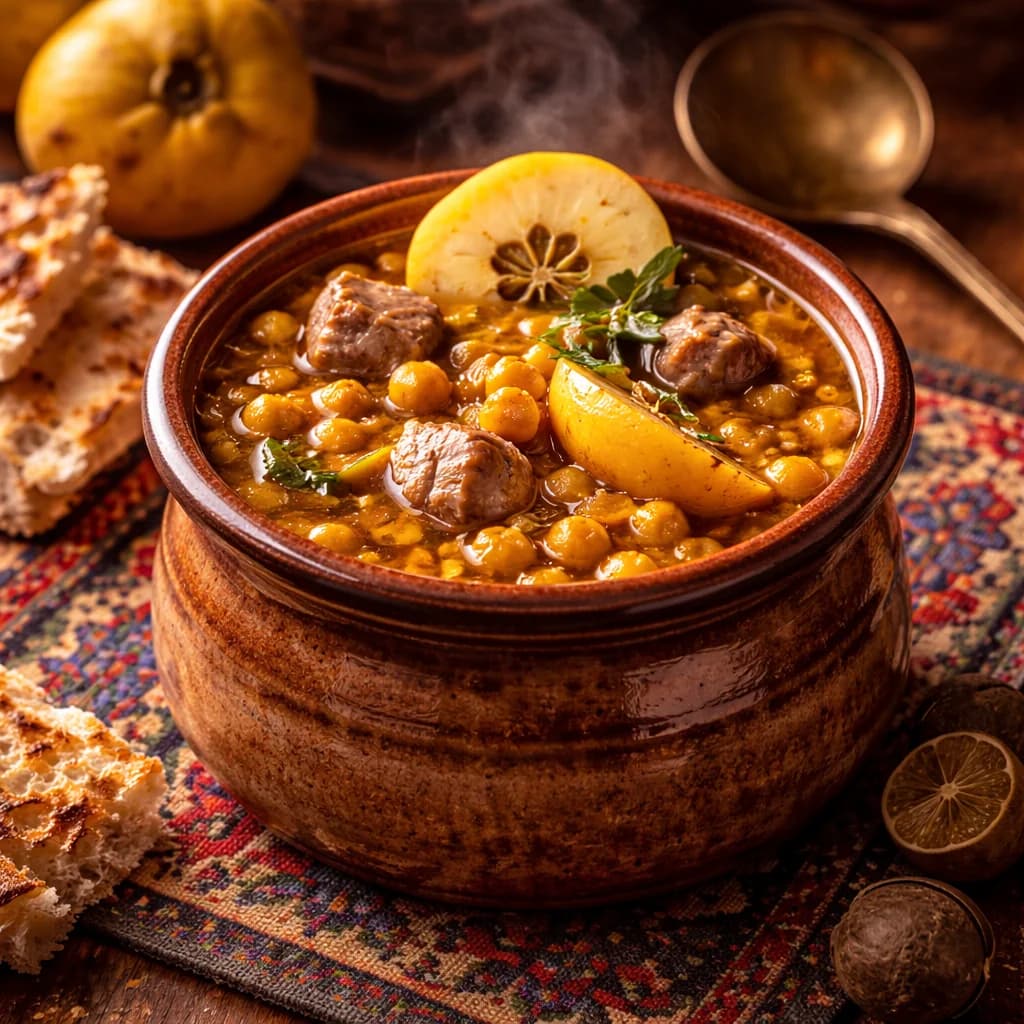
Quitten mit einem Sparschäler schälen (die Schale ist zäh). Vierteln und den harten Kern mit Kernen entfernen. Jedes Viertel in 2–3 dicke Spalten schneiden. Sofort in eine Schüssel mit kaltem Wasser und etwas Zitronensaft legen, um Bräunung zu verhindern.
Kritischer Schritt
Quitten oxidieren schnell und werden braun, wenn sie mit Luft in Berührung kommen. Das angesäuerte Wasser verhindert dies und hält die Spalten hell für ihre wunderschöne Farbveränderung beim Kochen.
Häufige Fehler
- •Spalten zu dünn schneiden (zerfallen beim Garen)
- •Nicht in angesäuertem Wasser aufbewahren (bräunt vor dem Kochen)
- •Kerne entsorgen – sie enthalten Pektin, das die Brühe auf natürliche Weise eindickt
Den Topf mit Quitten von Anfang an befüllen
Lammstücke in einen großen Topf legen. Abgetropfte Kichererbsen, weiße Bohnen, geviertelte Zwiebel und eingestochene getrocknete Limetten hinzufügen. Abgetropfte Quittenspalten jetzt hinzufügen – sie brauchen die volle Garzeit, um sich zu verwandeln. Kurkuma, Zimt, Salz und Pfeffer hinzufügen. Mit Wasser bedecken, etwa 5 cm hoch.
Kritischer Schritt
Anders als die meisten Früchte müssen Quitten von Anfang an hineingegeben werden. Sie brauchen 2,5–3 Stunden, um vollständig weich zu werden und ihre charakteristische Bernsteinfarbe zu entwickeln. Spätes Hinzufügen ergibt harte, blasse Quitten.
Zum Kochen bringen und abschäumen
Bei starker Hitze zum Kochen bringen. Den aufsteigenden grauen Schaum abschöpfen und weiter abschäumen, bis die Brühe relativ klar ist.
Langes Köcheln – die Quitte beim Verwandeln beobachten
Hitze auf sehr niedrig reduzieren. Topf mit leicht geöffnetem Deckel abdecken. Für 2,5 Stunden sanft köcheln lassen. Gelegentlich den Flüssigkeitsstand prüfen und die Farbveränderung der Quitte beobachten – das ist die Magie dieses Gerichts.
Kritischer Schritt
Die langsame Farbveränderung der Quitte ist eine chemische Reaktion, die Zeit und sanfte Hitze erfordert. Eile führt zu blasser, harter Frucht. Die bernstein-rosa Farbe zeigt an, dass die Quitte richtig gegart ist.
Kartoffeln und Tomate hinzufügen
Nach 2 Stunden (wenn die Quitte rosenfarben ist) geviertelte Kartoffeln und Tomate hinzufügen. Bei Wunsch Zucker hinzufügen, um die Süße der Quitte zu unterstreichen. Weitere 45–60 Minuten köcheln lassen.
Gargrad prüfen
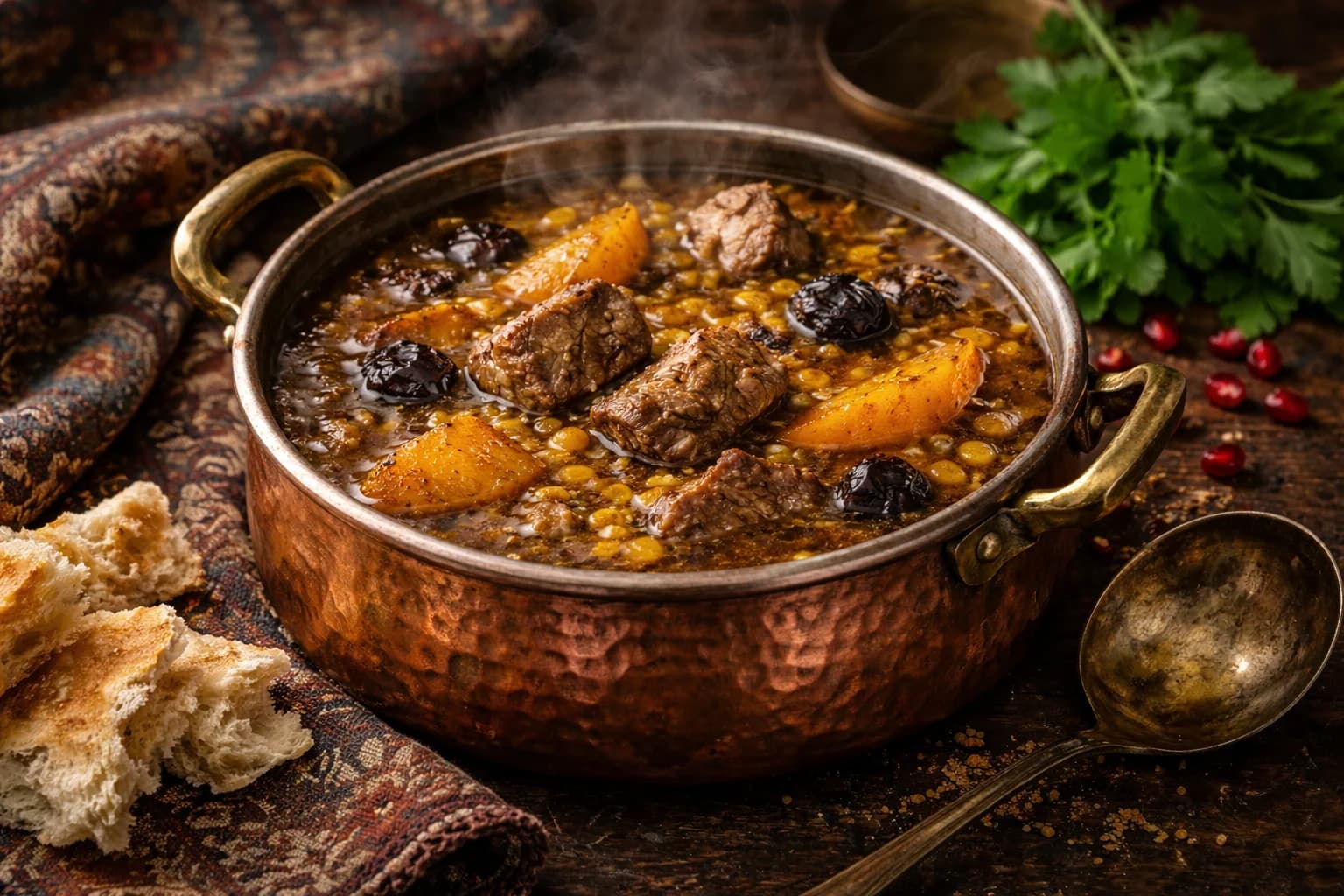
Alle Komponenten testen: Lamm fällt vom Knochen, Kichererbsen und Bohnen vollständig weich (keine kreidige Konsistenz), Kartoffeln weich, und – am wichtigsten – die Quitte tief bernsteinfarben und leicht zu durchstechen. Brühe abschmecken und Würze anpassen.
Kritischer Schritt
Wenn die Quitte noch blass oder hart ist, weiter garen. Die Farb- und Texturveränderung ist der eigentliche Sinn dieser Variante.
Trennen und mit Sorgfalt für die Quitte servieren
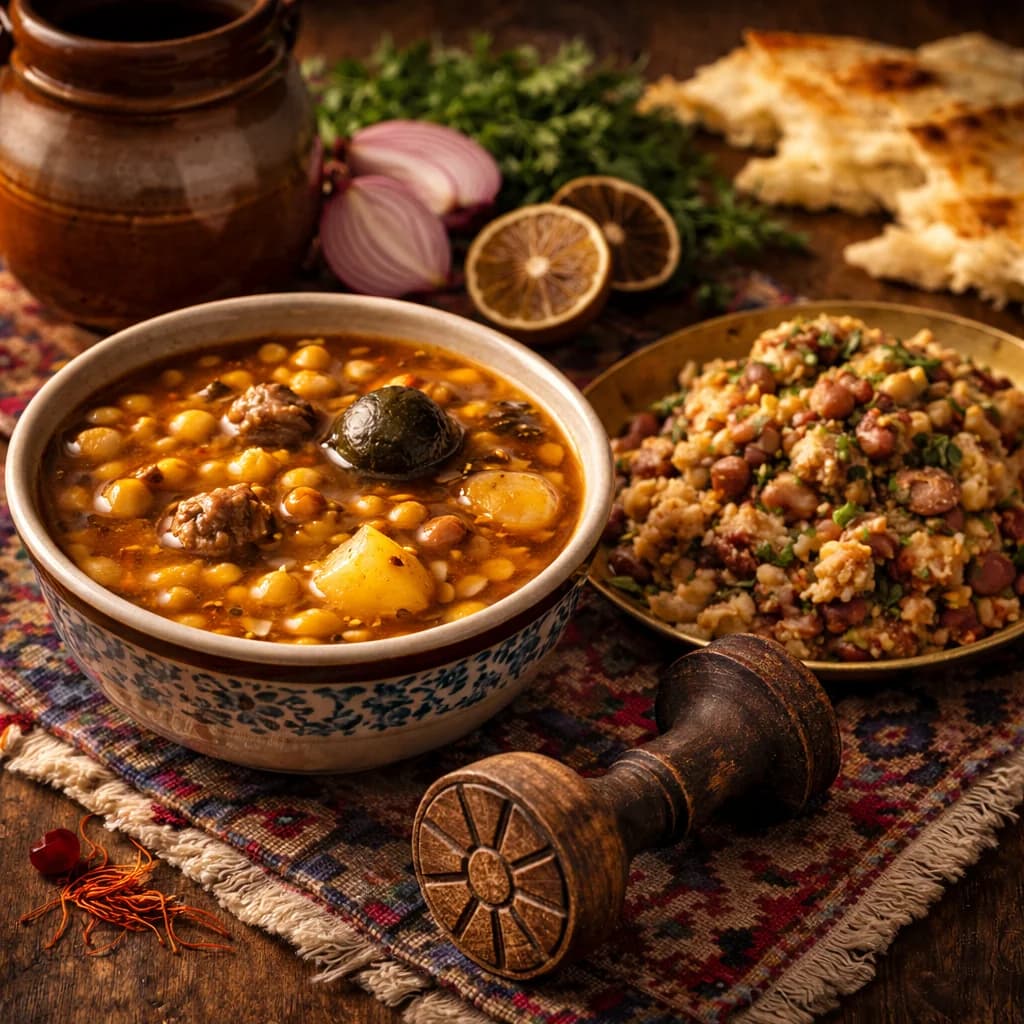
Feste Zutaten vorsichtig in eine Schüssel umfüllen, dabei die Quittenspalten behutsam behandeln, um sie ganz zu lassen. Bei dieser Version stampfen viele Familien Fleisch und Hülsenfrüchte, aber lassen einige Quittenspalten ganz obenauf für die Präsentation. Zuerst Brühe mit Brot servieren, dann den gestampften Fleischinhalt, gekrönt von wunderschönen Quittenspalten.