
Kritische Momente
- •Auberginen einsalzen, um Bitterkeit zu entfernen und Ölaufnahme zu reduzieren
- •Auberginen tief golden braten (nicht blass)
- •Auberginen am Ende hinzufügen, um die Textur zu bewahren
Safran aufblühen lassen
Safranfäden mit einer Prise Zucker im Mörser mahlen. In eine kleine Schüssel geben, heißes (nicht kochendes) Wasser hinzufügen, abdecken und mindestens 20 Minuten ziehen lassen.
Auberginen vorbereiten und einsalzen
Auberginen der Länge nach in Viertel schneiden (oder halbieren, wenn klein), Stiele zur Präsentation befestigt lassen. Alternativ in 1-cm-Scheiben schneiden. Alle Schnittflächen großzügig mit Salz bestreuen. In einem Sieb über einer Schüssel 30 Minuten stehen lassen.
Kritischer Schritt
Einsalzen entzieht Feuchtigkeit und Bitterkeit und – entscheidend – kollabiert die schwammige Struktur der Aubergine, damit sie beim Braten weniger Öl aufnimmt. Diesen Schritt zu überspringen führt zu fettigen, bitteren Auberginen.
Häufige Fehler
- •Nicht lange genug einsalzen (Aubergine bleibt schwammig)
- •Kugelauberginen ohne verlängerte Salzzeit verwenden
- •Salz nicht abspülen (Endgericht zu salzig)
Zwiebeln karamellisieren
Öl in einem großen schweren Topf bei mittlerer bis hoher Hitze erhitzen. Geschnittene Zwiebeln hinzufügen und unter gelegentlichem Rühren ca. 12–15 Minuten tief golden und karamellisiert anbraten.
Gewürze hinzufügen und Fleisch anbraten
Kurkuma und Zimt (wenn verwendet) hinzufügen, 30 Sekunden unter Rühren anrösten. Hitze auf hoch erhöhen, Fleischwürfel in einer einzigen Schicht hinzufügen und von mindestens zwei Seiten gut anbraten, ca. 6–8 Minuten. Bei Bedarf in Chargen arbeiten, um Überfüllen zu vermeiden.
Tomatenbasis aufbauen
Hitze auf mittel reduzieren. Tomatenmark hinzufügen und 2 Minuten unter ständigem Rühren anbraten, bis es dunkelt. Geriebene Tomaten hinzufügen und weitere 3 Minuten unter häufigem Rühren kochen.
Kritischer Schritt
Das Ankochen des Tomatenmarks entfernt rohe, blecherne Aromen und entwickelt Süße. Dieser Schritt baut die Geschmacksgrundlage der Sauce auf.
Flüssigkeit hinzufügen und köcheln
Wasser oder Brühe, Salz und Pfeffer hinzufügen. Zum Kochen bringen, dann auf niedrige Hitze reduzieren. Zugedeckt 1,5–2 Stunden köcheln lassen, bis das Fleisch sehr zart ist und leicht auseinanderfällt. Persische Eintöpfe profitieren von langsamem, langem Garen.
Auberginen spülen und trocknen
Salz von den Auberginenstücken unter kaltem Wasser abspülen. Sanft ausdrücken, um überschüssige Feuchtigkeit zu entfernen, dann sehr gründlich mit Küchenpapier oder einem sauberen Küchentuch trocken tupfen. Sie müssen vor dem Braten vollständig trocken sein.
Kritischer Schritt
Nasse Auberginen, die in heißes Öl fallen, verursachen gefährliches Spritzen und verhindern richtiges Bräunen. Gründliches Trocknen ist für Sicherheit und Textur unerlässlich.
Auberginen braten
Öl in einer großen Pfanne bei mittlerer bis hoher Hitze erhitzen, bis es schimmert. Auberginenstücke in Chargen ohne Überfüllen braten, einmal wenden, bis sie auf beiden Seiten tief goldbraun sind, ca. 3–4 Minuten pro Seite. Auf einen mit Küchenpapier ausgelegten Teller legen.
Kritischer Schritt
Richtig gebratene Auberginen sind der Star dieses Gerichts. Sie sollten tief golden (nicht blass) mit einer leichten Kruste sein, die im Eintopf ihre Form behält, während das Innere samtig wird.
Häufige Fehler
- •Öl nicht heiß genug (Auberginen saugen zu viel Öl auf, werden fettig)
- •Öl zu heiß (verbrennt außen, roh innen)
- •Pfanne überfüllen (Temperatur sinkt, Auberginen dämpfen)
- •Zu häufig wenden (Kruste bildet sich nicht)
Verjuice und Safran zum Eintopf hinzufügen
Verjuice (oder Zitronensaft) und aufgeblühten Safran in den Eintopf geben. Sanft umrühren und kosten – Säure mit mehr Verjuice anpassen oder mit einer Prise Zucker ausbalancieren, wenn zu herb.
Häufige Fehler
- •Zu viel saures Element auf einmal hinzufügen (nach und nach kosten)
- •Den Safran vergessen (verliert die charakteristische Goldfarbe)
Auberginen zum Eintopf hinzufügen
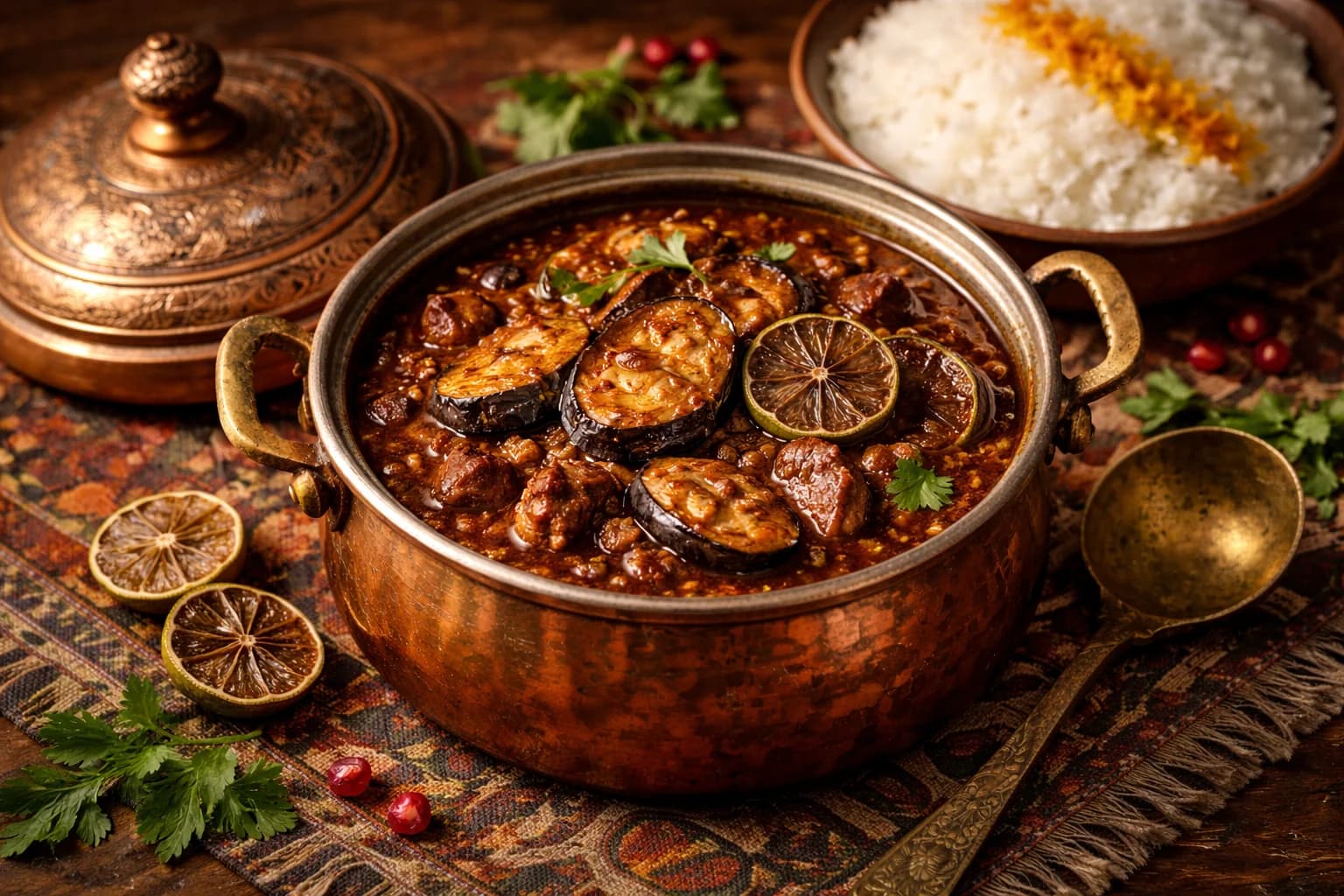
Die gebratenen Auberginenstücke vorsichtig in den Eintopf einbetten und etwas Sauce darüber löffeln. Versuchen, sie nicht vollständig zu versenken – einige sollten aus der Sauce herausragen. Zudecken und weitere 15–20 Minuten köcheln lassen, damit sich die Aromen verbinden.
Kritischer Schritt
Auberginen am Ende hinzuzufügen bewahrt ihre Form und Textur. Zu früh hinzugefügt, zerfallen sie in der Sauce.
Abschließende Würzung und Ruhezeit
Salz, Pfeffer und süß-saures Gleichgewicht abschmecken und anpassen. Vom Herd nehmen und zugedeckt 10 Minuten ruhen lassen. Die Sauce dickt beim Ruhen leicht ein.
Garnieren und servieren
Vorsichtig in eine Servierschüssel umfüllen und Auberginenstücke attraktiv obenauf anrichten. Falls saure Trauben (Ghooreh) verwendet werden, darüber streuen. Sofort mit Chelow und Tahdig servieren.
Ruhezeit Erforderlich
10 Min - Lässt die Sauce andicken und die Aromen harmonieren