
Kritische Momente
- •Richtiges Kneten für elastischen Teig
- •Ausreichende Ruhezeit (mindestens 1 Stunde)
- •Papierdünn ausrollen (1–2 mm)
- •Heiße trockene Pfanne für schnelles Garen
- •Richtige Behandlung nach dem Garen (abgedeckt = weich, unbedeckt = knusprig)
Teig zubereiten
In einer großen Schüssel Mehl und Salz vermengen. Falls Hefe verwendet wird, zum Mehl geben. Eine Mulde in der Mitte formen und warmes Wasser und Öl (falls verwendet) hineingeben. Zu einem rauhen Teig mischen, dann 8–10 Minuten kneten, bis er glatt und elastisch ist. Der Teig sollte weich, aber nicht klebrig sein – bei Bedarf kleine Mengen Mehl oder Wasser hinzufügen.
Kritischer Schritt
Richtiges Kneten entwickelt Gluten, das es ermöglicht, den Teig papierdünn auszurollen ohne zu reißen. Zu wenig gekneteter Teig reißt und widersetzt sich dem Ausrollen.
Teig ruhen lassen
Den Teig zu einer Kugel formen und in eine leicht geölte Schüssel legen. Mit Frischhaltefolie oder einem feuchten Tuch abdecken. Mindestens 1 Stunde bei Raumtemperatur ruhen lassen. Bei Verwendung von Hefe geht er leicht auf; ohne Hefe entspannt das Ruhen trotzdem das Gluten für leichteres Ausrollen.
Kritischer Schritt
Ruhen entspannt das Gluten und macht den Teig viel einfacher dünn auszurollen. Frisch gekneteter Teig widersetzt sich dem Ausrollen und springt zurück. Geruhter Teig ist geschmeidig und kooperativ.
Teig portionieren
Den geruhten Teig auf eine leicht bemehlte Arbeitsfläche stürzen. In 8 gleiche Stücke teilen. Jedes Stück zu einer glatten Kugel formen. Mit einem Tuch abdecken und 10 Minuten ruhen lassen, während die Pfanne aufgeheizt wird.
Kochfläche erhitzen
Eine große Gusseisenpfanne, Grillpfanne oder flache Pfanne bei mittel-hoher Hitze erhitzen. Die Oberfläche sollte sehr heiß, aber nicht rauchend sein. Mit einem kleinen Teigstück testen – es sollte sofort zischen und innerhalb von Sekunden Blasen bilden.
Kritischer Schritt
Die Pfanne muss heiß genug sein, um das dünne Lavash schnell zu garen – zu kühl und es trocknet aus bevor es gart; zu heiß und es verbrennt bevor es durchgegart ist.
Lavash ausrollen
Auf einer gut bemehlten Arbeitsfläche einen Teigball zu einem sehr dünnen Blatt ausrollen – so dünn wie möglich ohne zu reißen, idealerweise etwa 1–2 mm dick. Die Form kann rund, oval oder unregelmäßig sein. Traditionelles Lavash ist papierdünn und an manchen Stellen fast durchsichtig. Falls Samen hinzugefügt werden, auf der Oberfläche verteilen und mit dem Nudelholz eindrücken.
Kritischer Schritt
Dünne ist das definierende Merkmal von Lavash. Dickes Lavash ist ein völlig anderes Brot. Der Teig sollte dünn genug sein, um fast durchsichtig zu sein – das erzeugt die charakteristische Textur ob weich oder knusprig.
Lavash backen
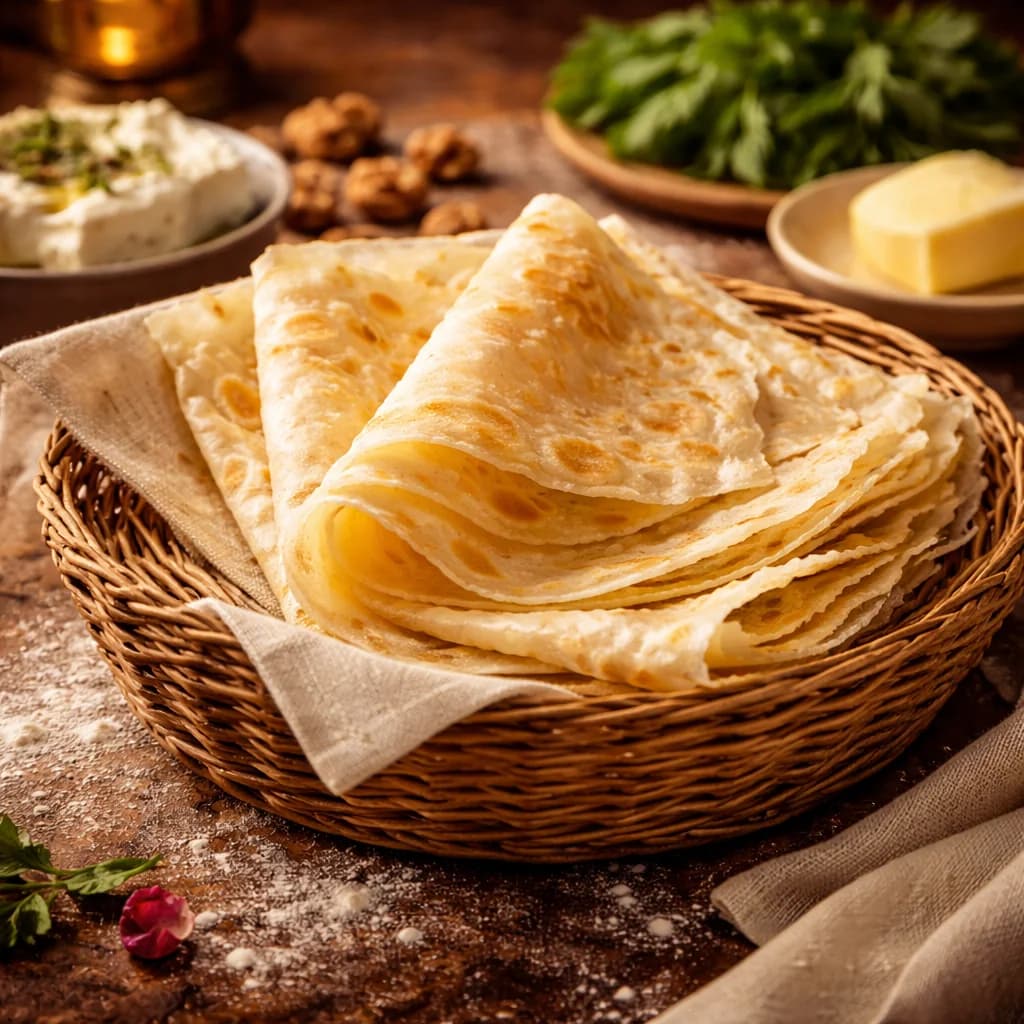
Das ausgerollte Lavash vorsichtig in die heiße, trockene Pfanne legen. Es wird sofort Blasen bilden und aufgehen – das ist richtig. Backen bis der Boden goldene Stellen hat und die Oberseite angetrocknet ist. Wenden und weitere 20–30 Sekunden backen. Das Brot sollte charakteristische Blasen und helle braune Stellen haben.
Kritischer Schritt
Schnelles, heißes Garen erzeugt die charakteristischen Blasen und Stellen während das Brot geschmeidig bleibt. Zu langes Garen trocknet es aus (in Ordnung wenn knuspriges Lavash gewünscht); zu wenig Garen hinterlässt rohe Stellen.
Lavash stapeln oder trocknen
Für weiches Lavash: sofort zu einem Stapel legen und mit einem sauberen Küchentuch abdecken. Der Dampf hält es weich und geschmeidig. Alle gekochten Lavash unter dem Tuch stapeln. Für knuspriges Lavash: auf einem Gitterrost einzeln abkühlen lassen – sie trocknen in Minuten knusprig.
Kritischer Schritt
Wie das Lavash sofort nach dem Garen behandelt wird, bestimmt ob es weich oder knusprig ist. Unter einem Tuch = weich und geschmeidig zum Einwickeln. Auf einem Rost = knusprig zum Dippen/Brechen.
Mit verbliebenem Teig fortfahren
Ausrollen und Garen mit den restlichen Teigkugeln wiederholen. In einem Rhythmus arbeiten: während ein Lavashgart, das nächste ausrollen. Jedes gegarte Lavash zum Stapel (für weiches) oder Rost (für knuspriges) geben. Hitze bei Bedarf anpassen – die Pfanne kann beim Arbeiten heißer werden.
Servieren oder lagern
Weiches Lavash: sofort oder innerhalb weniger Stunden servieren. Zum Einwickeln von Kebabs, Eintauchen in Dips oder Essen mit Käse und Kräutern verwenden. In Folie oder einem Tuch eingewickelt lagern; im Kühlschrank 3 Tage oder monatelang eingefroren. Knuspriges Lavash: zum Dippen oder Einbrechen in Suppen servieren. In einem luftdichten Behälter bei Raumtemperatur wochenlang lagern.
Ruhezeit Erforderlich
60 Min - Gluten muss sich für leichtes Ausrollen entspannen; Teig sollte weich und geschmeidig sein