
Moments Critiques
- •Précuire le riz al dente (pas mou)
- •Disposition correcte en couches pour l'effet visuel
- •Le tahdig aux pommes de terre nécessite le temps de cuisson complet
- •Ne jamais soulever le couvercle pendant l'étuvage
Laver et faire tremper le riz
Mettre le riz dans un grand saladier. Remplir d'eau froide, remuer avec la main et égoutter. Répéter 5 à 6 fois jusqu'à ce que l'eau soit presque claire. Dissoudre 2 c. à s. de sel dans 2 L d'eau tiède, ajouter le riz et faire tremper au moins 1 heure (jusqu'à 3 heures).
Étape Critique
Un bon lavage et trempage est le fondement d'un riz persan aérien. Cela ne peut être ni omis ni abrégé.
Faire infuser le safran
Moudre le safran avec une pincée de sucre au mortier. Ajouter 5 c. à s. d'eau chaude, couvrir et laisser infuser au moins 30 minutes.
Saisir les jarrets d'agneau
Éponger les jarrets d'agneau. Assaisonner généreusement avec sel, poivre et curcuma. Chauffer l'huile dans une grande cocotte à feu moyen-vif. Saisir les jarrets en lots, en les colorant sur toutes les faces pendant environ 4 à 5 minutes par côté. Réserver sur une assiette.
Étape Critique
La coloration développe une saveur profonde grâce à la réaction de Maillard. Sans cette étape, la viande est pâle et fade.
Braiser les jarrets d'agneau
Ajouter les oignons émincés dans la cocotte et faire dorer environ 8 minutes. Ajouter la cannelle si utilisée. Remettre les jarrets dans la cocotte, ajouter l'eau ou le bouillon et l'eau safranée. Porter à ébullition, puis réduire à feu doux. Couvrir hermétiquement et braiser 2 à 3 heures jusqu'à ce que la viande se détache de l'os.
Préparer les fèves
Pour les fèves fraîches : écosser, blanchir 2 minutes dans l'eau bouillante, plonger dans l'eau glacée et retirer la peau extérieure. Pour les surgelées : décongeler complètement et retirer la peau extérieure (optionnel, mais donne une couleur verte plus vive et une texture plus tendre).
Erreurs Courantes
- •Ne pas retirer la peau extérieure (texture plus coriace, couleur plus terne)
- •Utiliser de très vieilles fèves surgelées (texture grisâtre et farineuse)
Préparer l'aneth
Pour l'aneth frais : bien laver, essorer et hacher finement (il faut environ 3 tasses bien tassées). Pour l'aneth séché : mesurer et réserver – il sera ajouté différemment.
Faire revenir l'aneth et les fèves (si aneth frais)
Chauffer l'huile dans une poêle à feu moyen. Faire revenir les fèves 3 minutes. Ajouter l'aneth frais et faire revenir ensemble 3 à 4 minutes de plus, jusqu'à ce que l'aneth soit tombé et légèrement foncé. Assaisonner d'une pincée de sel. Réserver. (Si aneth séché, sauter cette étape – l'incorporer directement en couches avec le riz.)
Précuire le riz
Porter l'eau salée à ébullition vive dans une grande marmite. Égoutter le riz trempé et le verser dans l'eau bouillante. Cuire 5 à 7 minutes en testant fréquemment. Le riz doit être al dente – tendre à l'extérieur avec un minuscule cœur ferme.
Étape Critique
Une précuisson parfaite est essentielle pour un riz final aérien. Le stade al dente assure que les grains finissent de cuire à l'étuvage sans devenir pâteux.
Égoutter le riz
Égoutter immédiatement le riz dans une passoire fine. Rincer brièvement à l'eau tiède pour arrêter la cuisson. Secouer délicatement – ne pas presser ni comprimer.
Préparer le tahdig aux pommes de terre
Dans une cocotte antiadhésive, ajouter l'huile et l'eau safranée. Pour un tahdig aux pommes de terre : disposer les tranches de pomme de terre en une seule couche se chevauchant légèrement sur le fond. Sans pommes de terre : mélanger 2 tasses de riz précuit avec l'eau safranée et étaler au fond.
Étape Critique
La couche de tahdig est mise en place maintenant. Le tahdig aux pommes de terre est traditionnel pour le Baghali Polo et devient incroyablement croustillant et doré.
Disposer le riz en couches avec l'aneth et les fèves
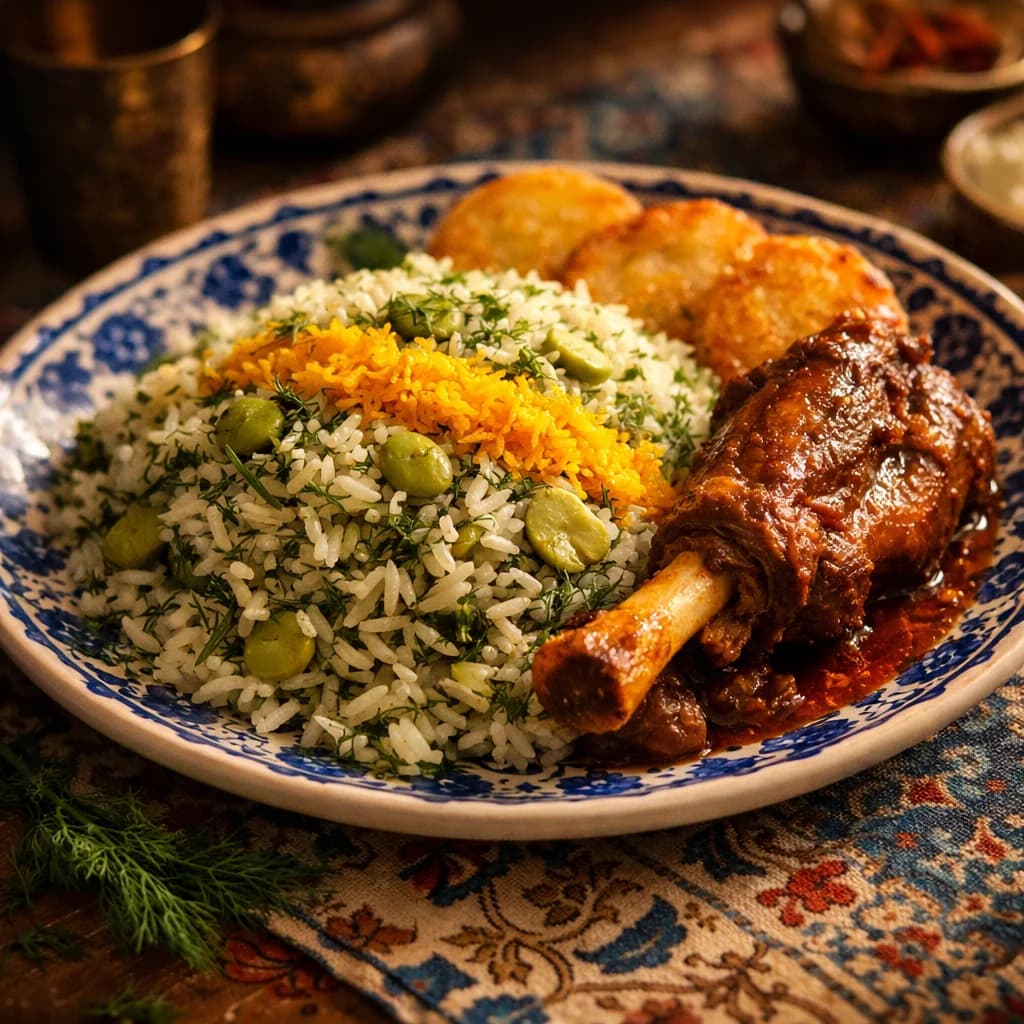
Alterner les couches de riz et de mélange aneth-fèves : commencer par une couche de riz nature sur le tahdig, puis une couche de mélange aneth-fèves, puis du riz, puis de l'aneth-fèves. Terminer par une couche de riz. Former en pyramide. Percer 5 à 6 trous jusqu'au fond avec le manche d'une cuillère en bois.
Étape Critique
La disposition en couches répartit l'aneth et les fèves uniformément et crée le bel aspect rayé au service. La pyramide et les canaux de vapeur assurent une cuisson uniforme.
Arroser de beurre et de safran
Faire fondre le beurre et le mélanger avec l'eau safranée restante. Verser en filet sur la pyramide de riz, en laissant couler dans les trous.
Étuver le riz
Chauffer la cocotte sans couvercle à feu moyen-vif 3 à 4 minutes jusqu'à ce que de la vapeur s'élève. Envelopper le couvercle dans un torchon propre et le poser fermement sur la cocotte. Réduire le feu au minimum. Étuver 50 à 55 minutes sans soulever le couvercle.
Étape Critique
Le torchon absorbe la condensation. Le feu doux permet un étuvage en douceur et un croustillage progressif du tahdig. Soulever le couvercle laisse échapper de la vapeur essentielle.
Démouler et servir
Retirer du feu et laisser reposer 5 minutes. Ôter le couvercle. Aérer délicatement le riz à la fourchette, en gardant les couches largement intactes. Déposer à la cuillère sur un plat de service. Pour le tahdig : poser une assiette sur la cocotte, retourner d'un geste ferme et soulever la cocotte. Le tahdig aux pommes de terre doit se démouler en un disque doré et croustillant.
Finition et dressage
Disposer les jarrets d'agneau autour du plat de riz ou sur un plat séparé. Napper l'agneau d'un peu de jus de braisage. Verser un filet d'eau safranée supplémentaire sur le riz pour la couleur. Servir immédiatement avec le tahdig cassé en morceaux ou présenté entier.
Repos Requis
5 min - Pour permettre au tahdig de se détacher des parois de la cocotte