
Moments Critiques
- •Haricots correctement trempés
- •Viande et haricots presque tendres avant d'ajouter le riz
- •Niveau de liquide correct lors de l'ajout du riz
- •Reconnaître le stade des cratères
- •Feu le plus bas pour la cuisson vapeur finale
Tremper les haricots toute la nuit
Placer les haricots secs dans un grand saladier, couvrir d'eau froide abondante. Tremper au moins 8 heures ou toute la nuit. Égoutter et rincer. Pour les haricots en conserve, sauter cette étape et les ajouter plus tard en cours de cuisson.
Étape Critique
Les haricots secs non trempés mettent une éternité à cuire et risquent de ne jamais devenir tendres. Pour un plat en cocotte, les haricots doivent être trempés afin de cuire dans le même temps que la viande.
Laver le riz
Laver le riz 3 à 4 fois jusqu'à ce que l'eau soit presque claire. Réserver. Pas besoin de trempage pour le dampokhtak.
Préparer les citrons verts séchés
Percer chaque citron vert séché plusieurs fois avec un couteau pointu ou une brochette. Cela permet à la saveur acidulée de se libérer dans le plat pendant la cuisson.
Saisir la viande
Faire chauffer l'huile dans une grande marmite à fond épais à feu moyen-vif. Éponger la viande. Faire dorer les morceaux de viande sur toutes les faces par lots, environ 8 minutes au total. Réserver sur une assiette.
Préparer la base aromatique
Ajouter l'oignon coupé en dés dans la marmite. Faire revenir jusqu'à coloration dorée, environ 8 minutes. Ajouter le curcuma, la cannelle, le cumin, le sel et le poivre. Remuer 30 secondes. Ajouter le concentré de tomates et cuire 2 minutes jusqu'à ce qu'il fonce.
Assembler la viande, les haricots et le liquide
Remettre la viande dorée dans la marmite. Ajouter les haricots trempés et égouttés (si en conserve, les ajouter plus tard) et les citrons verts séchés percés. Ajouter l'eau ou le bouillon. Porter à ébullition, réduire le feu, couvrir et laisser mijoter 60 à 75 minutes jusqu'à ce que la viande et les haricots soient presque tendres.
Étape Critique
La viande et les haricots doivent être presque tendres avant d'ajouter le riz : ils ne cuiront plus beaucoup ensuite. Pour les haricots en conserve, les ajouter dans les 15 dernières minutes de cette étape.
Ajouter le riz
Ajouter le riz lavé dans la marmite, en le répartissant uniformément sur la viande et les haricots. Ajouter le reste d'eau (ou suffisamment pour que le liquide affleure le riz). Ajouter l'eau safranée si utilisée. NE PAS remuer : le riz doit rester en surface. Augmenter le feu pour porter à ébullition.
Étape Critique
Ne pas remuer après l'ajout du riz : les couches doivent rester relativement distinctes. Le riz cuit en absorbant le liquide de braisage parfumé.
Ébullition jusqu'à absorption de l'eau
Laisser bouillir à découvert 5 à 8 minutes jusqu'à ce que la majeure partie de l'eau visible soit absorbée et que de petits trous se forment à la surface du riz (stade des cratères).
Étape Critique
Le stade des cratères indique qu'il est temps de baisser le feu et de cuire à la vapeur. C'est le même indicateur que pour le kateh.
Cuire à la vapeur au feu le plus bas
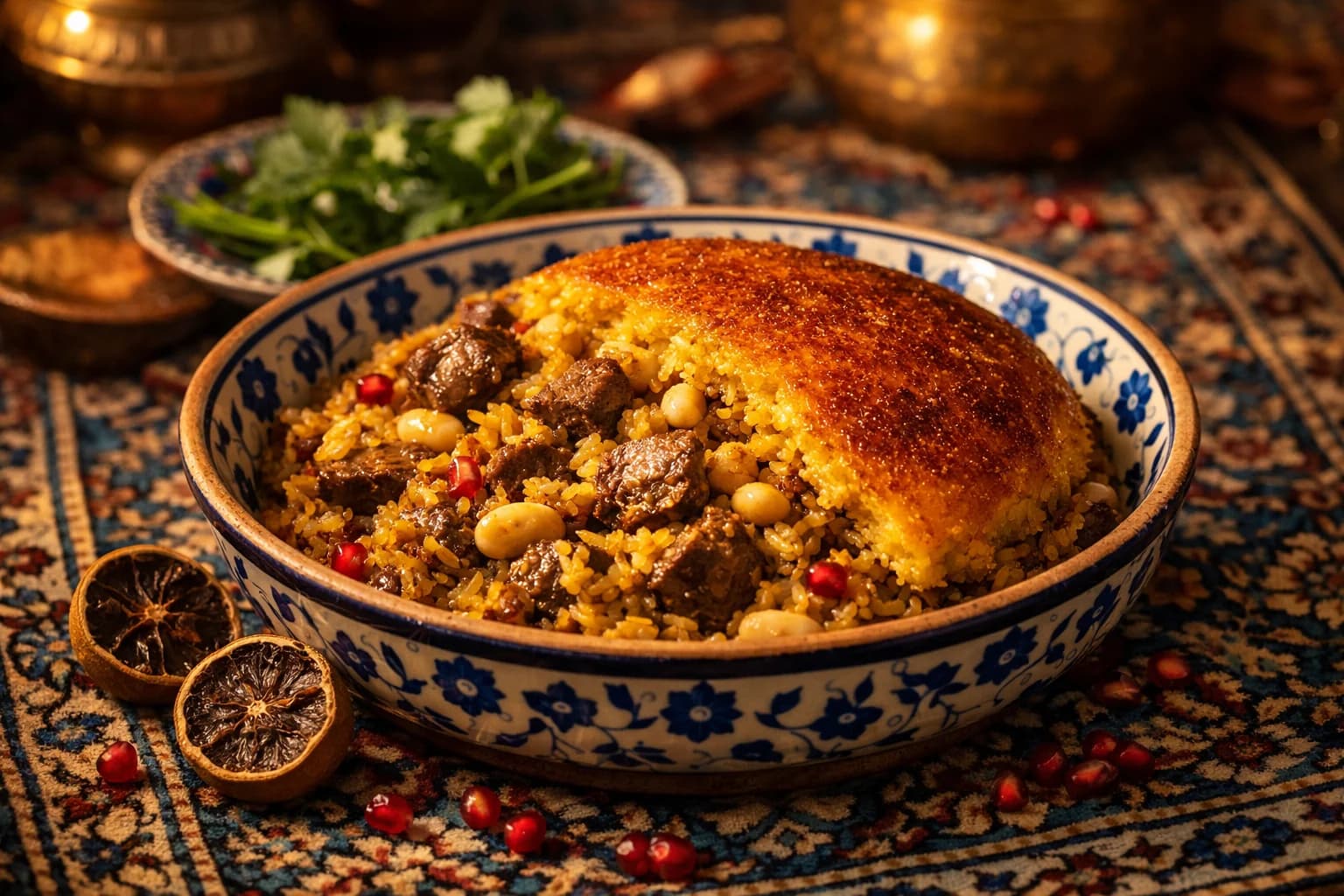
Envelopper le couvercle dans un torchon propre. Poser hermétiquement sur la marmite. Réduire le feu au minimum absolu. Cuire 40 à 50 minutes sans soulever le couvercle. Le riz va cuire à la vapeur et un tahdig se formera au fond.
Étape Critique
Le feu doux permet à tous les arômes de fusionner tout en formant le tahdig. Feu trop fort = fond brûlé, dessus pas cuit.
Laisser reposer et servir
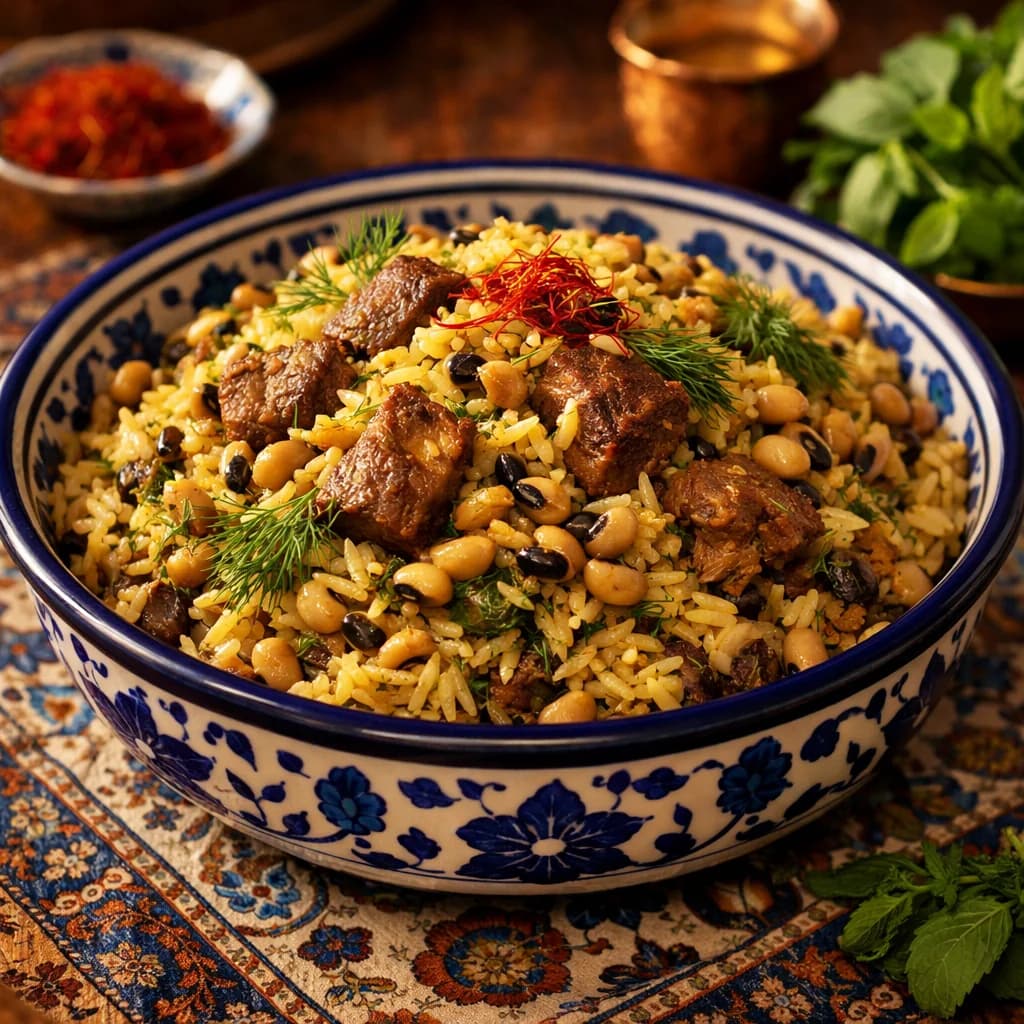
Retirer du feu. Laisser reposer couvert pendant 10 minutes. Retirer le couvercle. Le riz aura absorbé les saveurs de la viande et des haricots. Mélanger délicatement les couches au service, ou servir avec les couches apparentes. Racler le tahdig du fond : il sera épais et intensément savoureux.
Repos Requis
10 min - Permet aux saveurs de se stabiliser et au tahdig de se détacher