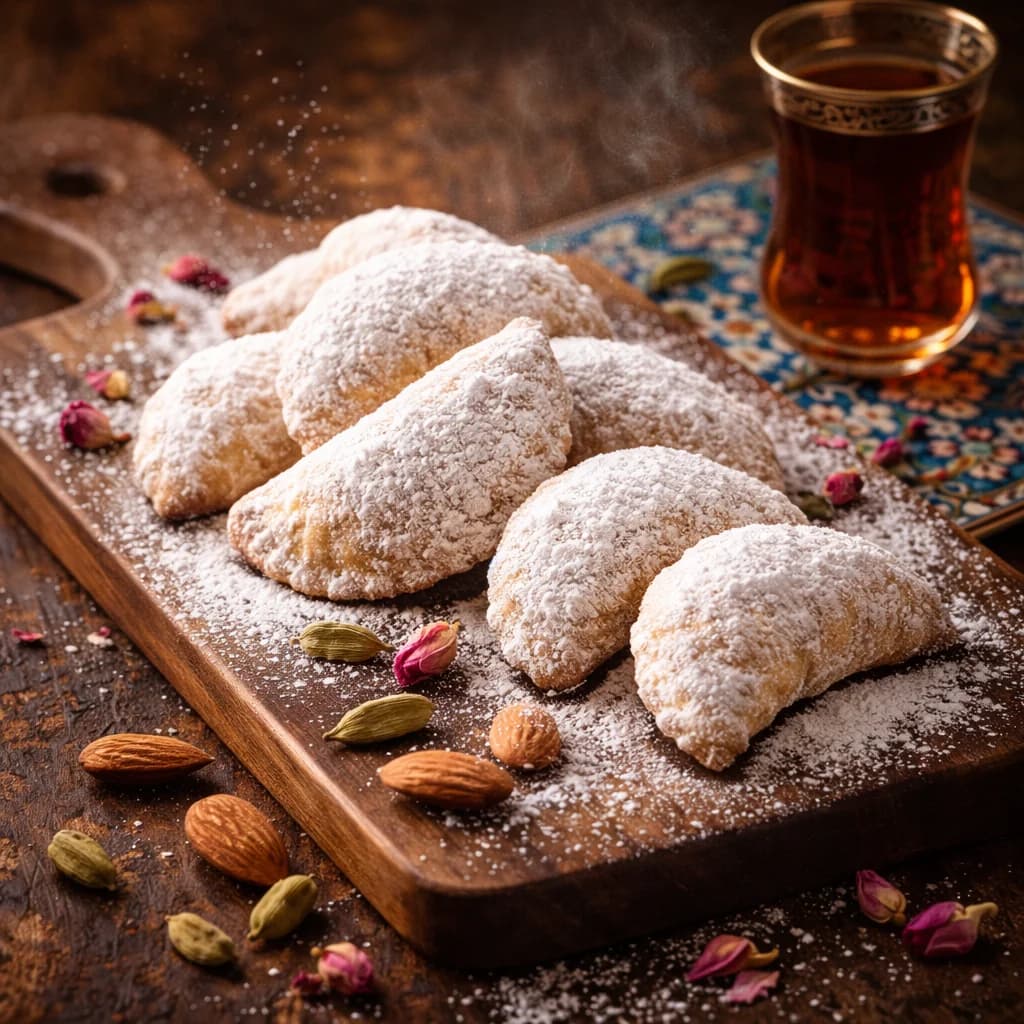
Ghotab (Persian Almond-Filled Crescent Cookies)

Ghotab (Persian Almond-Filled Crescent Cookies)

قطاب

Delicate crescent-shaped pastries from Yazd, filled with a fragrant mixture of ground almonds, cardamom, and rosewater, then deep-fried to golden perfection and dusted generously with powdered sugar—ghotab are among the most refined of Persian sweets. The paper-thin dough shatters at first bite, revealing the aromatic almond filling within. Each ghotab is a small treasure: crispy, perfumed, and impossibly elegant. These crescents are the specialty of Yazd, the ancient desert city famous for its sweets, and are essential to Nowruz celebrations and special occasions throughout Iran.

cookiePréparation: 60 minCuisson: 30 minadvancedPour 30

Note culturelle- Yazd

Ghotab is the pride of Yazd, an ancient city in central Iran famous for its exceptional sweets. Yazd's confectioners (qanadi) are renowned throughout Iran, and ghotab is their signature creation. The name 'ghotab' means 'pole' or 'axis'—the cookie's crescent shape resembles the curved blade of a traditional Persian sword. These delicate pastries are essential to Nowruz celebrations and are given as prestigious gifts. In Yazd, shops sell ghotab in beautifully decorated boxes, and travelers always bring boxes home as souvenirs. The combination of crispy, paper-thin dough, fragrant almond filling, and generous powdered sugar coating creates an unforgettable experience. While deep-frying might seem unusual for such delicate pastries, the technique produces a lighter, crispier result than baking. Mastering ghotab takes practice, but the results are worth the effort.

Moments Critiques

  • Rolling dough very thin (almost translucent)
  • Proper filling consistency
  • Sealing edges securely
  • Maintaining correct oil temperature
  • Generous powdered sugar coating
1
PRÉPARATION10 min

Make the filling

In a bowl, combine the finely ground almonds, 100g powdered sugar, cardamom, and 30ml rosewater. Mix until well combined. The mixture should hold together when pressed but not be wet. Set aside.

Fragrant, pale almond mixture that clumps when pressed
OdeurAlmonds, cardamom, rosewater—intensely aromatic
TextureFine, holds together when pressed

Étape Critique

The filling must be the right consistency—too dry and it will be crumbly; too wet and it will make the dough soggy. It should clump but not be pasty.

Use blanched almonds (skins removed) for the traditional pale color. The almonds should be ground fine but not to a paste.
2
PRÉPARATION10 min

Make the dough

In a large bowl, whisk together the melted butter (cooled to room temperature), egg yolks, yogurt, rosewater, and salt until smooth. Add the flour gradually, mixing until a soft, pliable dough forms. Knead briefly—just until smooth. The dough should be soft but not sticky.

Soft, smooth, pliable dough
OdeurButter, rosewater
TextureSmooth, soft, not sticky

Étape Critique

The dough needs to be soft enough to roll very thin but not sticky. Melted butter (not creamed) creates the right texture for a crispy fried dough.

Don't overwork the dough—you want it smooth but not elastic. Too much kneading makes it tough to roll thin.
3
PRÉPARATION45 min

Rest the dough

Wrap the dough in plastic wrap and let rest at room temperature for 30 minutes to 1 hour. This relaxes the gluten and makes the dough easier to roll thin.

Rested, relaxed dough
TextureSoft, pliable, easy to stretch

Étape Critique

Resting is essential—unrested dough springs back and is impossible to roll thin. The thin dough is what makes ghotab special.

The dough can rest longer (up to 2 hours) if convenient. It can also be refrigerated overnight—bring to room temperature before rolling.
4
PRÉPARATION20 min

Roll the dough very thin

Divide the dough into 2-3 portions. Working with one portion at a time (keep others covered), roll on a lightly floured surface until very thin—about 1-2mm, almost translucent. You should be able to see the shadow of your hand through it.

Paper-thin dough, almost translucent
SonRolling pin on thin dough
TextureExtremely thin, delicate

Étape Critique

The hallmark of authentic ghotab is paper-thin dough. Thick dough won't have the proper crispness. Take your time—this step cannot be rushed.

Roll from the center outward, rotating the dough frequently. Use flour as needed to prevent sticking. If the dough springs back, let it rest a few more minutes.
5
PRÉPARATION10 min

Cut circles

Using a round cutter or glass about 8-9cm in diameter, cut circles from the thin dough. Gather and re-roll the scraps (letting them rest briefly if they resist rolling). You should get about 30 circles.

Thin, uniform circles of dough
SonCutting
TextureThin, delicate circles
6
PRÉPARATION20 min

Fill and shape the crescents

Place about 1 teaspoon of filling in the center of each circle. Fold the circle in half to form a half-moon shape. Press the edges firmly to seal—use a fork to crimp if desired. The seal must be secure or they'll open during frying.

Crescent-shaped pastries with sealed edges
OdeurAlmond filling
TextureThin dough sealed around filling

Étape Critique

Proper sealing is essential—poorly sealed ghotab will open during frying, releasing the filling into the oil and becoming soggy.

Don't overfill—too much filling makes sealing difficult. Press the edges firmly. Some cooks brush the edge with water before sealing for extra security.
7
CUISSON10 min

Heat the oil

Pour the oil into a deep pot to a depth of at least 5cm. Heat to 170°C (340°F). Use a thermometer if possible. Test with a small piece of dough—it should sizzle immediately and rise to the surface.

Oil shimmering; test dough sizzles and rises
Medium-High170°C / 340°F
OdeurHot oil
SonSizzling when tested

Étape Critique

Temperature is crucial: too hot and the outside burns before cooking through; too cool and the pastries absorb oil and become greasy. 170°C is ideal for thin pastries.

Maintain consistent temperature by frying in small batches. The oil temperature drops when cold pastries are added.
8
CUISSON25 min

Fry the ghotab

Carefully slide 4-5 ghotab into the hot oil—don't crowd the pot. Fry for 2-3 minutes, turning once, until golden brown on both sides. The pastries should be evenly colored and crisp. Remove with a spider or slotted spoon and drain on a wire rack set over paper towels.

Golden brown crescents, evenly colored
Medium-High170°C / 340°F
OdeurFrying pastry—irresistible
SonActive sizzling
TextureCrisp, firm when lifted

Étape Critique

Even golden color indicates proper frying. Pale spots mean underdone; dark spots mean the oil was too hot. Turn once for even cooking.

Work in batches and let the oil return to temperature between batches. Don't stack just-fried ghotab—let them drain in a single layer.
Point de contrôle: Check the first batch carefully—adjust heat if needed. They should be golden, not pale and not dark brown.
9
FINITION10 min

Dust with powdered sugar

While the ghotab are still slightly warm (but not hot), dust generously with powdered sugar. Turn and dust the other side. The sugar should coat them completely, creating a snowy white exterior.

Snowy white crescents covered in powdered sugar
OdeurSweet, powdered sugar
TextureLight sugar coating

Étape Critique

The powdered sugar coating is essential—ghotab should be white, not golden when served. Dust while slightly warm so the sugar adheres, but not so hot that it melts.

Be generous—ghotab should be snowy white. Some cooks dip them entirely in powdered sugar. Sift the sugar for a finer coating.
10
FINITION30 min

Cool and store

Let the ghotab cool completely before storing. Store in an airtight container at room temperature, layered between parchment paper. They keep for 2-3 weeks. Dust with additional powdered sugar before serving if needed.

Snowy white crescents, neatly arranged
OdeurAlmonds, cardamom, rosewater beneath the sugar
SonCrisp when tapped
TextureShattering crisp exterior, aromatic filling
Ghotab are best after resting a day—the flavors meld and the texture stabilizes. They're made in large batches for Nowruz and keep well.

Repos Requis

45 min - Dough must rest to relax gluten for thin rolling

Extras

Équipement

rolling pinround cutter or glassdeep pot for fryingspider or slotted spoonwire rackstandard

Préparer à l'Avance

  • Dough can be refrigerated overnight (bring to room temperature before rolling).
  • Filling keeps refrigerated for 1 week.
  • Assembled unfried ghotab can be frozen (fry from frozen, adding 1 minute).
  • Fried ghotab keep 2-3 weeks at room temperature.

N/A—served at room temperature.

Re-dust with sugar before serving if needed.

Servir Avec

Accompagnements

  • Part of Nowruz sweet spread
  • Gift boxes
  • Tea service

Boissons

  • Persian tea (essential)
  • The almond-rosewater filling pairs beautifully with strong tea

Substitutions

almondsBlanched almonds are traditional for pale color. Walnuts or pistachios create different but delicious variations. Some recipes use a mix.
deep fryingEssential for authentic texture. Baking produces good but different results—the pastries won't be as shatteringly crisp.
yogurtAdds tenderness and helps the dough stretch thin. Sour cream or milk can substitute.
rosewaterEssential for the authentic flavor. Orange blossom water can substitute for a different floral note.

Mise à l'échelle

This recipe makes about 30 ghotab. The dough is rolled very thin and requires patience. Work in batches when frying. Ghotab keep well for 2-3 weeks in an airtight container—they're traditionally made in large batches for Nowruz.

Source

Traditionnel · Traditional Persian cuisine, Yazd

Ghotab is the signature sweet of Yazd, the ancient desert city in central Iran known for its exceptional confections. The city's master pastry makers (qanadi) have perfected these delicate crescents over centuries. Yazd's dry climate is said to produce superior ghotab—the thin dough fries perfectly crisp and stays that way.

Recettes similaires

Koloocheh (Persian Filled Cookies)

Koloocheh (Persian Filled Cookies)

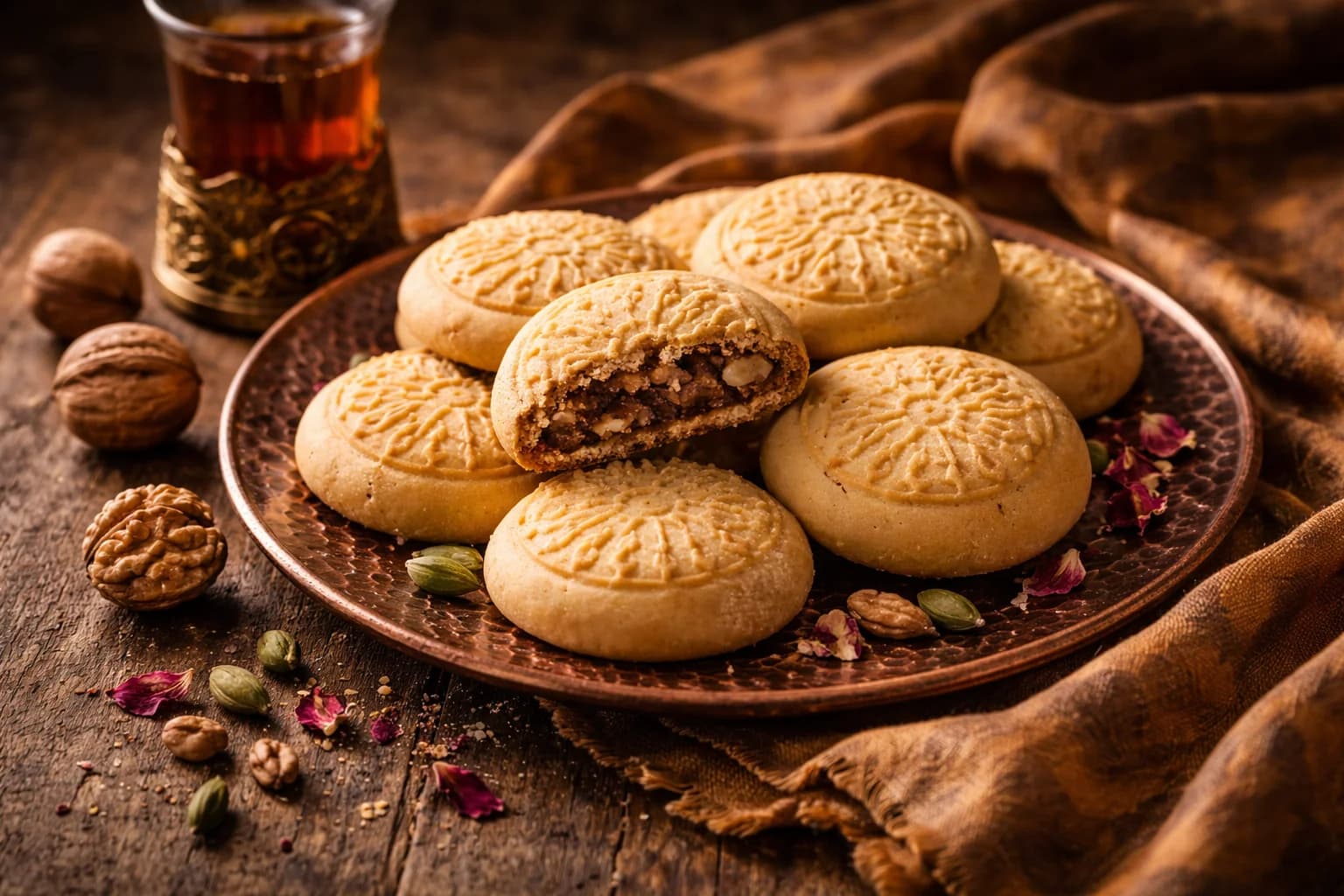
Soft, aromatic cookies with a tender crust enveloping a fragrant filling of spiced walnuts, cinnamon, and cardamom—koloocheh are the beloved stuffed cookies of northern Iran. Each region has its own style: some flat and stamped with intricate patterns, others plump and cake-like. The dough is enriched with butter and perfumed with rosewater and cardamom, yielding a cookie that's soft rather than crispy. The filling, redolent with warm spices and the richness of ground walnuts, creates a satisfying contrast. Traditionally made for Nowruz and special occasions, koloocheh are meant to be shared, offered to guests, and savored with tea.

Nan-e Berenji (Persian Rice Flour Cookies)

Nan-e Berenji (Persian Rice Flour Cookies)

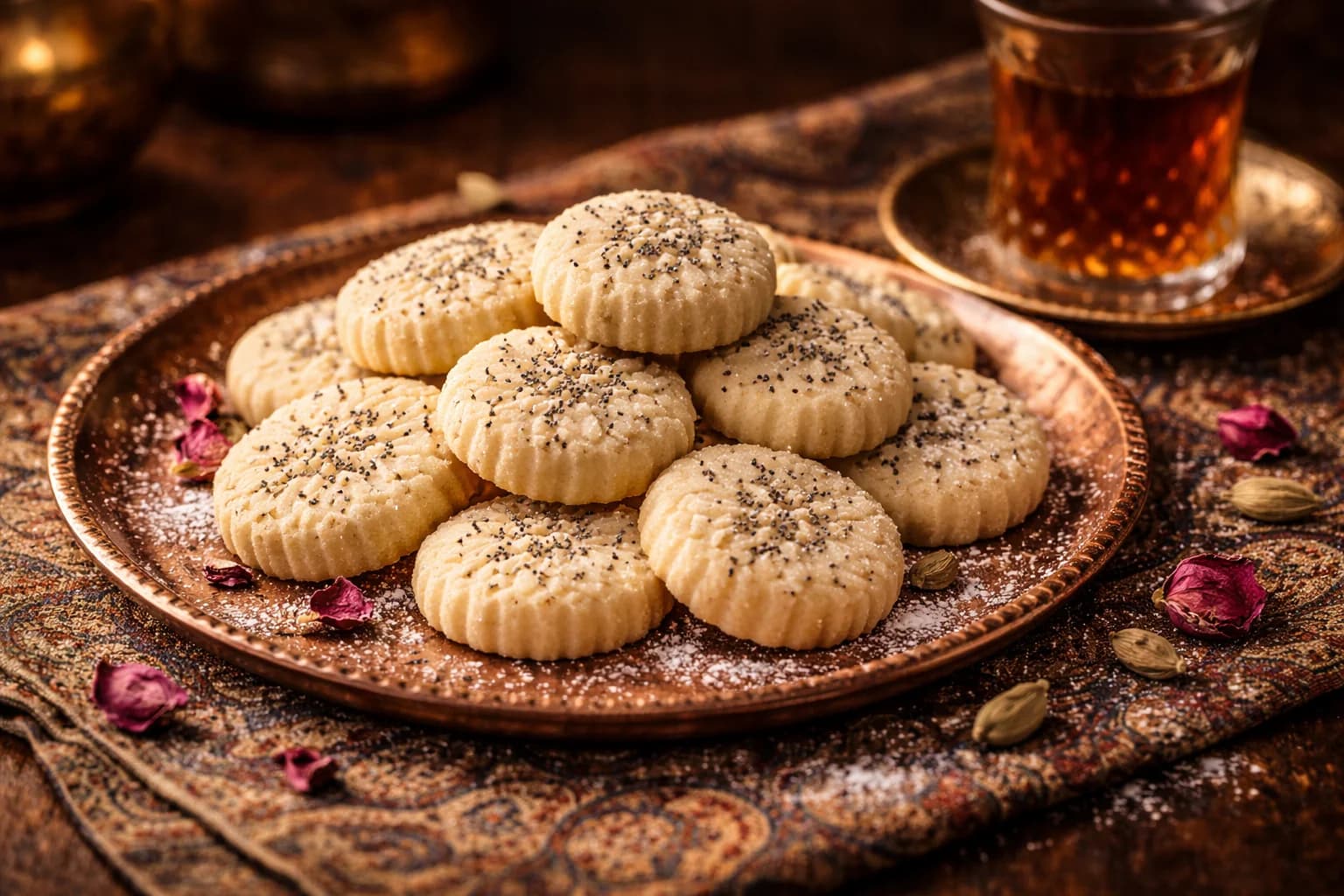
Impossibly delicate, melt-in-your-mouth cookies made from rice flour, perfumed with rosewater and cardamom, and decorated with poppy seeds—nan-e berenji are the ethereal jewels of Persian confectionery. These pale, crumbly cookies dissolve on the tongue, leaving behind whispers of floral fragrance and gentle sweetness. The rice flour creates a texture unlike any wheat-based cookie: tender, sandy, and almost weightless. Traditionally stamped with intricate wooden molds or simply decorated with a fork pattern and poppy seeds, nan-e berenji are essential to Nowruz celebrations and welcome with tea throughout the year.

Nan-e Nokhodchi (Persian Chickpea Flour Cookies)

Nan-e Nokhodchi (Persian Chickpea Flour Cookies)

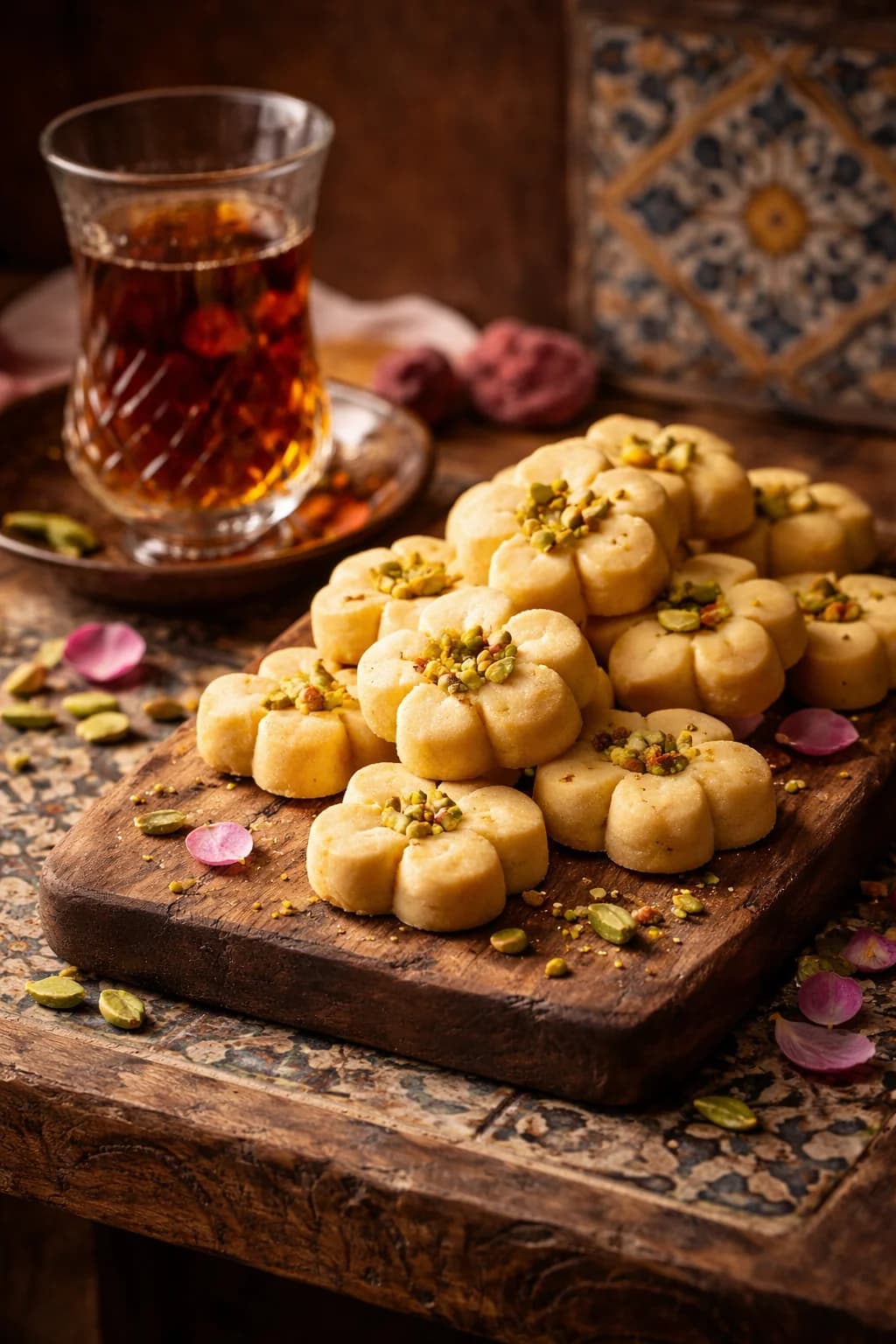
Tender, crumbly clover-shaped cookies made from chickpea flour, rich with butter and perfumed with cardamom and rosewater—nan-e nokhodchi are among the most distinctive of Persian sweets. The chickpea flour gives these cookies an unmistakable earthy sweetness and an impossibly tender texture that shatters delicately, then melts on the tongue. Traditionally shaped into four-petaled clovers (symbolizing good fortune) and decorated with slivered pistachios, nan-e nokhodchi are essential to Nowruz celebrations and prized year-round as an elegant accompaniment to tea. Their pale golden color and delicate appearance belie their intensely satisfying flavor.