
Nan-e Berenji (Persian Rice Flour Cookies)

Nan-e Berenji (Persian Rice Flour Cookies)

نان برنجی

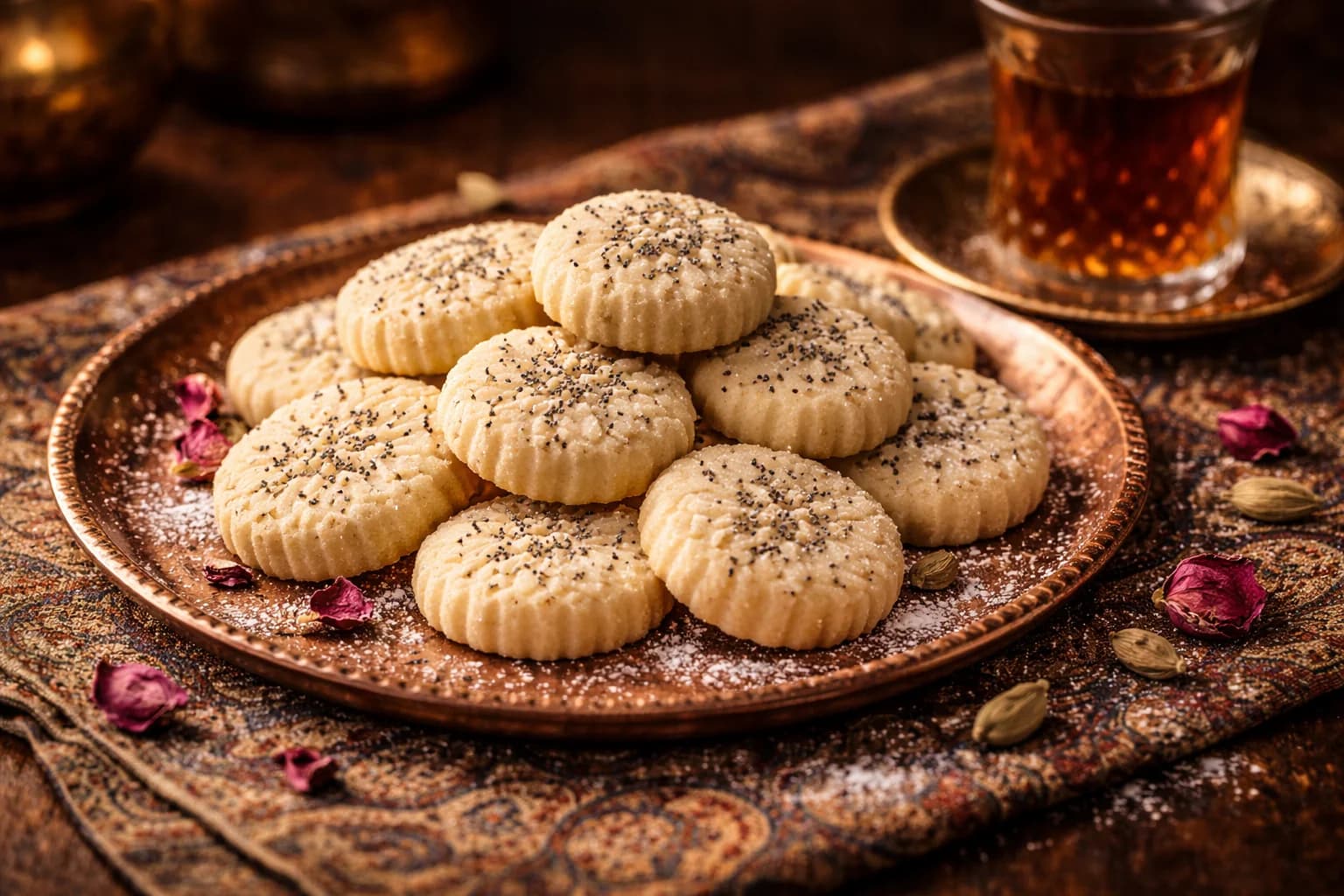
Impossibly delicate, melt-in-your-mouth cookies made from rice flour, perfumed with rosewater and cardamom, and decorated with poppy seeds—nan-e berenji are the ethereal jewels of Persian confectionery. These pale, crumbly cookies dissolve on the tongue, leaving behind whispers of floral fragrance and gentle sweetness. The rice flour creates a texture unlike any wheat-based cookie: tender, sandy, and almost weightless. Traditionally stamped with intricate wooden molds or simply decorated with a fork pattern and poppy seeds, nan-e berenji are essential to Nowruz celebrations and welcome with tea throughout the year.

cookiePréparation: 30 minCuisson: 18 minintermediatePour 30

Note culturelle- Kermanshah

Nan-e berenji holds a special place in Persian culture, particularly during Nowruz (Persian New Year). The cookies are part of the 'shirini' (sweets) that every household prepares or purchases for the festivities—no Nowruz spread is complete without them. Kermanshah, in western Iran, is the acknowledged home of the finest nan-e berenji, and the city's bakers are renowned for their mastery of these delicate cookies. The cookies are also offered to guests year-round with tea, their pale color and subtle sweetness making them an elegant accompaniment. The traditional decoration includes poppy seeds pressed into the surface before baking, creating a beautiful speckled appearance. Some bakers use intricately carved wooden stamps to impress patterns into the soft dough—these heirloom stamps are passed down through generations.

Moments Critiques

  • Using fine rice flour (not glutinous)
  • Sifting all dry ingredients
  • Creaming butter until very light
  • Not overmixing after adding flour
  • Low baking temperature (no browning)
  • Handling very gently when cooling
1
PRÉPARATION5 min

Prepare dry ingredients

Sift together the rice flour, powdered sugar, and ground cardamom into a bowl. Sifting is essential—rice flour can be lumpy and the powdered sugar needs to be perfectly smooth for the delicate texture.

Fine, uniform pale powder with no lumps
OdeurCardamom fragrance
SonSifting
TextureVery fine, silky powder

Étape Critique

Lumps in rice flour or powdered sugar will create an uneven texture. These cookies depend on perfectly smooth ingredients for their melt-in-your-mouth quality.

Use fine rice flour, not coarse. Glutinous (sweet) rice flour is different and won't work—it creates chewy, not crumbly, cookies.
2
PRÉPARATION4 min

Cream the butter

In a large bowl using a stand mixer or hand mixer, beat the softened butter on medium-high speed for 3-4 minutes until very light and fluffy. The butter should be pale and creamy, almost white in color.

Pale, fluffy, whipped butter
OdeurSweet butter
SonMixer whipping
TextureLight and airy

Étape Critique

Well-creamed butter creates the light, delicate texture. Underbeating results in dense, heavy cookies. The butter should be noticeably lighter in color after creaming.

Room temperature butter is essential—cold butter won't cream properly. If too warm, it becomes greasy and won't aerate.
3
PRÉPARATION3 min

Add egg yolks and rosewater

Add the egg yolks one at a time, beating well after each addition. Add the rosewater and beat until fully incorporated. Scrape down the sides of the bowl.

Smooth, creamy mixture with no visible yolk
OdeurRosewater blooming—floral and fragrant
SonMixer
TextureSmooth, creamy
The rosewater should be high quality—the fragrance is central to these cookies. You should smell it clearly when added.
4
PRÉPARATION3 min

Add dry ingredients

Add the sifted dry ingredients to the butter mixture in two additions, mixing on low speed just until combined after each. Do not overmix—the dough should just come together. It will be soft and slightly sticky.

Soft, cohesive dough; slightly sticky
OdeurButter, rosewater, cardamom
SonMixer on low
TextureSoft, pliable, slightly sticky

Étape Critique

Overmixing develops the small amount of protein in rice flour and makes the cookies tough rather than tender. Mix only until the dough comes together.

If the dough seems too soft to handle, don't add more flour—just chill it. The butter will firm up and make the dough workable.
5
PRÉPARATION45 min

Chill the dough

The dough should be soft but workable. If too sticky to handle, cover and refrigerate for 30-60 minutes until firm enough to shape. If the dough is already workable, you can proceed directly to shaping.

Firm but pliable dough
TextureCool, firm, not sticky
In warm kitchens, chilling is usually necessary. In cool conditions, you may be able to shape immediately. The dough should hold its shape when rolled into a ball.
6
PRÉPARATION15 min

Preheat oven

Preheat oven to 150°C (300°F). Line baking sheets with parchment paper. The low temperature is essential—these cookies should not brown.

Oven preheated; baking sheets lined
Low150°C / 300°F

Étape Critique

Nan-e berenji should remain pale—browning indicates overbaking. The low temperature allows the cookies to bake through while staying white.

7
PRÉPARATION15 min

Shape the cookies

Roll the dough into balls about 2.5cm (1 inch) in diameter—about 1 tablespoon of dough each. Place on the prepared baking sheets about 3cm apart (they don't spread much). Flatten each ball slightly to about 1cm thick.

Uniform round cookies, slightly flattened
TextureDough is pliable, holds shape
Work quickly if the kitchen is warm—the dough softens fast. If it becomes too sticky, refrigerate for 10 minutes and continue.
8
PRÉPARATION10 min

Decorate

If using a cookie stamp, press it gently into each cookie to create a pattern. If using a fork, press gently to create a crosshatch pattern. Sprinkle generously with poppy seeds, pressing them gently into the surface. Add a sliver of pistachio to the center if desired.

Patterned cookies with poppy seeds and optional pistachio
TextureSeeds adhering to soft dough
Traditional carved wooden stamps create beautiful floral or geometric patterns. A fork works well for home baking. The poppy seeds are traditional and add visual appeal.
9
CUISSON17 min

Bake

Bake for 15-18 minutes until the cookies are set but still pale—they should NOT brown. The bottoms may have the slightest hint of color but the tops should remain white. They will firm up as they cool.

Cookies are set and dry-looking but still completely pale
Low150°C / 300°F
OdeurGentle baking—butter, rosewater
TextureSet but still soft to touch

Étape Critique

The hallmark of perfect nan-e berenji is their pale, almost white color. Any browning means overbaking. They should look almost underdone when removed—they firm up significantly as they cool.

Every oven is different. Watch the first batch carefully and adjust time as needed. Better slightly underdone than browned.
Point de contrôle: Check at 15 minutes. Touch gently—they should feel set on top but still soft. If the edges are browning, they're overbaked.
10
FINITION30 min

Cool and store

Let the cookies cool on the baking sheet for 5 minutes—they're extremely fragile when hot. Transfer very gently to a wire rack to cool completely. Store in an airtight container at room temperature for up to 2-3 weeks.

Pale, delicate cookies with poppy seed decoration
OdeurRosewater and cardamom
TextureCrumbly, sandy, melt-in-your-mouth
These cookies are extremely fragile—handle with care. They taste best after a day when the flavors have melded. Store in a single layer or with parchment between layers.

Extras

Équipement

stand mixer or hand mixerbaking sheetsparchment papercookie stamp or forkstandard

Préparer à l'Avance

  • Dough can be refrigerated for up to 3 days or frozen for up to 2 months (thaw in refrigerator before using).
  • Baked cookies keep for 2-3 weeks in an airtight container at room temperature.

N/A—served at room temperature with tea

Servir Avec

Accompagnements

  • Part of a Persian cookie assortment
  • Nowruz spread

Boissons

  • Persian tea (essential)
  • The delicate flavor pairs perfectly with strong tea

Substitutions

rice flourMust be regular rice flour (not glutinous/sweet rice flour, which is sticky). Fine-ground is essential. Some recipes use a mix of rice flour and cornstarch for extra tenderness.
rosewaterEssential—the floral flavor defines these cookies. Must be high-quality Persian rosewater, not rose extract. Orange blossom water is an acceptable alternative.
poppy seedsTraditional decoration. Sesame seeds or nigella seeds can substitute for different appearance. Can omit but loses visual appeal.
butterSome traditional recipes use clarified butter (ghee) for richer flavor and even more crumbly texture.

Mise à l'échelle

This recipe makes about 30 cookies. The dough is delicate and benefits from chilling. Rice flour cookies don't spread much during baking, so you can place them fairly close together. They keep well in an airtight container for 2-3 weeks.

Source

Traditionnel · Traditional Persian cuisine, Kermanshah origin

Nan-e berenji originated in Kermanshah province in western Iran, where rice flour cookies have been made for centuries. The cookies are particularly associated with Nowruz and are a staple of the 'shirini' (sweets) offered to guests during the new year celebrations. Kermanshah remains famous for its nan-e berenji.

Recettes similaires

Nan-e Nokhodchi (Persian Chickpea Flour Cookies)

Nan-e Nokhodchi (Persian Chickpea Flour Cookies)

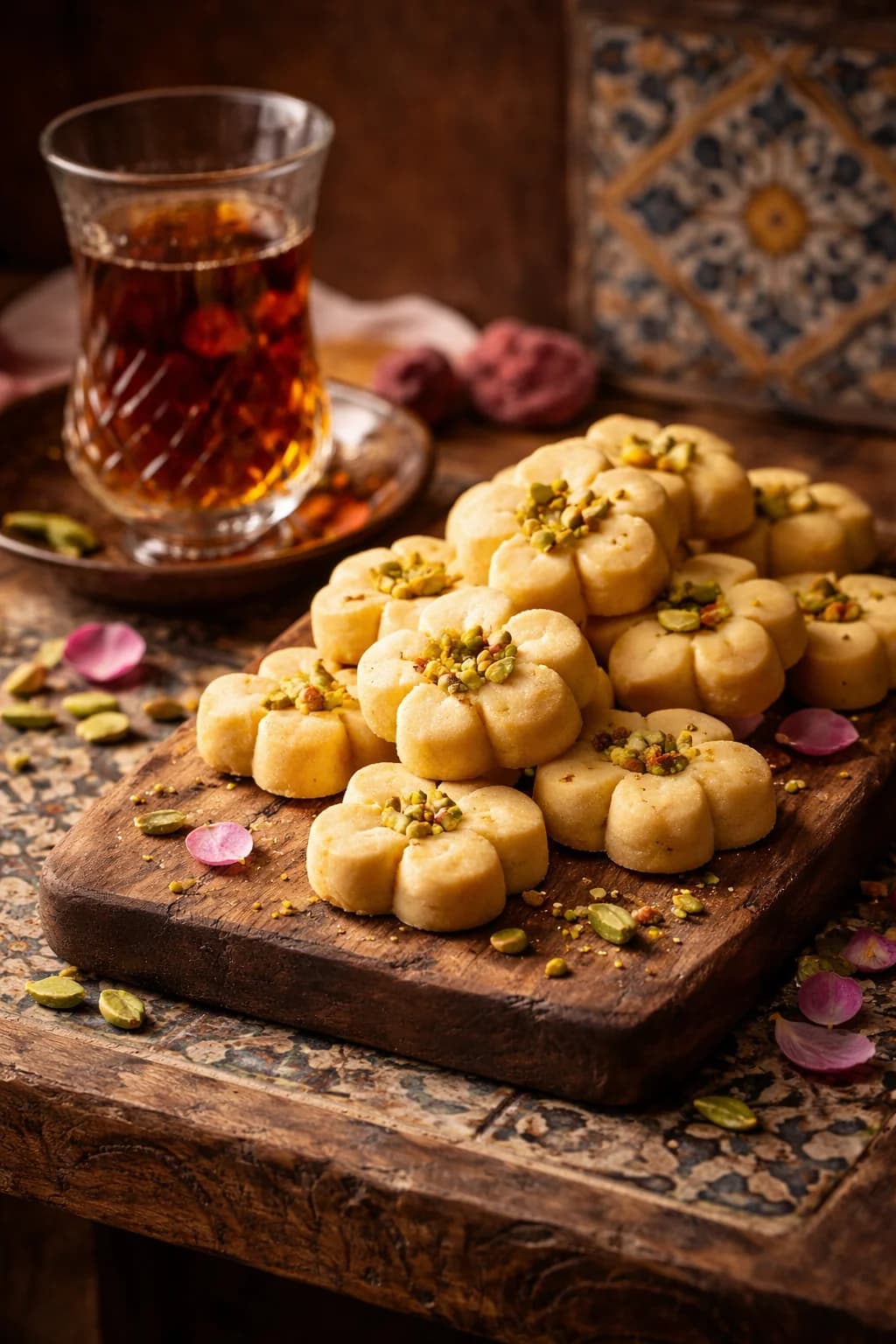
Tender, crumbly clover-shaped cookies made from chickpea flour, rich with butter and perfumed with cardamom and rosewater—nan-e nokhodchi are among the most distinctive of Persian sweets. The chickpea flour gives these cookies an unmistakable earthy sweetness and an impossibly tender texture that shatters delicately, then melts on the tongue. Traditionally shaped into four-petaled clovers (symbolizing good fortune) and decorated with slivered pistachios, nan-e nokhodchi are essential to Nowruz celebrations and prized year-round as an elegant accompaniment to tea. Their pale golden color and delicate appearance belie their intensely satisfying flavor.

Ghotab (Persian Almond-Filled Crescent Cookies)

Ghotab (Persian Almond-Filled Crescent Cookies)

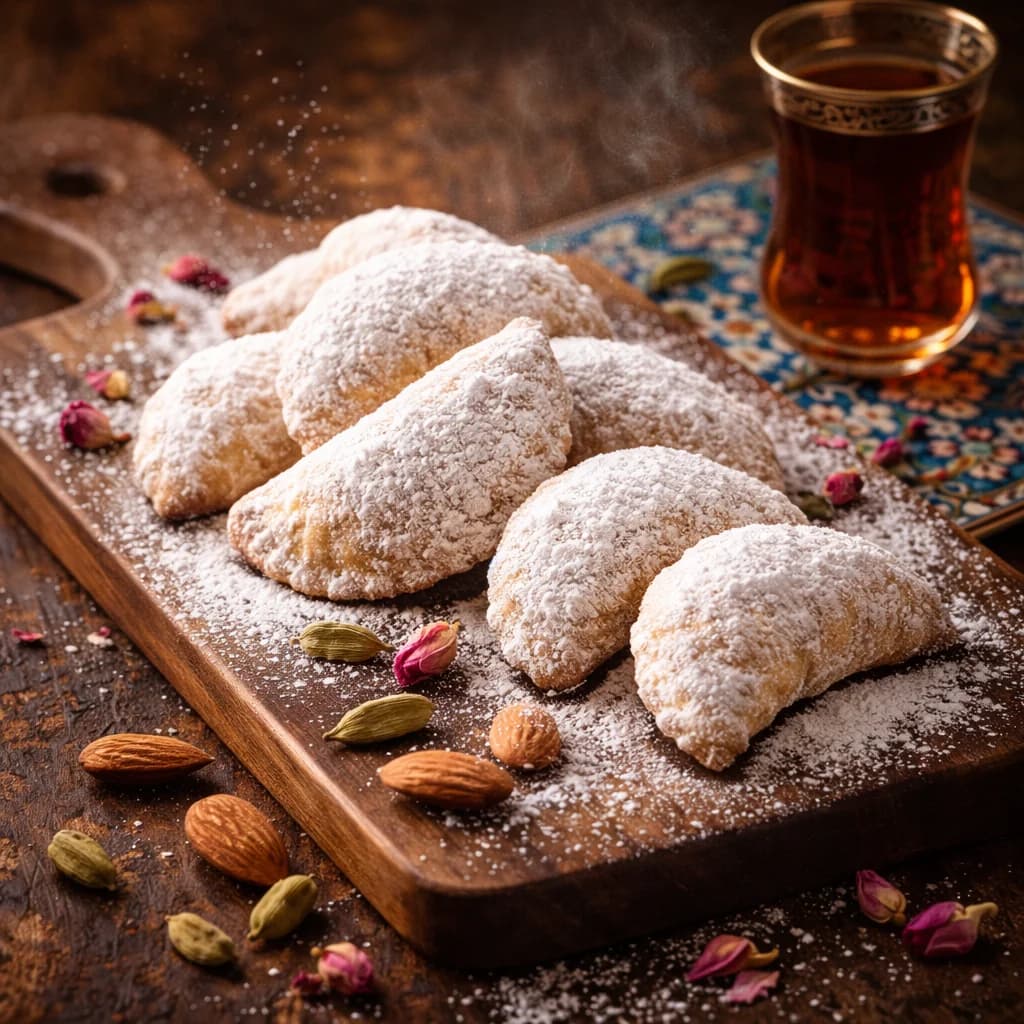
Delicate crescent-shaped pastries from Yazd, filled with a fragrant mixture of ground almonds, cardamom, and rosewater, then deep-fried to golden perfection and dusted generously with powdered sugar—ghotab are among the most refined of Persian sweets. The paper-thin dough shatters at first bite, revealing the aromatic almond filling within. Each ghotab is a small treasure: crispy, perfumed, and impossibly elegant. These crescents are the specialty of Yazd, the ancient desert city famous for its sweets, and are essential to Nowruz celebrations and special occasions throughout Iran.

Koloocheh (Persian Filled Cookies)

Koloocheh (Persian Filled Cookies)

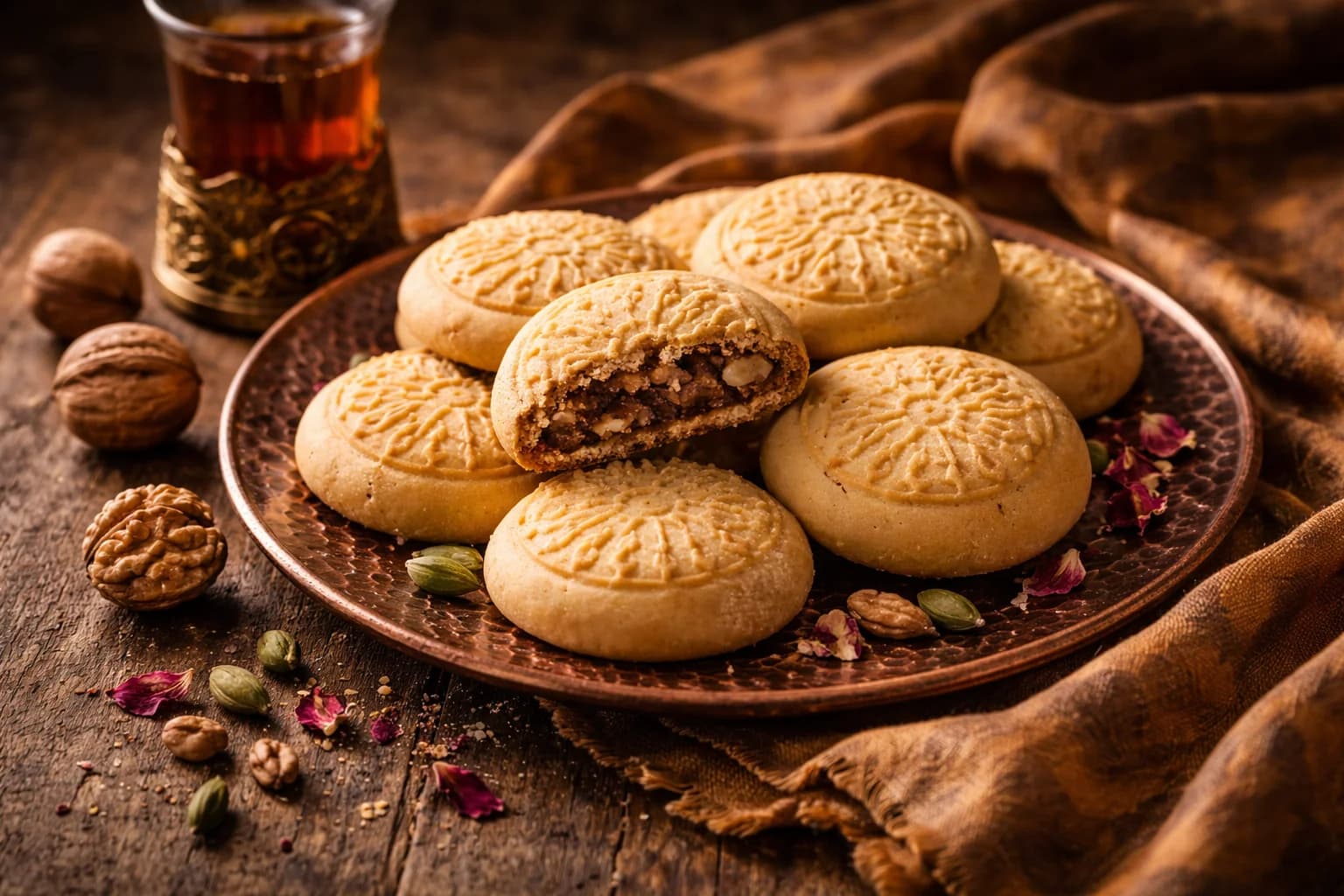
Soft, aromatic cookies with a tender crust enveloping a fragrant filling of spiced walnuts, cinnamon, and cardamom—koloocheh are the beloved stuffed cookies of northern Iran. Each region has its own style: some flat and stamped with intricate patterns, others plump and cake-like. The dough is enriched with butter and perfumed with rosewater and cardamom, yielding a cookie that's soft rather than crispy. The filling, redolent with warm spices and the richness of ground walnuts, creates a satisfying contrast. Traditionally made for Nowruz and special occasions, koloocheh are meant to be shared, offered to guests, and savored with tea.