
Moments Critiques
- •Griller les nouilles jusqu'au doré parfait
- •Caraméliser les oignons en profondeur (20+ minutes)
- •Précuire correctement le riz
- •Ne jamais soulever le couvercle pendant la cuisson vapeur
Laver et faire tremper le riz
Mettre le riz dans un grand saladier. Remplir d'eau froide, remuer vigoureusement et égoutter. Répéter 5 à 6 fois jusqu'à ce que l'eau soit presque claire. Dissoudre le sel dans de l'eau tiède, ajouter le riz et laisser tremper au moins 1 heure.
Infuser le safran
Moudre le safran avec une pincée de sucre au mortier. Transférer dans un petit bol, ajouter l'eau chaude. Couvrir et laisser infuser au moins 20 minutes.
Griller les nouilles
Casser les nouilles en morceaux si nécessaire. Chauffer l'huile dans une grande poêle à feu moyen. Ajouter les nouilles et les griller en remuant constamment pendant 4 à 6 minutes jusqu'à ce qu'elles soient dorées. Surveiller attentivement — elles passent rapidement de parfaites à brûlées.
Étape Critique
Le grillage des nouilles est ce qui rend ce plat spécial — il apporte une saveur de noisette et un contraste de textures. Des nouilles non grillées deviennent molles et sans intérêt. Des nouilles brûlées sont amères. Cette étape définit le plat.
Erreurs Courantes
- •Feu trop fort (brûle avant d'être uniformément grillé)
- •Pas assez de remuage (grillage inégal)
- •Grillage trop poussé (goût amer)
- •Sauter cette étape entièrement (passe à côté de l'essentiel)
Caraméliser les oignons
Dans la même poêle (ou une autre grande poêle), chauffer l'huile à feu moyen-vif. Ajouter les oignons émincés et cuire 20 à 25 minutes en remuant de temps en temps, jusqu'à une caramélisation profonde. Dans les 5 dernières minutes, ajouter le sucre. Assaisonner de sel. Réserver la moitié pour la garniture.
Étape Critique
Des oignons profondément caramélisés apportent une douceur et une saveur indispensables. Des oignons pâles n'apportent pas la même profondeur. Cette étape prend du temps — ne pas la précipiter.
Préparer les raisins secs et les dattes
Dans une petite casserole, faire fondre le beurre à feu doux-moyen. Ajouter les raisins secs et les faire sauter 2 minutes jusqu'à ce qu'ils gonflent. Ajouter les dattes hachées, la cannelle et la cardamome (si utilisée). Réchauffer 2 minutes. Ajouter l'eau safranée. Réserver.
Erreurs Courantes
- •Feu trop fort (les fruits brûlent)
- •Cuisson trop longue (les fruits deviennent durs)
Préparer la viande, si utilisée
Si vous utilisez de la viande : faire revenir la viande hachée avec de l'oignon coupé en dés, du sel et du poivre jusqu'à cuisson complète. Ou former de petites boulettes de viande et les dorer. Réserver.
Précuire le riz
Porter l'eau salée à ébullition vive. Égoutter le riz trempé et le verser dans l'eau bouillante. Cuire 5 à 7 minutes al dente — extérieur tendre avec un petit cœur ferme.
Étape Critique
Une précuisson correcte garantit un riz aéré.
Égoutter le riz
Égoutter immédiatement le riz dans une passoire fine. Rincer brièvement à l'eau tiède. Secouer délicatement pour égoutter.
Mélanger le riz avec les nouilles
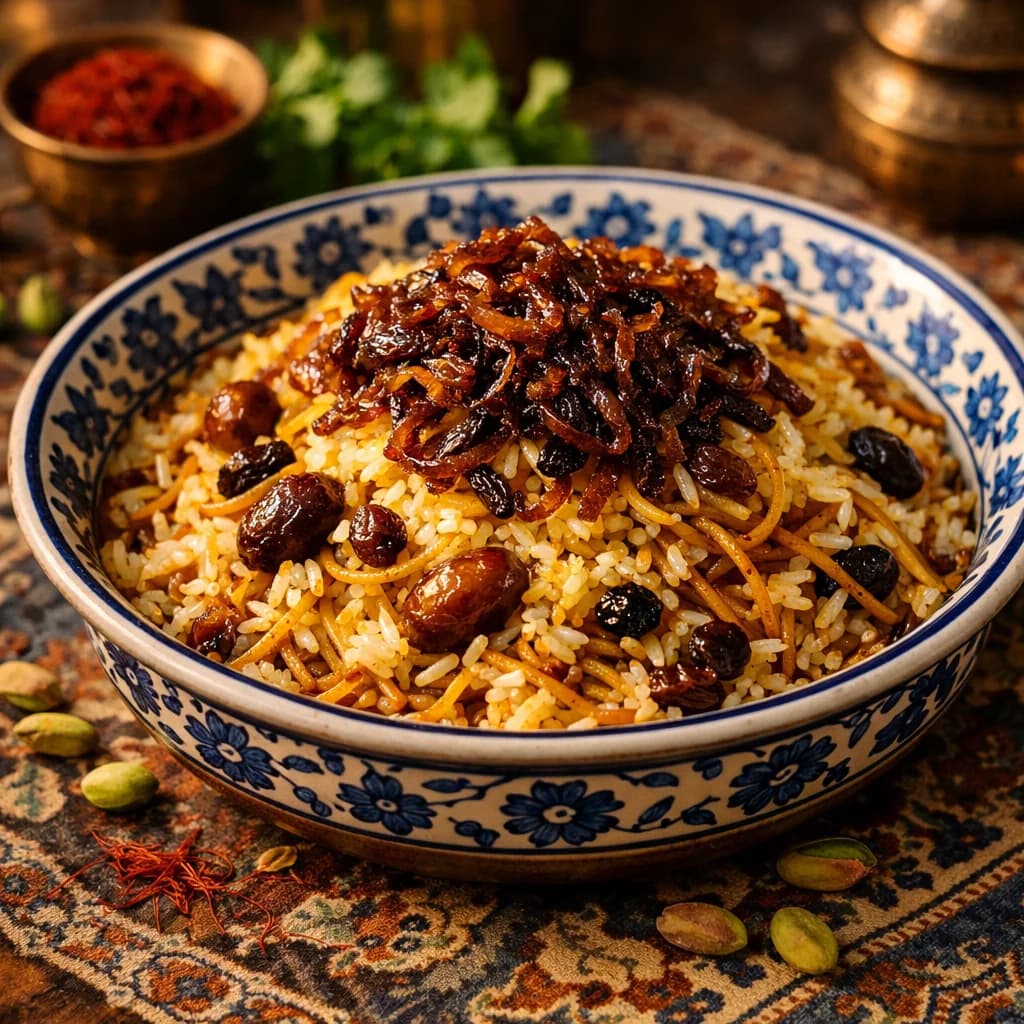
Incorporer délicatement les nouilles grillées au riz précuit. Veiller à ne pas trop casser les nouilles — on veut des brins visibles à travers le riz.
Préparer le tahdig et superposer
Dans une cocotte antiadhésive, mélanger l'huile avec l'eau safranée. Mélanger le riz aux nouilles avec l'eau safranée et l'étaler au fond pour le tahdig. Superposer le reste du mélange riz-nouilles en alternant avec le mélange raisins-dattes et la moitié des oignons caramélisés. Si de la viande est utilisée, l'intercaler au milieu. Former une pyramide. Percer 5 à 6 trous de vapeur.
Cuire le riz à la vapeur
Arroser le riz avec le reste du beurre fondu. Placer la cocotte à feu moyen-vif sans couvercle pendant 3 à 4 minutes jusqu'à ce que de la vapeur s'élève. Envelopper le couvercle d'un torchon propre, poser fermement sur la cocotte. Réduire le feu au minimum. Cuire à la vapeur 45 à 50 minutes.
Étape Critique
Une cuisson vapeur correcte garantit un riz aéré et un tahdig croustillant. Le torchon absorbe la condensation. Ne jamais soulever le couvercle.
Laisser reposer et démouler
Retirer du feu et laisser reposer 5 minutes. Retirer le couvercle. Égrener délicatement le riz à la fourchette, en mélangeant légèrement les couches tout en en laissant certaines visibles. Dresser sur un plat de service. Démouler le tahdig — il contiendra des brins de nouilles dorées.
Garnir et servir
Garnir avec les oignons caramélisés réservés et le reste du mélange de fruits. Arroser du reste d'eau safranée pour des traînées dorées. Disposer les morceaux de tahdig autour du plat. Pour Norouz, dresser avec soin — c'est un plat symbolique.
Repos Requis
5 min - Permet au tahdig de se décoller proprement