
Moments Critiques
- •Les herbes doivent être complètement sèches avant le hachage
- •Précuire correctement le riz (al dente)
- •Frire le poisson à bonne température pour un extérieur croustillant
- •Ne jamais soulever le couvercle du riz pendant la cuisson vapeur
Laver et faire tremper le riz
Mettre le riz dans un grand saladier. Remplir d'eau froide, remuer vigoureusement et égoutter. Répéter 5 à 6 fois jusqu'à ce que l'eau soit presque claire. Dissoudre le sel dans de l'eau tiède, ajouter le riz et laisser tremper au moins 1 heure.
Infuser le safran
Moudre le safran avec une pincée de sucre au mortier. Transférer dans un petit bol, ajouter l'eau chaude. Couvrir et laisser infuser au moins 20 minutes.
Laver et préparer les herbes
Laver toutes les herbes fraîches soigneusement dans plusieurs bains d'eau froide. Sécher dans une essoreuse à salade ou étaler sur des torchons propres et sécher complètement en tapotant. Les herbes doivent être très sèches. Hacher finement toutes les herbes séparément, puis les mélanger dans un grand saladier.
Étape Critique
Des herbes humides vont cuire à la vapeur au lieu de s'incorporer correctement, produisant un riz aggloméré et décoloré avec une texture d'« épinards cuits » au lieu d'un riz aéré parsemé d'herbes. Un séchage minutieux est essentiel.
Erreurs Courantes
- •Ne pas assez sécher les herbes (riz détrempé et aggloméré)
- •Hacher trop grossièrement (les herbes ne se répartissent pas)
- •Utiliser des herbes fanées (saveur et couleur ternes)
Préparer le poisson
Sécher complètement les filets de poisson avec du papier absorbant. Assaisonner les deux faces de sel, poivre et curcuma. Laisser reposer à température ambiante 15 à 20 minutes pendant la préparation du riz. Le poisson sera frit juste avant de servir.
Faire sauter les herbes (facultatif mais recommandé)
Chauffer l'huile dans une grande poêle à feu moyen. Ajouter les herbes hachées combinées et faire sauter 5 à 7 minutes en remuant fréquemment, jusqu'à ce que les herbes foncent légèrement et deviennent parfumées. Cette étape adoucit la saveur crue des herbes et intensifie la couleur verte. Si du fenugrec séché est utilisé, l'ajouter ici.
Précuire le riz
Porter l'eau salée à ébullition vive. Égoutter le riz trempé et le verser dans l'eau bouillante. Cuire 5 à 7 minutes al dente — extérieur tendre avec un petit cœur ferme. Tester fréquemment.
Étape Critique
La précuisson correcte détermine la texture finale du riz. Les herbes apportant de l'humidité supplémentaire, rester légèrement du côté al dente.
Égoutter et mélanger le riz aux herbes
Égoutter immédiatement le riz dans une passoire fine. Rincer brièvement à l'eau tiède. Incorporer délicatement le mélange d'herbes sautées (ou crues) au riz jusqu'à répartition homogène. Le riz doit être uniformément parsemé de vert.
Préparer le tahdig et superposer le riz
Dans une cocotte antiadhésive, mélanger l'huile avec l'eau safranée. Prendre du mélange riz-herbes et l'étaler au fond pour le tahdig, en pressant légèrement. Ajouter le reste du riz aux herbes en formant une pyramide. Percer 5 à 6 trous de vapeur jusqu'au fond.
Cuire le riz à la vapeur
Arroser de beurre fondu sur le riz. Placer la cocotte à feu moyen-vif sans couvercle 3 à 4 minutes jusqu'à ce que de la vapeur s'élève. Envelopper le couvercle d'un torchon propre, poser fermement sur la cocotte. Réduire le feu au minimum. Cuire à la vapeur 45 à 50 minutes.
Étape Critique
Une cuisson vapeur correcte garantit un riz aéré et un tahdig croustillant. Ne pas soulever le couvercle.
Enrober le poisson
Étaler la farine sur une assiette. Enrober chaque filet de poisson de farine en secouant l'excédent. L'enrobage doit être léger et uniforme. Réserver sur une assiette propre.
Frire le poisson
Chauffer l'huile dans une grande poêle à feu moyen-vif jusqu'à ce qu'elle miroite. Déposer délicatement les filets de poisson — ne pas surcharger la poêle. Frire 3 à 4 minutes par face jusqu'à ce qu'ils soient dorés et croustillants. Le poisson doit être cuit à cœur et s'effeuiller facilement. Si de l'ail est utilisé, l'ajouter dans la dernière minute de cuisson.
Étape Critique
Un poisson correctement frit est le compagnon parfait du riz aux herbes. Il doit être croustillant et doré, ni mou ni gras. Le contrôle de la température est essentiel.
Erreurs Courantes
- •Huile pas assez chaude (poisson gras et mou)
- •Huile trop chaude (brûle dehors, cru dedans)
- •Poêle surchargée (la température baisse, le poisson cuit à la vapeur)
- •Retourner le poisson trop tôt (la croûte se déchire)
Égoutter le poisson
Déposer le poisson frit sur une assiette tapissée de papier absorbant et laisser égoutter brièvement. Assaisonner d'une dernière pincée de sel tant qu'il est chaud. Garder au chaud pendant la finition du riz.
Laisser reposer et démouler le riz
Retirer la cocotte de riz du feu et laisser reposer 5 minutes. Retirer le couvercle. Égrener délicatement le riz à la fourchette. Dresser sur un grand plat de service. Démouler le tahdig — il sera parsemé de vert et doré.
Dresser et servir
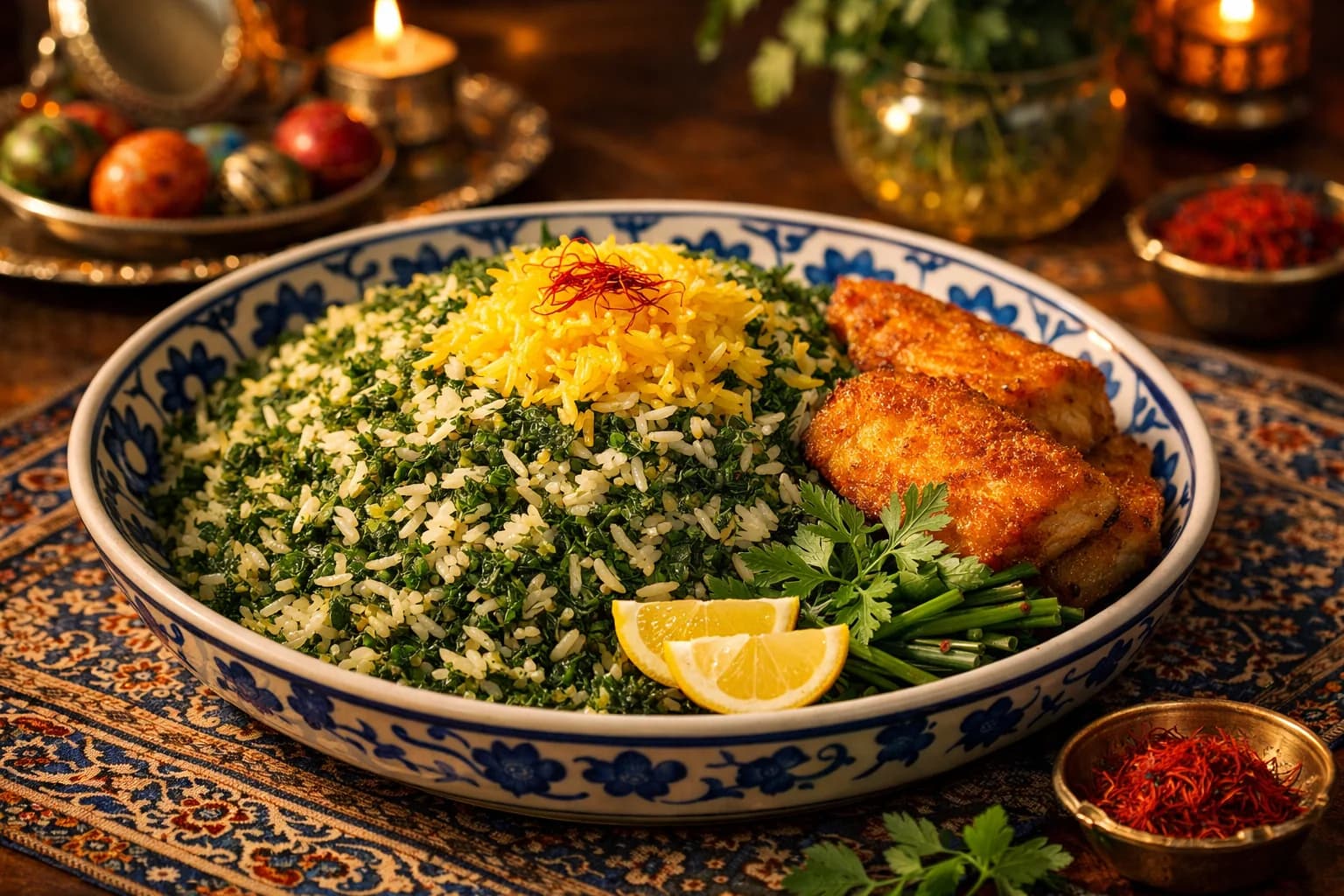
Disposer le riz aux herbes sur un grand plat. Placer le poisson frit à côté ou par-dessus. Arroser du reste d'eau safranée sur le riz. Disposer les morceaux de tahdig autour du plat. Servir immédiatement avec des quartiers de citron à presser sur le poisson.
Repos Requis
5 min - Permet au tahdig de se décoller proprement